


There is no reliable average settlement for brain injury settlement in California since the value of each claim varies based on how bad the traumatic brain injury (TBI) is, what kind of medical care is needed, how much income is lost as a result of that injury and also who was responsible for the accident causing this injury. A concussion that clears up in a few weeks and a severe TBI that leaves someone needing lifelong care are valued very differently. The final number is shaped by liability, insurance coverage levels and strength of evidence as well.
Etehad Law is a Beverly Hills personal injury firm led by Simon Etehad, who has represented injured plaintiffs since 1996. The firm's case results include a jury verdict of more than $11 million in an auto case and a $1.5 million policy-limits settlement for a T-bone crash, and clients have rated the firm 5.0 stars across 285 Google reviews. Cases are handled on contingency, so you pay no attorney fees unless the firm recovers compensation for you. If you or a family member suffered a brain injury, schedule a free consultation to talk through your options.
This guide covers what drives the value of a brain injury claim in California, how severity affects compensation, the damages you can seek, how fault is divided, the evidence you need, and the deadlines that apply.
What Is the Average Brain Injury Settlement in California?

No court or state agency publishes an average settlement figure for California brain injury cases, and the numbers you see online can't predict what your claim is worth. Some traumatic brain injury claims can be in the tens of thousands of dollars. Cases that involve long term impairment of thinking ability, large costs for future care needs, or losses in a career can be much more valuable.
The scale of the problem is well documented. The CDC reports more than 69,000 TBI-related deaths in the United States in 2021, about 190 every day. The CDC also categorizes TBIs as mild, moderate, or severe; this shows that the range of results can vary widely. Those figures show how serious brain injuries are, but they say nothing about settlement values.
Knowing what you're seeing is important when you see large numbers too. A settlement is an arrangement worked out directly among the different sides; this typically happens without going through a trial process. A verdict is an award decided by a judge or jury. Figures in attorney ads rarely explain the facts behind them, whether the amount is gross or net, or whether the case was unusual. A large verdict is not a typical result.
What your claim may be worth comes down to your medical bills, future care, lost wages, reduced earning capacity, pain and suffering, and emotional distress, adjusted for fault and the insurance available. A lawyer who reviews your records can give you a far more useful estimate than any average.
How Does Brain Injury Severity Affect Settlement Value?
Severity affects almost every part of a brain injury claim: the medical bills, the recovery time, the future care, and the effect on your work and daily life. Nevertheless, an initial diagnosis does not carry value by itself. What is important is having a good long term view and making sure that your symptoms are well documented.
The table below compares how mild, moderate, and severe TBIs typically differ in symptoms and in how they can affect a claim.
| Brain injury severity | Common symptoms and effects | How severity may affect settlement value |
|---|---|---|
| Mild traumatic brain injury (mTBI) | Concussion, headaches, dizziness, trouble concentrating, fatigue, and short-term memory problems. Many people recover within weeks, but some have symptoms that last much longer. | Claims typically involve medical bills, lost wages, pain, and emotional distress. Lasting post-concussion symptoms that disrupt work or daily life can raise the value. |
| Moderate traumatic brain injury | Longer confusion, extended memory loss, slower thinking, poor coordination, and changes in mood or behavior. Recovery often requires months of rehabilitation. | Higher medical costs, more time off work, and ongoing cognitive therapy increase economic damages. Lasting cognitive or behavioral changes can support larger non-economic damages. |
| Severe traumatic brain injury | Prolonged unconsciousness or coma, major memory loss, serious cognitive or physical disability, personality changes, and possible permanent neurological damage. | Claims can include long hospitalization, lifelong care, in-home help, permanent disability, and decades of lost earnings, which makes them far more valuable, subject to liability and available coverage. |
Why Long-Term Effects Matter
Two people with the same diagnosis can have very different outcomes. One person recovers completely within a month. Another has persistent headaches, memory problems and mood swings which are so severe that they struggle to perform their jobs. When symptoms last beyond the expected recovery period, specialist evaluations and consistent medical records show how far the injury reaches.
In severe and moderate cases, long term prognosis is most important. If the injury causes permanent cognitive impairment, personality changes, or a need for ongoing care, the claim has to cover losses that run years into the future. Doctors, economists, and life care planners often assign numbers to future treatments and lost earnings.
What Factors Determine the Value of a California Brain Injury Claim?
Liability and the strength of the evidence come first. You generally have to show that someone else's negligence caused the injury and your losses. Police reports, witness testimony, photographs, video footage from security cameras, medical records, and expert analysis together show what occurred and connect that to injuries to the head. Negotiations become harder when there's disagreement or weak links.
Medical bills and future care needs usually constitute the biggest share of the claim. This includes emergency treatment, hospital stays, surgeries, medicines, physiotherapy, and rehabilitation for neurological issues. When a TBI requires ongoing treatment, the claim can also include future medical costs, long-term assistance, and rehabilitation, as long as medical evidence supports them.
Reduced income and lost earning potential can be significant if someone suffers from cognitive or physical issues that prevent them from being able to work. Lost wages cover income you missed while recovering. Reduced earning potential refers to future income that an injury prevents, for example if memory or concentration issues prevent someone who used to do a certain job from returning to that same job. Proof of such losses comes from pay records, tax returns, and vocational evaluations.
Age, occupation and life before getting hurt matters too. Someone who is 25 years old and has a permanent brain injury may face many decades of caregiving needs along with lost income potential. A surgeon or software engineer may lose a career that depends on the exact skills the injury affected. Before the accident how you operated shows what has changed.
Insurance coverage usually has practical limits. Even when damages are large, the at-fault party's policy may cap what the insurer will pay. There may be other sources for recovery under different policies or from other responsible parties. It would be wise to do an early careful review into what exactly is covered.
What Compensation Can You Recover After a Brain Injury in California?

If someone else was negligent and that negligence led to your brain injury, you can ask for compensation for both financial losses as well as personal harm suffered. The California Courts self-help guide lists medical bills, lost wages, emotional harm, and future problems from the injury as examples of damages an injured person may claim.
Brain injuries rack up costs fast. A CDC study published in Medical Care estimated that nonfatal TBIs accounted for more than $40.6 billion in U.S. healthcare costs in 2016. A separate 2024 CDC study, summarized on the CDC's injury economics page, found that people with a nonfatal TBI treated in an emergency department averaged about $4,530 in medical spending and $1,500 in lost work over one year. Hospital admissions saw that average costs rose to $51,241 for medical expenses and $6,110 for time missed from work. These are national cost estimates not settlements but they show quickly how costs pile up for both treatment and lost wages.
Economic Damages: Medical Expenses, Lost Wages, and Future Care
Economic damage includes costs that you can quantify in dollars. For an injury to the brain this usually means getting emergency treatment, spending time in the hospital, doing surgery if necessary, taking medicine, doing physical therapy, rehabilitation for neurological issues and then later continuing therapy, living in long term care if needed, or assistance with day to day tasks in the future. If you're unsure who pays your medical bills after an accident while the claim is pending, sort that out early.
Lost wages and reduction in earning potential are often big components in a large part of a TBI claim. If memory loss, cognitive problems, or physical limits keep you from working, you can claim the income lost during recovery and the future earnings you can reasonably be expected to lose. Medical records, pay stubs, tax returns, and expert evaluations back up these numbers.
Non-Economic Damages: Pain, Suffering, and Emotional Distress
Much of what a brain injury takes never shows up on a bill. Non-economic damages compensate for physical pain, emotional distress, cognitive difficulties, and loss of enjoyment of life. A person with a TBI may live with constant headaches, anxiety, personality changes, strained relationships, or the loss of hobbies they once loved. California Civil Code § 1431.2 handles these intangible losses separately from measurable economic damages.
Since there's no fixed price for these losses, evidence is important. Medical evaluations, testimony from you and your family, and records of how your daily life has changed all help show their weight.
Two California rules can restrict non-economic damages. Under Proposition 213 (Civil Code § 3333.4), an injured person who was driving or owned an uninsured vehicle at the time of the crash, or who was convicted of DUI for that crash, generally can't recover pain and suffering damages. An uninsured owner can still recover them if the at-fault driver was convicted of DUI, and economic losses remain recoverable in every case. And if the brain injury was caused by medical negligence, Civil Code § 3333.2 (MICRA) caps non-economic damages. After the 2022 reforms, the cap rises each year; for cases resolved in 2026 it is $470,000 for injury cases and $650,000 for wrongful death cases, per category of defendant.
Punitive Damages in Certain Brain Injury Cases
Punitive damages are meant to punish particularly wrongful conduct, not to compensate someone. Under California Civil Code § 3294, you must prove by clear and convincing evidence that the defendant acted with malice, oppression, or fraud. A severe injury alone doesn't qualify. A drunk driver who causes a crash is one situation where punitive damages may come up.
How Does California's Comparative Negligence Law Affect Brain Injury Settlements?
California uses pure comparative negligence rules, which means you can still get compensation even if you share some fault for an accident. According to the California Supreme Court's decision in Li v. Yellow Cab Co. (1975), your damages are reduced based on the proportion of fault that you bear, rather than being barred. The Etehad Law's Guide to comparative negligence in California goes into more detail about the rules.
Here's how that works out with numbers. Suppose your brain injury claim is valued at $500,000 and you are found 20% responsible for the accident.
| Calculation | Amount |
|---|---|
| Illustrative total damages | $500,000 |
| Injured person's share of fault | 20% |
| Reduction for comparative negligence | $100,000 |
| Potential recovery after fault reduction | $400,000 |
The same rule works for any percentage as well. If someone is found responsible for 70% of the fault in an incident, they can still recover 30% of their damages. Your recovery depends on both the evidence and the insurance that is available. Without insurance while driving, Proposition 213 also bars damages for pain and suffering. That's why understanding California's uninsured motorist laws matters too.
Insurers know this rule well and often argue that you share the blame, because every percentage point lowers what they pay. Reports of accidents, witness accounts, and photographs can help to refute unfair distribution of blame. Don't assume you have no claim because you made a mistake.
How Do You Prove a Brain Injury Claim in California?
Showing that you have a claim for a brain injury involves proving what happened, who is at fault, showing how that accident led to your injury, and also explaining how much it has cost you. These steps strengthen that case.
1. Get Medical Care and Follow Your Treatment Plan
Go see a doctor right away and stick to what they recommend. Medical records from the emergency room, ordering CT scans or MRIs, and performing neurological evaluations determine both kind and degree of the injury sustained. The CDC notes that concussion symptoms can affect how you think, feel, act, and sleep, and some don't appear for hours or days.
Make sure you keep copies of every evaluations, treatment plans, prescriptions and records from rehabilitation. A regular scan can't rule out a concussion or mild traumatic brain injury; it's important to document symptoms consistently. Gaps in care give insurers an opening, which is why consistent medical treatment is so important.
2. Gather Evidence of How the Accident Happened
Gather police reports, photos from the scene, video footage from security cameras, details on vehicle damage and also get contact info for any witnesses. When dealing with accidents, collision reports and photos are useful for reconstructing exactly what happened, and having knowledge of what to do after a car accident is important for preserving this kind of evidence. In a premises liability case, attention turns to what hazards exist and whether the property owner was aware of them or should have been aware. Keep original files whenever you can.
3. Connect the Injury to the Defendant's Negligence
A diagnosis alone doesn't prove someone else caused it. Under California negligence law, you generally need to show that the defendant was negligent, that you were harmed, and that the negligence was a substantial factor in causing the harm. Medical records that show symptoms shortly after an accident help to establish this connection. Neurologists, neuropsychologists, and other specialists can offer opinions on the injury, cognitive impairment, and expected recovery. If symptoms appeared later, give your doctor an accurate timeline and keep records of when they began.
4. Document Your Financial Losses
Keep all your bills and receipts, including those for medical treatment, prescriptions you receive, and those related to travel to appointments. If you were absent from work, save your paycheck stubs, letters from your employer, and tax returns. If an injury impacts your ability to earn money, vocational or financial experts can assess what earnings you have lost. For ongoing care, keep track of treatment plans and assessments for future needs.
5. Record How the Injury Affects Your Daily Life
Brain injuries often change concentration, memory, mood, relationships, and independence in ways others don't see right away. Keep a dated journal of headaches, sleep problems, emotional changes, trouble at work, and tasks you can no longer do. Comments from family members, caregivers or colleagues can give more details too. This record supports your non-economic damages and should complement your medical evidence, not replace it.
6. Talk to a Lawyer Before the Deadline
A lawyer can assess liability, spot missing evidence, bring in the right experts, calculate your damages, and handle the insurance company. There are good reasons for getting a brain injury attorney involved early when symptoms are complex or several parties may be responsible. Don't delay until after treatment is done. Deadline for filing keeps slipping while you're still recovering.
How Long Does It Take to Settle a Brain Injury Case in California?

How long it takes varies depending on the severity of the injury, length of treatment and if there is any dispute over who is at fault. A straightforward claim involving a mild TBI may resolve within a few months. Cases with permanent neurological damage, large future care costs, or contested liability often take a year or more, and complex cases can take several years.
A lot of waiting time is due to recovery after treatment. Before putting a number on a claim, lawyers typically want clear prognoses, rehabilitation plans and expert estimates for future care and lost income. Settling before then risks leaving lasting symptoms out of the calculation.
Lots of claims get settled through negotiations with the insurance company. When liability or value stays disputed, a lawsuit may be needed, and discovery, expert testimony, and court schedules add time. Filing suit doesn't mean the case will go to trial. Check out how long a personal injury lawsuit takes in California for a closer look at each stage.
What Is the Deadline for Filing a Brain Injury Lawsuit in California?
Under Code of Civil Procedure § 335.1 law in California, generally speaking, you have two years from the time of getting hurt to file a lawsuit for personal injuries. California Courts' statute of limitations guide affirms that there is a two year deadline and warns this can cost you the right to sue if you miss it. That's important when dealing with brain injuries because symptoms and long term results can take a while to appear.
Claims against government agencies move quicker. Under Government Code § 911.2, a claim for personal injury claim against a public entity generally must be filed within six months. If the agency turns down the claim then there is a separate much shorter time limit for bringing a lawsuit.
Some situations, such as injuries to minors or injuries that weren't reasonably discoverable right away, can change how the deadline is calculated. Don't assume delayed symptoms extend it. The Etehad Law's guide for statute of limitations for personal injury details any exceptions and an attorney can verify the deadline that applies to you.
Should You Accept a Brain Injury Settlement Offer?
Before accepting an offer, look into covering all of your full losses, not just the bills that are due right now. A TBI can cause headaches, memory problems, cognitive impairment, emotional distress, and lost earning capacity that aren't obvious at first. An offer that covers your current medical bills may leave out costs for rehab, long term care, and missed paychecks too.
Compare what they're offering with your actual medical bills, lost income, future treatments and also consider any pain and suffering you've endured. Think about how strong proof of fault is and consider if comparative negligence could reduce what you recover. Also check how much actual insurance coverage is there. Adjusters are trained to accept less than what they should and we have a guide on dealing with insurance adjusters that details tactics to be aware of.
Timing matters. If you settle while your condition is still changing, you may underestimate the cost of future care or the effect of permanent impairment. That risk is greatest in moderate and severe cases that need long-term rehabilitation, in-home help, or changes to where and how you live.
Make sure to read this agreement before you sign it. A final settlement generally ends your right to seek more money for the injuries it covers, even if your medical costs rise later. A case-specific review before you accept can tell you whether the offer is in a reasonable range.
Do You Need a Brain Injury Attorney?
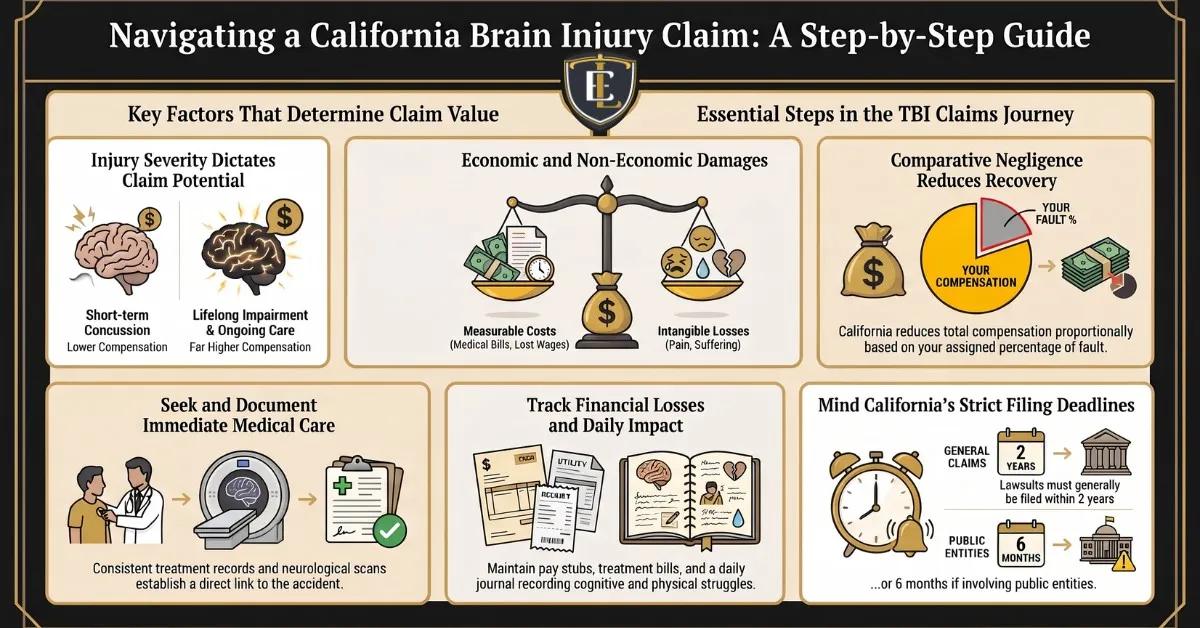
A brain injury can affect your health, finances, work, and relationships long after the accident. Valuing the claim means looking closely at the severity of the injury, your medical costs, lost income, future care, fault, and insurance coverage. Settlement averages can't capture all the finer details either and similar injury cases often result very differently.
A lawyer can gather your records, establish liability, calculate current and future damages, and negotiate with the insurer for you. No attorney can predict a particular result, but a careful evaluation helps you make informed decisions.
For nearly 30 years now, Simon Etehad has been representing people who have been injured in California. If you or a loved one suffered a brain injury because of someone else's negligence, contact Etehad Law for a free consultation about your options and the potential value of your claim.
Frequently Asked Questions
Settlements for brain injuries in California vary depending on how bad the injury is, what evidence you have and what losses you've suffered. This text covers common questions about compensation for TBI (traumatic brain injury), long delayed in showing symptoms, insurance coverage, and rights of family members.
How Much Is a Mild Traumatic Brain Injury Settlement Worth in California?
There is variability depending on medical bills, duration of symptoms, lost income, pain and suffering, and the insurance coverage that is available. Since there is no verified statewide average value, you have to assess the worth of your claim based on the specifics of that particular case.
Can You Receive Compensation for a Concussion Without Losing Consciousness?
Yes. Lots of concussions occur without any loss of consciousness at all. If you have proof that there was an injury, that another party is responsible and also that you suffered damages, you can still pursue compensation. Medical records, diagnostic results, and reported symptoms back this claim.
Can You Claim Compensation if Brain Injury Symptoms Appear Days After an Accident?
Yes indeed. Headaches, memory problems, dizziness, and trouble concentrating can show up days after an accident. See a doctor as soon as symptoms appear and keep records, because medical evidence linking the injury to the accident is central to the claim.
Does Health Insurance Affect a Brain Injury Settlement in California?
Health insurance may pay for treatment at first, but your insurer may have a right to be repaid from the settlement through a lien or reimbursement claim. How much that affects what you keep depends on your plan and the law that applies, so review it with a lawyer before accepting an offer.
Can Family Members Recover Damages When a Brain Injury Causes Permanent Disability?
A spouse or registered domestic partner may be able to bring a loss of consortium claim for the loss of companionship, care, and support caused by the injury. If the brain injury results in death, eligible family members may be able to bring a wrongful death claim.
Legal Disclaimer: This article is purely for informational purposes only. This is not legal advice and it does not create any attorney client relationship. Brain injury settlement amounts vary with the severity of the injury, documented damages, liability, insurance coverage, and California law. Settlement figures and examples in this article are hypothetical. Past results do not guarantee a similar outcome in any future case. If you need advice for your situation, talk to an experienced personal injury lawyer. Contact Etehad Law to discuss your legal options.
You may also like
 Personal Injury
How Much Is My Personal Injury Case Worth?
How much is my personal injury case worth? Discover how to accurately assess the value of your personal injury case.
Read More » Expert Opinion
Top 5 Myths About Personal Injury Cases – Debunked
If you've been injured in an accident, you may have heard myths about personal injury cases that could prevent you from seeking…
Read More »Simon P. Etehad Named to 2027 Southern California Super Lawyers
Etehad Law founder Simon P. Etehad has been selected to the 2027 Southern California Super Lawyers list, his seventh consecutive year and…
Read More »
