


The California personal injury statute of limitations is generally two years from the date of the injury. This legal deadline determines how long you have to file a personal injury lawsuit, although certain claims and exceptions may shorten or extend that timeframe.
At Etehad Law, we represent injury victims on a contingency fee basis, meaning you pay no attorney fees unless we recover compensation for you. For over 30 years, our firm has recovered more than $100 million in settlements and has earned a 5.0 Google rating based on 267 reviews. Our case results include an $11 million-plus jury verdict and numerous policy-limit recoveries in motor vehicle and premises liability cases. If you have been injured because of someone else’s negligence, contact us as soon as possible.
In this guide, we explain the California personal injury statute of limitations and the deadlines that apply to different types of claims. We also discuss important exceptions, government claims, the discovery rule, and why acting promptly can strengthen your case.
What Is a Statute of Limitations?
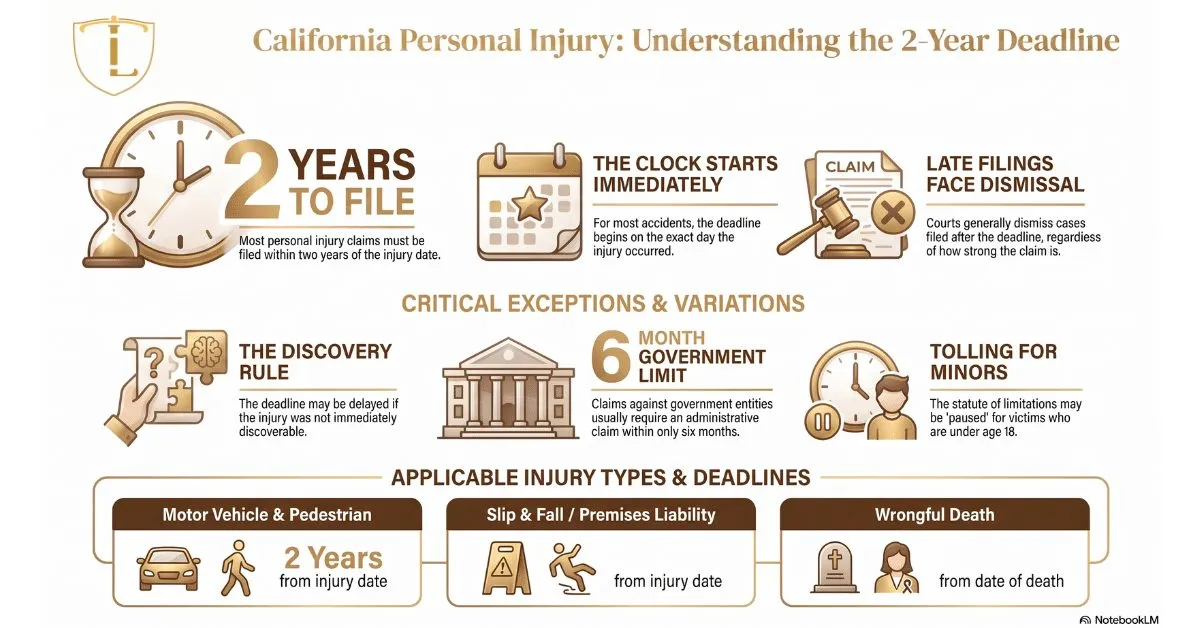
A statute of limitations is a law that sets the deadline for filing a lawsuit. In personal injury cases, it determines how long an injured person has to bring a legal claim after an accident. According to the California Courts, filing after the applicable deadline may prevent a court from hearing your case.
Statutes of limitations exist to promote fairness and encourage timely resolution of legal disputes. Over time, evidence may disappear, documents may be lost, and witness memories may fade. Filing claims promptly helps preserve reliable evidence and supports a fair legal process.
For personal injury claims, these deadlines have significant consequences. If the statute of limitations expires before you file your lawsuit, the defendant can ask the court to dismiss your case. In most situations, you will lose your legal right to recover compensation, regardless of how strong your claim may be.
We recommend speaking with a personal injury attorney as soon as possible after an accident. Early legal guidance helps preserve evidence, identify the correct filing deadline, and protect your right to pursue compensation.
What Is the California Statute of Limitations for Personal Injury?
The California statute of limitations for most personal injury claims is two years from the date of the injury. This deadline is established by California Code of Civil Procedure Section 335.1.
In most cases, the clock starts running on the date the injury occurs. This is often the date of a car accident, dog bite, slip and fall, or other incident causing harm. However, certain exceptions, such as the discovery rule, may delay when the statute of limitations begins.
Filing your claim early offers several important advantages. It gives your attorney more time to preserve evidence, interview witnesses, obtain medical records, and prepare a strong case. Early action also reduces the risk of missing important legal deadlines.
If you file after the statute of limitations expires, the court will usually dismiss your lawsuit. We recommend consulting a personal injury attorney promptly to determine the deadline that applies to your specific case and protect your right to recover compensation.
Types of Personal Injury Cases Covered by the Statute of Limitations
The California statute of limitations applies to many different types of personal injury claims. Although many cases share the same filing deadline, certain claims may be subject to different rules or exceptions depending on the circumstances.
The table below helps you understand these cases better:
| Type of Personal Injury Case | How the Statute of Limitations Generally Applies |
|---|---|
| Car accidents | Most claims must be filed within two years of the injury date. |
| Truck accidents | The general two-year deadline usually applies unless a special exception exists. |
| Motorcycle accidents | Most injured riders have two years to file a personal injury lawsuit. |
| Pedestrian accidents | Claims generally follow California’s two-year personal injury statute. |
| Bicycle accidents | Injured cyclists usually have two years to pursue legal action. |
| Slip and fall accidents | Most premises liability claims are subject to the two-year filing deadline. |
| Dog bites | Dog bite lawsuits generally must be filed within two years of the attack. |
| Wrongful death | Eligible family members generally have two years from the date of death to file suit. |
| Product liability | Most product liability claims involving personal injuries follow the two-year limitation period. |
| Premises liability | Claims against negligent property owners generally must be filed within two years. |
When Does the Statute of Limitations Begin?
In most personal injury cases, the statute of limitations begins on the date the injury occurs. This is typically the date of a car accident, dog bite, slip and fall, or other underlying accident. From that day, the legal deadline generally starts running.
However, California recognizes an important exception known as the discovery rule. This rule may apply when an injured person could not reasonably discover the injury immediately. Instead of beginning on the accident date, the statute of limitations may begin when the injury was discovered or reasonably should have been discovered.
The discovery rule often applies in cases involving hidden injuries or medical malpractice. For example, symptoms from medical negligence or certain psychological injuries may not appear until weeks, months, or even years later. In these situations, delayed discovery can affect the filing deadline.
Even when the discovery rule applies, waiting to pursue legal action can create challenges. Evidence may disappear, medical records may become harder to obtain, and witness memories may fade over time. We recommend consulting an attorney as soon as you suspect your injury resulted from another person’s negligence.
As Erik Harper explains, “Determining when the statute of limitations begins is not always straightforward. Early legal guidance helps protect your rights and avoid costly filing mistakes.”
Important Exceptions to California’s Statute of Limitations

One important exception involves minors. In many situations, the statute of limitations is tolled until the child reaches adulthood. Different rules may apply depending on the type of claim and the defendant involved.
Another exception applies to individuals who lack legal capacity. California law may pause the filing deadline while an injured person is legally incapacitated. This tolling rule protects individuals who cannot protect their own legal interests.
The statute of limitations may also be tolled if the defendant leaves California. In certain circumstances, the time spent outside the state may not count toward the filing deadline. An attorney can determine whether this exception applies.
Government claims follow very different deadlines than most personal injury cases. Before filing a lawsuit, you generally must present a claim to the public entity. If the claim is rejected, additional filing deadlines apply under California law.
California also recognizes other limited exceptions based on specific circumstances. These may include delayed discovery, fraudulent concealment, or other tolling provisions authorized by statute. Since these rules are highly fact-specific, early legal advice is often essential.
What Happens If You Miss the Deadline?
Missing the statute of limitations can have serious legal consequences. In our experience, even a short delay may prevent you from pursuing compensation, regardless of the strength of your case.
The most significant consequence is that your case may be dismissed. If you file after the applicable deadline, the defendant will likely ask the court to dismiss your lawsuit. Courts generally enforce these deadlines unless a recognized legal exception applies.
Missing the deadline also weakens your negotiating position with insurance companies. Once the statute of limitations expires, insurers know you have limited legal leverage. They may refuse to negotiate because you can no longer pursue your claim in court.
Your legal options become much more limited after the deadline passes. You may lose the right to recover damages for medical bills, lost income, pain and suffering, and other losses. In many cases, filing even one day late is enough to bar your claim.
Although exceptions exist, they are relatively uncommon. Tolling rules, delayed discovery, or other statutory exceptions may extend the filing deadline under specific circumstances. These exceptions require careful legal analysis and should never be assumed.
As Erik Harper explains, “Statutes of limitations are unforgiving. Protecting your rights starts with understanding the deadline before it expires.” Seeking legal advice early helps avoid preventable mistakes and preserves your ability to pursue compensation.
What You Should Do After an Injury
Taking the right steps after an injury can protect both your health and your legal rights. In our experience, early action also strengthens your ability to pursue compensation. We recommend following this process.
Step 1: Seek Medical Treatment
Your health should always come first. Obtain medical care immediately, follow your treatment plan, and attend every follow-up appointment. Prompt treatment creates important medical records supporting your claim.
Step 2: Document the Accident
Record as many details as possible while they remain fresh. Take photographs of the accident scene, your injuries, property damage, and any hazardous conditions. Write down what happened and identify potential witnesses.
Step 3: Preserve Important Evidence
Keep damaged clothing, personal belongings, medical bills, receipts, and all accident-related documents. Save emails, text messages, and correspondence with insurance companies. Strong evidence helps support liability and damages.
Step 4: Avoid Giving Recorded Statements Without Legal Advice
Insurance adjusters may ask for recorded statements soon after the accident. We recommend speaking with a personal injury attorney before answering detailed questions or discussing fault.
Step 5: Contact a Personal Injury Attorney
Consult an attorney as soon as possible after your injury. Early legal guidance helps preserve evidence, meet important filing deadlines, and protect your right to recover compensation.
How a California Personal Injury Attorney Can Help

A personal injury attorney does much more than file legal paperwork. In our experience, early legal representation helps protect your rights and strengthen your claim from the beginning.
Your attorney first determines the correct filing deadline for your case. Different claims have different statutes of limitations, exceptions, and procedural requirements. Identifying the correct deadline helps prevent costly filing mistakes.
Your lawyer also conducts a thorough investigation into your claim. This includes reviewing accident reports, medical records, witness statements, photographs, and other available evidence. A comprehensive investigation helps establish liability and damages.
Preserving critical evidence is another important responsibility. Your attorney can obtain surveillance footage, secure expert opinions, and request records before they disappear. Acting quickly often strengthens your position during settlement negotiations.
Insurance negotiations require experience and preparation. Your attorney communicates directly with insurance adjusters and responds to attempts to reduce your claim’s value. We recommend allowing your lawyer to handle these discussions on your behalf.
Your attorney also ensures your lawsuit is filed before the applicable legal deadline expires. Missing the statute of limitations may prevent you from recovering compensation, regardless of your injuries.
Finally, your lawyer works to maximize your potential compensation. They evaluate medical expenses, lost income, future treatment costs, pain and suffering, and other recoverable damages. Every category of loss should be carefully documented and supported.
As Erik Harper explains, “Meeting the deadline is only part of a successful claim. Thorough preparation and early action often make the greatest difference in the final outcome.”
Need a California Personal Injury Attorney?
The California personal injury statute of limitations can have a significant impact on your ability to recover compensation. In our experience, understanding the correct filing deadline and acting promptly are essential to protecting your legal rights. Waiting too long may result in losing the opportunity to pursue damages, even if you have a strong case.
At Etehad Law, we have over 30 years of experience helping injured clients navigate California’s personal injury laws. If you have been injured because of someone else’s negligence, do not wait until the filing deadline is approaching. Contact Etehad Law today for a free consultation to discuss your case, understand your legal options, and protect your right to recover compensation.
Frequently Asked Questions
Below are answers to some of the most common questions about the California personal injury statute of limitations.
What is The Statute of Limitations For Personal Injury in California?
In most cases, you have two years from the date of the injury to file a personal injury lawsuit. Missing this deadline may prevent you from recovering compensation.
Are There Exceptions To The Filing Deadline?
Yes, there are certain exceptions, including the discovery rule and tolling provisions for minors or legally incapacitated individuals. Claims against government entities also follow different deadlines.
What Is The Discovery Rule in California?
The discovery rule may delay the start of the statute of limitations when an injury is not immediately apparent. The filing period generally begins when the injury was discovered or reasonably should have been discovered.
Is The Deadline Different For Claims Against The Government?
Yes, it is. Claims against California government entities generally require an administrative claim within six months of the incident. Additional deadlines apply if the government denies your claim.
Can I Still Recover Compensation If I Miss The Statute of Limitations?
Typically, you cannot. Courts generally dismiss lawsuits filed after the applicable deadline unless a recognized legal exception applies.
How Long Do I Have To File a Wrongful Death Lawsuit in California?
In most cases, eligible family members have two years from the date of death to file a wrongful death lawsuit. Because exceptions may apply, we recommend consulting a personal injury attorney as soon as possible
Legal Disclaimer: This article is for informational purposes only and does not constitute legal advice or create an attorney-client relationship with Etehad Law. Statutes of limitations and filing deadlines vary depending on the facts of each case, the parties involved, and applicable California law. Missing a legal deadline may affect your right to pursue compensation. If you have questions about your specific situation, consult a qualified California personal injury attorney as soon as possible.
You may also like
 Expert Opinion
 What is a Vehicle Black Box and How Can It Help Your Case?
Uncover the role of your car black box in legal cases. Insights from Personal Injury Attorney in Beverly Hills await. Check to…
Read More » Expert Opinion
 Will Posting on Social Media Tank Your Case?
How social media posts can affect a legal case, the dos and don'ts while a claim is open, and what insurers look…
Read More » Accident and Injury
 The Dangers of Texting and Walking
How distracted walking causes pedestrian collisions, who is at fault in a pedestrian versus car accident in California, and what to do…
Read More »
