

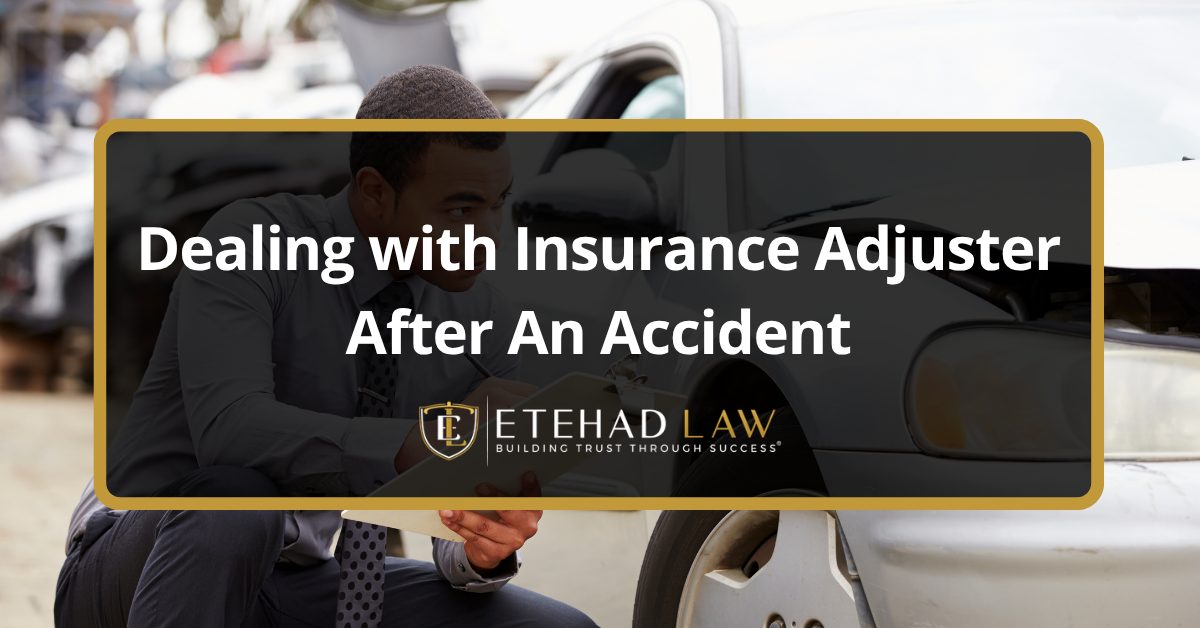
Dealing with insurance adjusters after an accident can have a significant impact on the outcome of your insurance claim. While the adjuster may seem helpful, their role is to evaluate claims on behalf of the insurance company. Thus, knowing what to say and what to avoid can help protect your right to fair compensation.
At Etehad Law, we represent injury victims on a contingency fee basis, meaning you pay no attorney fees unless we recover compensation for you. Our firm has recovered more than $100 million in settlements and has earned a 5-star rating based on more than 250 Google reviews. Our case results include an $11 million-plus jury verdict and numerous policy-limit recoveries in motor vehicle and premises liability cases. If you were injured in an accident, contact us today for a free consultation to pursue the maximum compensation.
In this guide, you'll learn how insurance adjusters work, the tactics they commonly use, what information you should provide, when to involve a personal injury lawyer, and how to strengthen your claim while pursuing the maximum compensation available.
What Does an Insurance Adjuster Do After an Accident?

After a car accident, one of the first people you may hear from is an insurance adjuster. Their role is not simply to ask what happened. An insurance claims adjuster investigates the claim, reviews the available evidence, and determines how the insurance company will handle your claim under the terms of the applicable policy.
According to the National Association of Insurance Commissioners (NAIC), an adjuster investigates claims, determines coverage, examines relevant documents, inspects property damage, determines the amount payable under the policy, and often negotiates or settles the claim. More than 30 states require licensure for one or more types of insurance adjusters.
The investigation usually begins with understanding how the accident occurred. The adjuster may review the police report, inspect vehicle damage, request photographs, speak with witnesses, and ask for your account of the collision. They may also collect repair estimates, review medical records, and evaluate the medical treatment you received if you are pursuing compensation for injuries. The goal is to gather enough information to determine liability and estimate the value of the insurance claim.
Another important responsibility is determining what the insurance policy actually covers. Before discussing compensation, the adjuster must verify whether the policy applies to the accident, identify any coverage limits, and determine which damages may be covered. The NAIC notes that after an adjuster completes an assessment, the findings are submitted to the insurer to determine the claim settlement.
Once the investigation is complete, the adjuster evaluates both economic and non-economic losses. That may include property damage, medical expenses, lost wages, repair costs, and other documented losses. The adjuster then uses that information to calculate a proposed settlement offer and begin negotiations.
Although adjusters are expected to evaluate claims professionally, it is important to remember who they represent. A company or staff adjuster works for the insurance company, not for the injured person. Understanding that relationship can help you approach conversations with realistic expectations and make informed decisions as the claims process moves forward.
Whose Insurance Adjuster Are You Talking To?
Not every insurance adjuster has the same role or the same responsibilities. Before answering questions or discussing your insurance claim, it is important to know whether you are speaking with your own insurance company or the other driver's insurer. That distinction can influence what information you should provide and how you approach the conversation.
Your Own Insurance Company's Adjuster
If the adjuster works for your own insurance company, your policy may require you to report the accident and cooperate with its investigation. That typically means providing basic information about when and where the accident occurred, identifying the vehicles involved, and submitting documents that support your claim.
Even so, it is wise to communicate carefully. Stick to the facts, avoid speculation, and do not guess if you are unsure about something. If your injuries are still being evaluated or you do not yet know the full extent of your damages, it is perfectly acceptable to say that your medical treatment is ongoing and you will provide additional information when it becomes available.
The Other Driver's Insurance Adjuster
The other driver's insurance adjuster has a different role. Their responsibility is to protect the interests of their employer, not yours. While they may be courteous and professional, they are evaluating the claim on behalf of the other driver's insurance company, which has a financial interest in resolving claims for as little as reasonably possible.
Because of that, their questions may be designed to evaluate liability, the severity of your injuries, or the value of your claim. In most situations, you are not legally required to give the other driver's insurance adjuster a recorded statement, and you do not have to discuss the details of your injuries before speaking with a personal injury attorney. If you do communicate with the adjuster, keep the conversation brief, provide only basic information, and avoid discussing fault or making statements about the value of your claim before you understand the full extent of your injuries.
What Should You Say to an Insurance Adjuster After an Accident?
Start by providing only the basic information needed to identify the claim. This generally includes your name, contact details, the date and location of the car accident, and the vehicles involved. If the adjuster asks questions about the circumstances surrounding the collision, stick to facts you personally know rather than repeating what someone else may have told you.
Kirk Comer advises, "You don't have to tell your entire story during the first phone call. Give the facts you know, avoid assumptions, and remember that it's perfectly acceptable to say you don't have enough information to answer a question yet."
If you are unsure about something, say so. Guessing about vehicle speeds, distances, reaction times, or who caused the crash can create unnecessary problems later if additional evidence tells a different story. The same approach applies to your injuries. You may still be undergoing medical treatment, and some symptoms do not fully develop until days after an accident. Rather than minimizing your condition or making predictions about your recovery, simply explain that you are continuing to receive medical care and that the full extent of your injuries is still being evaluated.
Keep your answers concise and resist the urge to fill moments of silence with extra details. Many questions require only a brief response, and volunteering unnecessary information rarely benefits your claim. If the adjuster requests documents, authorizations, or additional information, ask for the request in writing so you have a clear record of what is being requested and time to review it before responding.
Approaching these conversations calmly and carefully does not mean you are being uncooperative. It means you are protecting your interests while allowing the claims process to proceed based on accurate information rather than assumptions or incomplete facts.
What Should You Not Say to an Insurance Adjuster?
What you don't say can be just as important as what you do say. That doesn't mean looking for clever phrases or trying to "beat" the insurance company. The goal is accuracy. After a car accident, you may not yet know the full extent of your injuries or every detail of what happened, so it is better to answer carefully than to make statements you later have to correct.
Kirk Comer explains, "We never tell clients to memorize a script. We tell them to be truthful, stick to the facts, and avoid making statements before they have all the information. Accuracy protects your claim far better than guesswork."
One example is saying, "I'm fine" or "I'm not injured." Many car accident victims feel relatively normal immediately after a crash because adrenaline can temporarily mask pain. Hours or even days later, they may develop neck pain, back injuries, or other symptoms that require medical treatment. If you have not been fully evaluated, it is more accurate to explain that you are still being examined or are waiting to learn the extent of your injuries.
The same applies to saying, "I'm sorry." People often apologize out of politeness rather than because they caused the accident. Even so, those words can sometimes be interpreted as accepting responsibility. Likewise, avoid statements that directly or indirectly admit fault before the facts have been fully investigated.
It is also wise to avoid guessing. If you are asked about vehicle speed, following distance, reaction time, or another detail you do not know with certainty, say that you are unsure rather than estimating. An incorrect estimate can later conflict with physical evidence, witness statements, or the police report.
Be equally careful when discussing your injuries. Telling an adjuster that your pain is "not that bad" or that you'll "probably be okay in a few days" may not reflect your condition if symptoms worsen. At the same time, avoid exaggerating what happened or overstating your injuries. The strongest insurance claim is built on facts supported by medical records, evidence, and consistent statements, not on minimizing or overstating the circumstances surrounding the accident.
Should You Give the Insurance Adjuster a Recorded Statement?
A recorded statement is a formal interview in which an insurance adjuster asks you questions about the car accident, your injuries, and the events leading up to your insurance claim. The answers you provide become part of the claim file and may be reviewed throughout the investigation alongside other evidence, including police reports, medical records, repair estimates, and witness statements.
If the request comes from your own insurance company, your policy may require you to cooperate with its investigation. The California Department of Insurance advises policyholders to cooperate with their insurer's investigation and provide information needed to process a claim.
The situation is often different when the request comes from the other driver's insurance company. In many cases, you are not legally required to provide that insurer with a recorded statement, especially before you understand the full extent of your injuries or have spoken with a personal injury lawyer. If liability is disputed or your injuries are significant, consulting an attorney first may help you avoid creating unnecessary issues during the claims process.
A recorded statement is not viewed in isolation. As your claim develops, the adjuster may compare your answers with your medical treatment, medical records, photographs, repair estimates, and other evidence gathered during the investigation. If your condition changes or additional facts come to light, differences between your early statement and later evidence may become part of the settlement discussion.
If an adjuster asks you to provide a recorded statement, there is usually no need to answer on the spot. Ask why the statement is needed, whether the request can be made in writing, and whether you can consult an attorney beforehand. Taking a little time to understand your rights is often far better than giving a statement before you know the full picture.
Should You Sign a Medical Records Release?

Insurance companies routinely ask claimants to sign a medical authorization because they need documentation to evaluate an injury claim. Medical records help the adjuster verify the injuries you sustained, the medical treatment you received, and the medical expenses you are claiming as part of your case.
That does not mean every authorization should be signed without review. Some releases are limited to records related to the accident, while others are broad enough to give the insurer access to years of unrelated medical history. Before signing anything, read the authorization carefully and understand exactly what information the insurance company is requesting.
This distinction becomes especially important if you have a pre-existing condition. Relevant records may help distinguish between injuries caused by the accident and those that existed beforehand, but an overly broad authorization may provide access to medical information that has little or nothing to do with your claim.
If you are unsure about the scope of a medical release, ask questions before signing it. A personal injury attorney can review the authorization, explain why certain records may be relevant, and help you understand whether the request is appropriately tailored to your claim.
Common Insurance Adjuster Tactics to Watch For
Most insurance adjusters handle claims professionally, but it is important to remember that their job is to evaluate claims on behalf of the insurance company. Part of that responsibility includes protecting the company's financial interests, which can involve carefully examining liability, damages, and the value of your insurance claim.
Let's look at some tactics below:
Insurance Adjuster TacticWhy It May Be UsedHow to RespondCalling soon after the accidentAn adjuster may contact you before you know the full extent of your injuries or have gathered all the facts.Remain calm, provide only basic information, and avoid discussing your injuries in detail until you have received appropriate medical treatment.Asking leading questions about faultQuestions may be framed in a way that encourages you to speculate or make statements that could be interpreted as admitting responsibility.Stick to facts you know firsthand, avoid guessing, and never admit fault if the investigation is still ongoing.Requesting broad medical authorizationsThe insurer may seek access to more medical information than is reasonably necessary to evaluate your insurance claim.Read every authorization carefully and understand exactly which medical records you are allowing the insurer to obtain before signing.Questioning whether your injuries came from the accidentThe adjuster may argue that your condition existed before the collision or resulted from another cause to reduce the value of your claim.Keep records of your diagnosis, follow your treatment plan, and retain documentation linking your injuries to the car accident.Using gaps in treatment to dispute injuriesDelays in seeking or continuing treatment may be used to argue that your injuries were not serious or were unrelated to the accident.Attend follow-up appointments, follow your doctor's recommendations, and keep records of your ongoing medical treatment.Requesting unnecessary informationSome requests may go beyond what is needed to evaluate the claim and could provide information unrelated to the accident.Ask why the information is needed and provide only documents that are relevant to your insurance claims process.Making an early settlement offerAn early settlement offer may be made before the full value of your medical expenses, lost wages, and future damages is known.Review the offer carefully and consider speaking with a car accident lawyer before accepting a settlement that could resolve your entire claim.
What If the Adjuster Says You Were Partially at Fault?
It is not uncommon for an insurance adjuster to suggest that you were partly responsible for a car accident. That does not automatically mean the insurer is correct or that you have lost your right to pursue compensation. An adjuster's opinion is simply part of the insurance claims process, and it can change as additional evidence becomes available.
California follows a pure comparative negligence rule, which means an injured person may still recover damages even if they share responsibility for an accident. Your compensation is generally reduced by your percentage of fault rather than eliminated altogether. For example, if you are found 20% responsible for a collision, your recoverable damages are typically reduced by 20%.
The insurance company's fault determination is not the final word. Liability may continue to evolve as police reports, witness statements, photographs, surveillance footage, repair estimates, and medical records are reviewed. In some cases, accident reconstruction experts or additional witnesses may provide information that changes how fault is assigned.
Strong evidence often makes the biggest difference when liability is disputed. Photographs from the scene, traffic camera footage, witness accounts, vehicle damage, cell phone records, and documentation of your medical treatment can all help establish what happened. The more complete the evidence, the more difficult it becomes for an insurer to unfairly increase your share of fault.
Should You Accept the Insurance Company's First Settlement Offer?
Receiving a settlement offer soon after an accident can be tempting, especially if you are facing medical bills, vehicle repairs, and time away from work. However, early offers often arrive before the full impact of the accident is known. Accepting compensation too soon may leave you responsible for losses that were not apparent during the first days or weeks after the crash.
One of the biggest concerns is that your recovery may still be ongoing. You may know your current medical expenses, but you may not yet know whether you will need additional treatment, surgery, physical therapy, or long-term care. Future medical needs can significantly affect the value of your claim.
The same is true for your income. Some injuries require extended time away from work, while others affect your ability to perform your job long after the accident. A fair evaluation should consider not only your current lost wages, but also any reduction in future earning capacity if your injuries have lasting effects.
A settlement should also account for losses that are harder to measure financially, including physical pain, emotional distress, and other non-economic damages. If your injuries result in permanent limitations or ongoing symptoms, those consequences may deserve consideration before you agree to resolve your claim.
Perhaps the most important point is understanding what happens after you sign a settlement release. In most cases, accepting a final settlement requires you to release the insurance company and the at-fault party from any further liability related to the accident. That generally means you cannot return later and request additional compensation because your injuries turned out to be more serious or more expensive than originally expected.
Before accepting an offer, make sure you understand the full extent of your damages and what rights you may be giving up. If you have questions about whether an offer is fair, speaking with an experienced car accident attorney or personal injury lawyer can help you make an informed decision.
What Evidence Should You Keep When Dealing With Insurance Companies?
The strength of an insurance claim often depends on the quality of the evidence supporting it. The more documentation you have, the easier it becomes to establish what happened, demonstrate the extent of your losses, and respond if the insurance company disputes part of your claim. Waiting until the adjuster asks for something can make important records harder to locate, so it is usually best to organize everything as early as possible.
Kirk Comer explains, "The strongest claims are usually the best documented ones. Good records don't just help prove your losses. They also make it much harder for an insurance company to question what happened or argue that your damages are unsupported."
Start with the police report, as it provides an official record of the accident and often includes important details about the parties involved, witness information, and the responding officer's observations. Although it does not determine liability, it frequently becomes an important reference during the claims process.
Next, preserve every photograph and video you have. Images of vehicle damage, road conditions, skid marks, traffic signals, visible injuries, and the accident scene can help establish how the collision occurred. If you recorded videos immediately after the crash, keep those as well because they may capture details that still photographs miss.
Medical documentation is equally important. Keep copies of your medical records, treatment recommendations, diagnostic imaging, prescriptions, and every medical bill related to your injuries. These records help connect your injuries to the accident and document the medical expenses you are seeking to recover.
Financial records should also be organized from the beginning. Save repair estimates, invoices for vehicle repairs, receipts for rental vehicles, towing charges, medications, medical equipment, and any other accident-related expenses. If your injuries caused you to miss work, retain pay stubs, employer statements, or other documentation showing your lost wages or lost income.
Finally, create a file containing every communication with the insurance company. Save emails, letters, text messages, claim forms, and notes from telephone conversations, including the date, time, and name of the insurance adjuster you spoke with. Having a complete record of those communications can help resolve misunderstandings and provide valuable context if questions arise later in the claim.
How to Communicate With an Insurance Adjuster
Begin by keeping a record of every interaction with the adjuster. Write down the date and time of each phone call, the adjuster's name, what was discussed, and whether any documents or follow-up information were requested. Saving emails, letters, and text messages can also help if there is later a disagreement about what was said during the claims process.
When possible, communicate in writing. Written communication creates a clear record and gives you time to review questions before responding. If the adjuster makes an important request over the phone, ask whether it can be sent by email or letter so you have an accurate record of what is being requested.
As you answer questions, stick to facts you know firsthand. If you do not know the answer to a question, it is perfectly acceptable to say so. Guessing about how the accident occurred, estimating speeds or distances, or speculating about your injuries can create unnecessary issues if later evidence tells a different story.
The same principle applies when discussing your physical condition. Do not exaggerate your symptoms in an effort to increase the value of your claim, but do not minimize them either. If your treatment is ongoing or you are still waiting for test results, explain that your recovery is continuing and that you do not yet know the full extent of your injuries.
Before signing any document, take time to read it carefully and make sure you understand what it says. Whether it is a medical authorization, a property damage form, or a settlement release, ask questions about anything that is unclear. Once certain documents are signed, they may affect your legal rights or your ability to pursue additional compensation.
Finally, don't let anyone rush you into accepting a settlement offer simply because it is available. An early offer may not reflect future medical expenses, lost wages, or the long-term impact of your injuries. If you are unsure whether an offer is fair, speaking with an experienced car accident lawyer before making a final decision can help you evaluate your options.
When Should You Stop Talking to the Adjuster and Contact a Lawyer?

One of the clearest reasons is the severity of your injuries. If you suffered permanent injuries, require ongoing medical treatment, face substantial medical bills, or expect future medical care, the value of your claim may extend well beyond your current expenses. Accepting a settlement before understanding those long-term losses can affect your financial recovery.
Legal guidance also becomes important when liability is disputed. If the insurance adjuster claims you caused the accident, argues that you were partially at fault, or disputes how the collision occurred, the claim may require additional evidence and legal analysis. The same is true when multiple parties may share responsibility, since determining liability becomes considerably more complicated.
You should also consider speaking with an attorney if the insurance company denies your claim, repeatedly requests extensive medical records or other information that appears unrelated to the accident, or makes a settlement offer that does not seem to reflect your injuries, lost wages, or other documented damages. Those situations often signal that the claim has moved beyond a routine adjustment process.
Can a Personal Injury Lawyer Deal With the Insurance Adjuster for You?
Yes, a personal injury lawyer can help you with insurance adjusters. Once you hire a personal injury attorney, the insurance company will generally communicate through your legal representative instead of contacting you directly about the substance of your claim. That allows you to focus on your recovery while your attorney manages the legal and insurance issues.
A lawyer's role extends well beyond answering phone calls. Your attorney can gather medical records, obtain police reports, interview witnesses, collect photographs and videos, review repair estimates, and organize the evidence needed to support your insurance claim. When liability is disputed, your attorney can also evaluate the insurer's arguments, identify weaknesses in its position, and develop evidence that supports your version of events.
Documenting damages is another important part of the process. In addition to current medical expenses and lost wages, your attorney can evaluate future medical care, diminished earning capacity, property damage, and other losses that may not be reflected in an early settlement offer. Presenting complete documentation helps ensure the claim is evaluated using the full scope of your damages rather than only the expenses known immediately after the accident.
Your attorney can also review every settlement offer before you decide whether to accept it. The American Bar Association explains that the decision to settle always belongs to the client, while the lawyer provides advice about the strengths of the claim, the available evidence, and whether an offer appears reasonable under the circumstances.
If negotiations do not result in a fair settlement, your attorney can take the next step by filing a lawsuit when appropriate. That opens the discovery process, allowing both sides to obtain evidence, question witnesses under oath, and prepare the case for trial if necessary. Even when a claim ultimately settles, having an experienced car accident attorney prepared to litigate can strengthen your position throughout the negotiation process.
Need Help Dealing With Insurance Adjusters?

Dealing with an insurance adjuster after a car accident can be more complicated than it first appears. The conversations you have, the documents you provide, and the decisions you make during the insurance claims process can all affect the value of your claim. Understanding your rights, documenting your losses, and approaching negotiations carefully can help you pursue a fair outcome.
At Etehad Law, we have spent over 30 years helping accident victims protect their interests when dealing with insurance companies. From handling adjuster communications and gathering evidence to reviewing settlement offers and pursuing fair compensation, our legal team is prepared to guide you through every stage of the claims process.
If you've been injured because of someone else's negligence, don't feel like you have to face the insurance company alone. Contact Etehad Law today for a free consultation and let our experienced car accident attorneys help you pursue the compensation you deserve.
Frequently Asked Questions
Dealing with an insurance adjuster often raises questions about what you should say, what information you must provide, and when to involve a lawyer. Here are answers to some of the questions accident victims ask most often.
What Should I Say To An Insurance Adjuster After An Accident?
Provide only basic, accurate information about the accident and stick to facts you know firsthand. If you do not know the answer to a question or are still receiving medical treatment, say so rather than guessing.
What Should I Not Tell An Insurance Adjuster?
Avoid admitting fault, apologizing for causing the accident, speculating about what happened, or minimizing your injuries. You should also avoid exaggerating your condition because accuracy is more important than trying to strengthen your claim with unsupported statements.
Do I Have To Give The Insurance Company a Recorded Statement?
Your own insurance policy may require you to cooperate with your insurer's investigation, but that does not automatically mean you must provide a recorded statement to the other driver's insurance company. If you have questions about your obligations, consider speaking with a personal injury lawyer before agreeing to a recorded interview.
Can An Insurance Adjuster Access My Medical Records?
An adjuster can review medical records that you authorize the insurer to obtain or that are otherwise legally available during the claims process. Before signing a medical authorization, make sure you understand what records will be released and whether the request is appropriately limited to your claim.
Should I Accept The First Settlement Offer?
Not until you understand the full extent of your injuries, medical expenses, lost income, and any future damages. Once you accept a settlement and sign a release, you generally cannot seek additional compensation for the same accident.
What Happens If The Insurance Adjuster Blames Me For The Accident?
An adjuster's opinion is not the final determination of liability, and fault may change as additional evidence is reviewed. Photographs, witness statements, police reports, and other evidence can all influence how responsibility is ultimately assigned.
Can a Lawyer Talk To The Insurance Company For Me?
Yes. Once you hire a personal injury attorney, your lawyer can communicate with the insurance company, negotiate on your behalf, and help protect your rights throughout the claims process.
Legal Disclaimer: This article is provided for general informational purposes only and should not be considered legal advice. Every accident claim is different, so consult a qualified attorney about your specific circumstances before making decisions that could affect your legal rights.
You may also like
 Personal Injury Law
 What to Do After a Truck Accident in California
Learn what to do after a truck accident in California, from seeking medical care and gathering evidence and protecting your legal rights.
Read More » Personal Injury Law
 Are E-Bikes Legal in California?
Are e-bikes legal in California? Discover the laws governing e-bikes in California, including safety regulations, classifications, and key compliance tips.
Read More » Personal Injury Law
 Can You Sue an Unlicensed Contractor in California?
Before you make any decisions, here are five crucial things you need to know about unlicensed contractors in California.
Read More »
