

You’ve likely come across the word ‘black box’ in a vehicle and you’re wondering, ‘what is a vehicle black box?’ A vehicle black box is an event data recorder (EDR) that captures important crash data before, during, and after a collision. This information can help investigators determine how an accident occurred and may become valuable evidence in a personal injury claim.
At Etehad Law, we represent car injury victims on a contingency fee basis, meaning you pay no attorney fees unless we recover compensation for you. In the past 30 years, our firm has recovered more than $100 million in settlements and has earned a 5.0 Google rating based on 267 reviews. Our case results include an $11 million-plus jury verdict and numerous policy-limit recoveries in motor vehicle and premises liability cases. If you were injured in an accident, contact us today for a free consultation to pursue the compensation available under California law.
In this guide, we explain what a vehicle black box is, what information it records, who can access the data, and how it can support an accident investigation. We also discuss privacy laws, legal requirements, and why black box evidence can play an important role in proving fault after a collision.
What is a Vehicle’s Black Box?
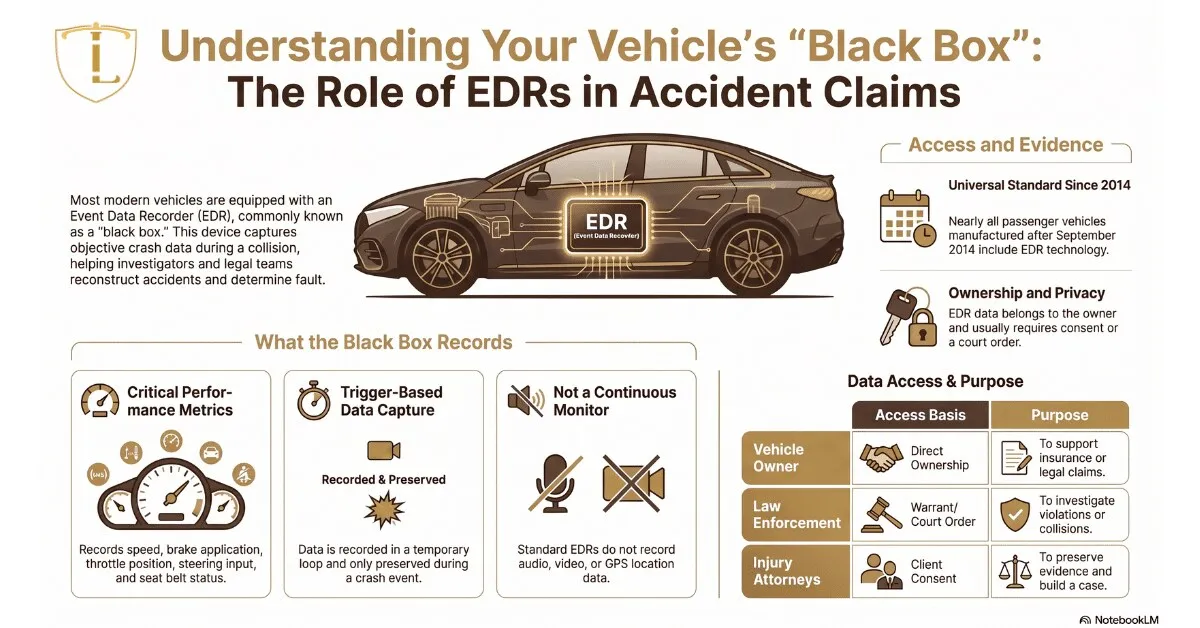
A vehicle black box is an Event Data Recorder (EDR) that captures crash-related information before, during, and after a collision. According to the National Highway Traffic Safety Administration (NHTSA), most passenger vehicles manufactured in recent years are equipped with EDR technology to assist crash investigations.
Despite its name, a vehicle black box is not a large black device like those used in airplanes. Instead, it is a small electronic recording system, usually integrated into the airbag control module or another vehicle computer. Its primary purpose is to capture objective crash data rather than continuously monitor every aspect of a driver’s behavior.
A vehicle black box records important information during a collision. Depending on the vehicle model, the stored data may include vehicle speed, brake application, throttle position, seat belt status, engine RPM, steering input, and airbag deployment. Federal regulations require certain crash-related data elements to be recorded when an EDR is installed.
The recorded information can provide valuable evidence after a car accident. Accident reconstruction experts, insurance companies, and attorneys may use this objective data to better understand how a collision occurred. In many cases, black box records help establish fault and support personal injury claims.
Motor vehicle crashes remain a significant public safety concern. According to the National Highway Traffic Safety Administration (NHTSA) Traffic Safety Facts, more than 40,000 people die each year in traffic crashes across the United States, while millions more suffer injuries. Reliable crash data helps investigators understand these collisions and improve roadway safety.
How Do Black Boxes Work?
A vehicle’s Event Data Recorder continuously monitors information from multiple vehicle systems while you drive. In our experience, the device does not continuously save every trip. Instead, it records data in a temporary loop until a qualifying crash event occurs.
When a collision or sudden deceleration triggers the system, the Event Data Recorder preserves important crash data. According to the National Highway Traffic Safety Administration, many EDRs capture information from several seconds before, during, and immediately after the crash. This data helps investigators understand exactly what happened before the impact.
Depending on the vehicle and manufacturer, the recorded information may include vehicle speed, engine RPM, throttle position, brake application, steering input, seat belt status, airbag deployment, and vehicle roll angle. Federal EDR standards require manufacturers to record specific crash-related data elements when an Event Data Recorder is installed.
The recorded information is stored in electronic memory designed to preserve crash data after a collision. Because the data is retained electronically, accident reconstruction experts can retrieve and analyze it using specialized equipment and manufacturer-specific software.
Access to black box data is generally limited. Vehicle owners usually control access to the information under the federal Driver Privacy Act, although law enforcement, insurance companies, or attorneys may obtain the data with the owner’s consent, a court order, or another legal exception.
As Simon Etehad explains, “Black box data provides an objective account of what occurred before a crash. When combined with other evidence, it can be invaluable during an accident investigation and personal injury claim.”
Who Can Access Black Box Data?
According to the National Highway Traffic Safety Administration (NHTSA), Event Data Recorder (EDR) data generally belongs to the vehicle owner or lessee. Access is restricted by the federal Driver Privacy Act and typically requires the owner’s consent or another legal basis. As Simon Etehad explains, “Black box data can provide objective evidence that supports or challenges witness accounts. Preserving that evidence quickly is often critical to a successful accident investigation.”
Let’s take a look at people who can access black box data:
| Party | Can They Access Black Box Data? | How Access Is Typically Obtained | Why They Need the Data |
|---|---|---|---|
| Vehicle owner or lessee | Yes | They own or control the recorded data under federal law. | To understand the crash and support an insurance or legal claim. |
| Law enforcement | Yes, in certain circumstances | With legal authority, a warrant, court order, or another recognized exception. | To investigate collisions and determine possible violations. |
| Insurance companies | Sometimes | Usually with the owner’s consent or another lawful basis. | To evaluate liability, damages, and insurance claims. |
| Personal injury attorneys | Yes, when authorized | Through the client’s consent, discovery, or a court order. | To preserve evidence and build a stronger personal injury case. |
| Accident reconstruction experts | Yes, when retained | After receiving authorization from the owner or legal representatives. | To analyze crash data and reconstruct how the collision occurred. |
| Vehicle manufacturers | Limited circumstances | As permitted by law, owner consent, or legal proceedings. | To evaluate safety systems or respond to litigation. |
| Courts | Yes | Through subpoenas, discovery orders, or other legal procedures. | To review black box evidence during legal proceedings. |
Are There Any Limitations to Black Boxes?
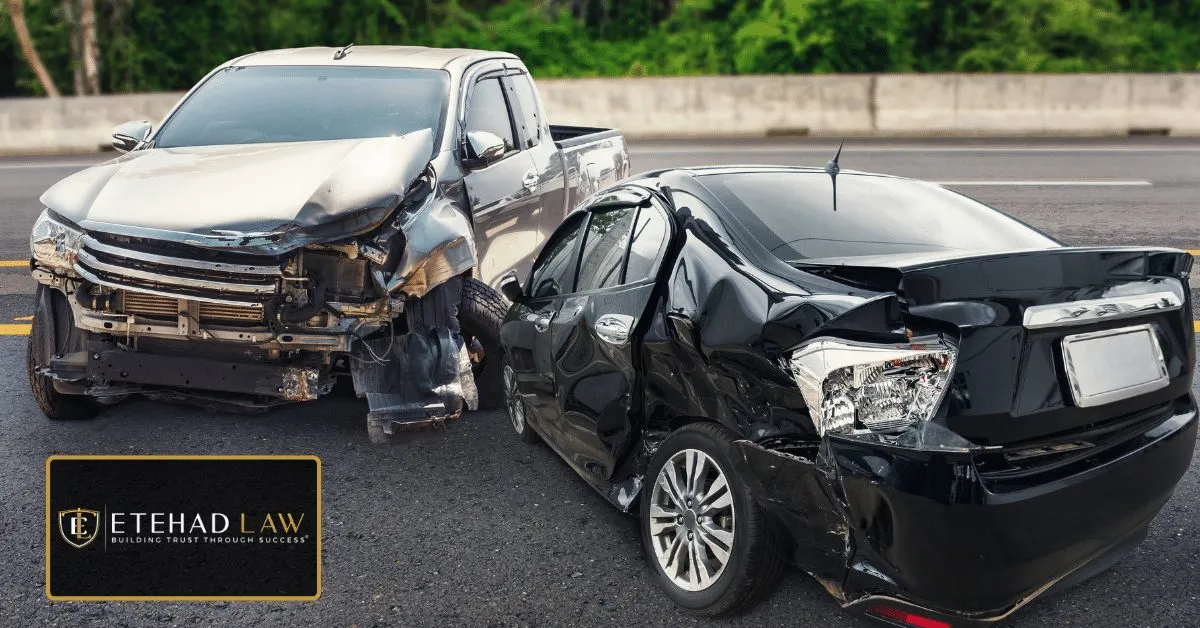
Although vehicle black boxes provide valuable crash information, they cannot tell the entire story. In our experience, investigators combine black box data with other evidence to determine how an accident occurred. According to the Insurance Institute for Highway Safety (IIHS), Event Data Recorders are designed to capture specific crash-related vehicle information rather than continuously monitor everything that happens inside a vehicle.
One important limitation is that black boxes generally do not capture audio or video recordings. They record vehicle performance data instead of conversations or visual footage from inside or outside the vehicle.
Black boxes also do not typically record the date or time of a collision. Investigators usually verify that information through police reports, emergency dispatch records, surveillance footage, or witness statements.
Another limitation is that most Event Data Recorders do not provide GPS location services. Although some modern vehicles include connected telematics or navigation systems, those features operate separately from the vehicle’s black box.
Because of these limitations, black box information should never be viewed in isolation. Investigators compare it with photographs, vehicle damage, medical records, witness statements, and expert analysis to reconstruct the crash accurately.
Modern accident investigations rely on multiple sources of evidence rather than a single device. Combining black box data with other objective evidence often provides the clearest picture of how a collision occurred and who may be at fault.
How to Tell If Your Vehicle Has a Black Box
Most modern vehicles are equipped with an Event Data Recorder (EDR), commonly called a vehicle black box. According to the National Highway Traffic Safety Administration (NHTSA), nearly all passenger vehicles manufactured on or after September 1, 2014, include an EDR that complies with federal regulations.
One of the easiest ways to determine whether your vehicle has a black box is to review the owner’s manual. Manufacturers are generally required to disclose the presence of an Event Data Recorder and explain the type of information it may record.
You can also contact your dealership or vehicle manufacturer. Provide your vehicle identification number (VIN), and they can often confirm whether your specific model includes EDR technology.
Another option is to have the vehicle inspected by a qualified technician or accident reconstruction specialist. These professionals can identify the system and determine whether black box data may be available after a collision.
Keep in mind that EDR technology varies by manufacturer and vehicle type. Passenger cars, pickup trucks, SUVs, and commercial vehicles may record different types of crash data depending on their design and onboard safety systems.
If you have been involved in a serious accident, we recommend speaking with a personal injury attorney promptly. Early action can help preserve valuable black box data before it is overwritten or becomes unavailable.
How to Determine Fault in a Motor Vehicle Accident
Determining fault requires a careful review of all available evidence. In our experience, no single piece of evidence tells the entire story. We recommend following this process after a collision:
Step 1: Obtain the Police Report
Begin by reviewing the official accident report. Police officers often document the crash scene, identify potential traffic violations, and record statements from the drivers and witnesses.
Step 2: Gather Physical Evidence
Collect photographs of the vehicles, road conditions, skid marks, traffic signs, and any visible damage. Physical evidence helps investigators understand how the collision occurred.
Step 3: Interview Witnesses
Independent witnesses can provide valuable information about the events leading to the crash. Their statements may confirm or contradict the accounts provided by the drivers.
Step 4: Review Medical Records
Medical documentation helps establish the injuries caused by the accident. The timing and nature of those injuries may also support your version of the collision.
Step 5: Analyze the Vehicle’s Black Box Data
If available, retrieve the Event Data Recorder information from the vehicles involved. Black box data may reveal vehicle speed, brake application, steering input, seat belt use, engine RPM, and airbag deployment before the crash.
Step 6: Consult Accident Reconstruction Experts
When liability is disputed, accident reconstruction specialists analyze the available evidence. They combine black box data, vehicle damage, witness statements, and physical evidence to recreate the collision.
Step 7: Allow Your Attorney to Build the Case
Your attorney reviews all available evidence to identify the at-fault party and establish negligence. They also negotiate with insurance companies and prepare your case for litigation if necessary.
As Simon Etehad explains, “Fault is rarely determined by one piece of evidence alone. The strongest cases combine objective data with thorough legal investigation.”
Need a Car Injury Lawyer?
Black box data can play an important role in proving fault after a motor vehicle accident, but it is only one piece of the evidence. In our experience, building a strong personal injury claim requires a thorough investigation, careful analysis of crash data, and a complete assessment of your damages. Your attorney will evaluate medical expenses, lost wages, property damage, future financial losses, and the circumstances that contributed to the collision before pursuing compensation.
At Etehad Law, we have over 30 years of experience representing car accident victims throughout California. Our legal team works with accident reconstruction experts, preserves critical evidence, analyzes vehicle black box data when available, and negotiates aggressively with insurance companies. If necessary, we are prepared to take your case to court to pursue the compensation you deserve.
If you or a loved one has been injured in a car accident, do not wait to seek legal advice. Contact Etehad Law today for a free consultation to discuss your case, understand your legal options, and learn how we can help protect your rights.
Frequently Asked Questions About Vehicle Black Boxes
Vehicle black boxes often raise questions about privacy, accident investigations, and personal injury claims. Below are answers to some of the most common questions drivers ask about Event Data Recorders.
How To Tell If a Car Has a Black Box?
Most vehicles manufactured in recent years include an Event Data Recorder. Check your owner’s manual, contact the manufacturer, or ask a qualified technician to confirm.
Is It Worth Getting a Black Box In Your Car?
Most modern vehicles already include a factory-installed Event Data Recorder. The crash data it captures can provide valuable evidence during accident investigations and insurance claims.
How Long Does a Car Black Box Record For?
Most black boxes store only a brief period of crash-related information before, during, and immediately after a collision. The exact recording duration varies depending on the vehicle manufacturer and model.
What Are The Negatives of a Black Box?
Black boxes record limited crash data and cannot capture every detail of an accident. Some drivers also have privacy concerns regarding who may access the stored information under certain legal circumstances.
Do Black Boxes in Cars Record Audio?
No, they don’t. Standard Event Data Recorders generally do not record conversations or audio inside the vehicle. They are designed to capture vehicle performance and crash-related data instead.
Legal Disclaimer: This article is for informational purposes only and does not constitute legal advice or create an attorney-client relationship with Etehad Law.
You may also like
 Accident and Injury
 California Personal Injury Statute of Limitations
Learn the California statute of limitations for personal injury claims, key filing deadlines, exceptions, and why you should act quickly.
Read More » Expert Opinion
 Will Posting on Social Media Tank Your Case?
How social media posts can affect a legal case, the dos and don'ts while a claim is open, and what insurers look…
Read More » Expert Opinion
 When to Go to Trial
When does a California injury case go to trial? The litigation timeline, the two-year filing deadline, why most cases settle, and what…
Read More »
