


How much is a car accident settlement? The answer depends on the injuries, financial losses, available insurance, and circumstances surrounding the crash. Some claims involving minor injuries may settle for a few thousand dollars. Others involving serious injuries and long-term medical care may result in substantially higher compensation.
At Etehad Law, we represent injury victims on a contingency fee basis, meaning you pay no attorney fees unless we recover compensation for you. Our firm has recovered more than $100 million in settlements and has earned a 5-star rating based on more than 240 Google reviews. Our case results include an $11 million-plus jury verdict and numerous policy-limit recoveries in motor vehicle and premises liability cases. If you were injured in an accident, contact us today for a free consultation to pursue the maximum compensation.
This guide explains what can affect a car accident settlement amount. We will examine medical bills, lost wages, pain and suffering, insurance policy limits, and shared fault. You will also learn why settlement values can vary and how an experienced car accident lawyer may help.
The Basics of Car Accident Settlements

A car accident settlement is usually an agreement between the injured person and the responsible party's insurer. Instead of taking the case through a full trial, both sides agree on payment.
In exchange, the injured person generally agrees to release certain future claims. That makes the decision to settle an important one.
The Centers for Disease Control and Prevention reported millions of crash-related emergency visits in recent years. Serious crashes can therefore create consequences far beyond vehicle repairs.
A settlement can cover losses that already exist. It can also account for losses expected to continue after the claim is resolved.
Simon Etehad says, “The number should reflect the accident's real impact, not simply the first bills received.”
Most cases begin with an insurance claim. An adjuster reviews the available information and decides what the insurer believes the claim is worth.
That number is not automatically the final word. Negotiations can continue when the evidence supports a different valuation.
Some cases settle quickly. Others take longer because injuries, fault, or insurance coverage remain disputed.
If negotiations fail, mediation or a lawsuit may become necessary. Still, most car accident cases do not require a full trial.
Key Components of A Car Accident Settlement
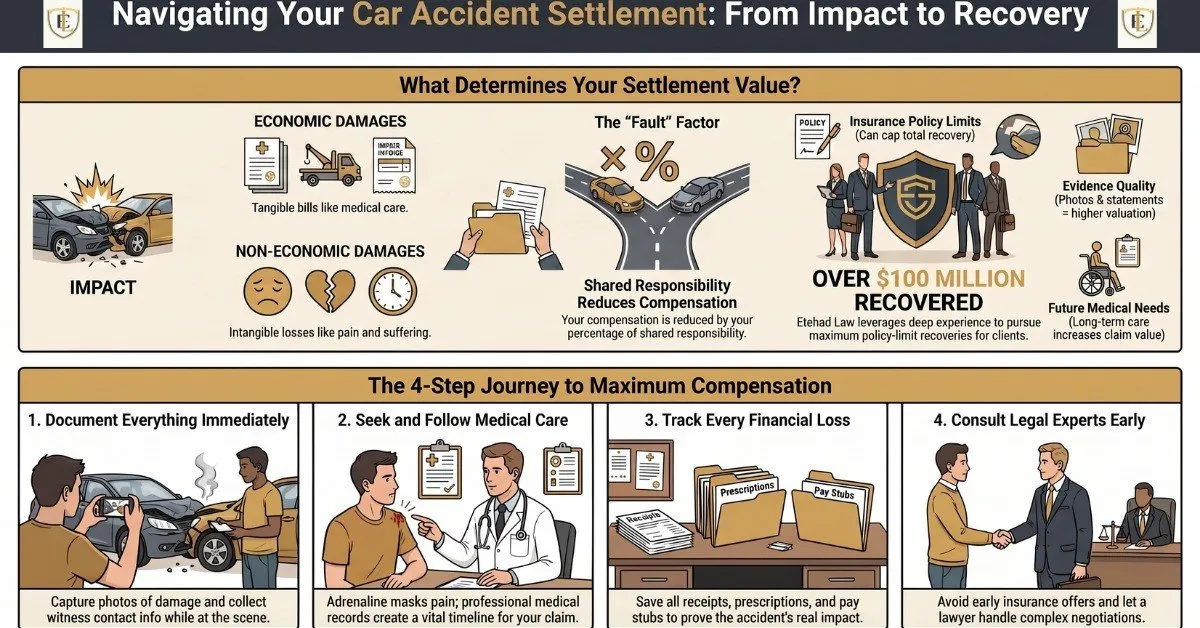
The final settlement amount usually comes from several different categories of loss. Some have clear dollar amounts. Others require a closer look at how the injury changed someone's life.
Medical expenses are often a major starting point. Who pays those bills while a claim is open is its own question. These can include emergency care, ambulance charges, surgery, hospital treatment, medication, and diagnostic testing.
Treatment does not always end after the emergency room. Physical therapy, specialist visits, rehabilitation, and follow-up appointments can add to medical costs.
Future medical bills may also matter. That is especially true when doctors expect continued treatment. Take a person who breaks a leg in a collision. The initial bill may only tell part of the story.
Surgery, mobility aids, follow-up care, and physical therapy could continue for months. Those costs may all affect the settlement value.
Property damage is another part of many accident claims. It can include vehicle repairs or the vehicle's value after a total loss. Personal items damaged in the crash may also be relevant. A phone, laptop, or other property should not be overlooked. Photographs and repair estimates can help establish those losses. Receipts may also become useful.
Lost wages can enter the picture when injuries keep someone away from work. Missing several days may create one type of loss. A long recovery can create another. Some injuries affect a person's ability to return to the same job. Consider a warehouse worker with a serious spinal injury. Physical restrictions could affect future earning capacity. That loss may continue long after the visible injuries improve. Income records can help show what was actually lost.
Then there is pain and suffering. These are non-economic damages because they do not arrive with a receipt. Physical pain matters. So can emotional distress, chronic discomfort, sleep problems, and lost enjoyment of daily activities. There is no universal price for pain. A brief recovery differs greatly from years of chronic pain.
Finally, fault can change everything. California uses pure comparative negligence in personal injury cases. That means a person's compensation can be reduced by their share of responsibility. A $100,000 award becomes $80,000 if the injured person was 20% at fault.
Police reports, photographs, witness accounts, and vehicle damage may help answer fault questions. The stronger the evidence, the easier those issues become to evaluate.
Additional Factors Influencing Settlement Amounts

Your injuries are important, but they are not the only thing affecting a settlement. A claim can look strong on paper and still face practical limits.
| Factor | How It Can Affect the Settlement |
|---|---|
| Insurance Policy Limits | Coverage limits can restrict what an insurer pays. A larger loss may require finding another available source of compensation. |
| Evidence and Documentation | Medical records, photographs, police reports, and witness statements can support your version of events and documented losses. |
| California Law | California rules on fault and damages can affect recovery. Shared responsibility may reduce the compensation available. |
| Future Medical Needs | Continued treatment can increase the value of a claim. Medical opinions may help establish those expected costs. |
| Injury Severity | Serious injuries often create greater medical and financial losses. Permanent limitations can also affect future earnings and daily life. |
| Available Coverage | The at-fault driver's insurance policy may not cover every loss. Other policies could matter in some circumstances. |
Factor
How It Can Affect the Settlement
Insurance Policy Limits
Coverage limits can restrict what an insurer pays. A larger loss may require finding another available source of compensation.
Evidence and Documentation
Medical records, photographs, police reports, and witness statements can support your version of events and documented losses.
California Law
California rules on fault and damages can affect recovery. Shared responsibility may reduce the compensation available.
Future Medical Needs
Continued treatment can increase the value of a claim. Medical opinions may help establish those expected costs.
Injury Severity
Serious injuries often create greater medical and financial losses. Permanent limitations can also affect future earnings and daily life.
Available Coverage
The at-fault driver's insurance policy may not cover every loss. Other policies could matter in some circumstances.
Steps to Maximize Your Settlement
You cannot guarantee a specific settlement amount. What you do after the accident, however, can protect important evidence and support your claim.
Step 1: Start Documenting the Accident
Take photographs if it is safe to do so. Capture the vehicles, damage, road conditions, traffic signals, and anything else that may explain the crash.
Get witness names and contact details. Independent witnesses can become important when drivers disagree about fault.
Make notes while your memory is fresh. Small details can disappear surprisingly quickly. If police respond, ask how to obtain the report. Review it when available for obvious factual errors.
Step 2: Get Medical Care When You Need It
Do not assume you are uninjured because you walked away from the crash. Adrenaline can mask symptoms immediately after an accident.
Seek medical attention when you have pain or concerning symptoms. Follow your doctor's medically appropriate recommendations.
Tell your provider about changes in your condition. New symptoms should not simply be ignored. Medical records can help create a timeline. They may show when symptoms began and how your condition developed.
Step 3: Keep Your Records Together
Save medical bills, prescriptions, treatment records, and receipts. Keep them somewhere you can easily find later. Do the same with documents showing missed work. Pay stubs and employer records can help establish lost income.
Future treatment recommendations should also be preserved. Do not rely on memory months later. A well-documented claim is easier to evaluate. Missing records can create unnecessary disputes.
Step 4: Handle Insurance Conversations Carefully
You may need to report the accident promptly. Provide accurate information about what you know. There is no reason to guess about unanswered questions. Avoid speculating about fault or injuries.
An adjuster may contact you soon after the accident. Keep notes about important conversations. A recorded statement can have consequences you did not anticipate. Understand what you are being asked before responding.
Step 5: Look Beyond Today's Bills
The first medical expenses may not show the full cost of an injury. Recovery can take longer than expected. Think about future treatment and missed work. Consider whether your injury affects daily activities or future employment.
A settlement should be considered using the available information at that time. Rushing because bills are stressful can create other problems.
Step 6: Read Settlement Offers Closely
The first offer is not always the final offer. It may arrive before your treatment is complete. Look at what the proposed payment actually covers. Compare it with your documented medical expenses and other losses.
A settlement release can limit future claims. Understand its effect before signing.
Step 7: Get Legal Advice When the Case Becomes Complicated
Some claims are relatively straightforward. Others involve serious injuries, disputed fault, or multiple insurance policies.
A car accident lawyer can review the evidence and explain the issues affecting your case. They can also handle negotiations with insurance companies.
If a lawsuit becomes necessary, your attorney can explain the next stage. Legal advice is especially useful before making an irreversible decision.
The Role of Legal Representation

A car accident claim can become complicated before settlement discussions even begin. Someone may dispute fault, your injuries, or the available insurance coverage.
The financial consequences can also be substantial. The U.S. Department of Transportation has estimated billions in annual economic costs from motor vehicle crashes. Those costs include more than damaged cars. Medical care, lost productivity, and other consequences can follow a serious collision.
An experienced car accident attorney can investigate what happened. They may review police reports, photographs, witness statements, and other available evidence.
Simon Etehad says, “A case should be understood before it is valued.” That includes looking beyond immediate medical bills. Some injuries require treatment that continues long after the accident.
A lawyer can also deal with insurance adjusters. That can be helpful when the insurer questions fault or the seriousness of your injuries.
Legal representation does not guarantee a particular result. No attorney can honestly promise a specific settlement amount.
What an attorney can do is help you understand the process. They can organize the evidence and explain your options as the claim develops.
Need a Car Accident Lawyer?
A car accident can leave you with more questions than answers. Medical bills may be growing, work may be difficult, and the insurance company may already be asking questions.
The value of a car accident settlement depends on the details of your case. Your injuries, medical expenses, lost wages, available insurance coverage, and evidence can all affect the outcome.
At Etehad Law, we understand that no two accidents are alike. We take the time to examine what happened and how the crash affected your life.
Our team can gather evidence, review medical records, and assess your documented losses. We can also handle insurance communications and help you understand your options.
With over 30 years of experience, Etehad Law represents people injured in California car accidents. Our goal is to pursue fair compensation while you focus on your recovery.
You do not have to figure out the claims process alone. Contact Etehad Law today for a free consultation and discuss your car accident case with our team.
Frequently Asked Questions
Settlement questions often come with frustrating answers: it depends. That is because two accidents that look similar can produce very different losses.
What Is the Most Money You Can Get From a Car Accident?
There is no universal maximum for every car accident settlement. Serious injuries can produce very large claims, but available insurance coverage may limit actual recovery.
Other responsible parties or insurance policies could affect the amount available. The facts must be examined before anyone can estimate a realistic figure.
How Much Money Should I Ask for in a Settlement?
Do not choose a number simply because it sounds high. Start with your documented losses, including medical expenses, lost income, and other legally recoverable damages.
Future treatment may also need consideration. The right figure depends on the evidence, not a standard settlement formula.
How Much Can You Get for Pain and Suffering?
There is no fixed amount for pain and suffering. Someone with temporary discomfort will usually face different losses than someone living with permanent pain.
The injury's effect on daily life matters. Recovery time, treatment, limitations, and emotional consequences can also affect the claim.
What Should You Do After a Car Accident?
First, check yourself and others for injuries. Call 911 when emergency help or police assistance is needed.
Document the scene when it is safe. Exchange information, report the accident, and seek medical care for concerning symptoms.
How Are Pain and Suffering Calculated?
There is no single calculator that produces an exact answer. Insurers and attorneys may consider methods such as multipliers or daily values.
Those methods are only tools, not guarantees. The actual circumstances and evidence surrounding the injury remain important.
Legal Disclaimer: This article provides general information only and does not constitute legal advice. Every case involves different facts, and reading this article creates no attorney-client relationship with Etehad Law.
You may also like
 Accident and Injury
 California Personal Injury Statute of Limitations
Learn the California statute of limitations for personal injury claims, key filing deadlines, exceptions, and why you should act quickly.
Read More » Expert Opinion
 What is a Vehicle Black Box and How Can It Help Your Case?
Uncover the role of your car black box in legal cases. Insights from Personal Injury Attorney in Beverly Hills await. Check to…
Read More » Expert Opinion
 Will Posting on Social Media Tank Your Case?
How social media posts can affect a legal case, the dos and don'ts while a claim is open, and what insurers look…
Read More »
