

Knowing what to do after a truck accident in California can help protect your health, preserve critical evidence, and support any insurance or personal injury claim that follows. Get medical help, call the police, document the accident scene, exchange information, and report the collision to your insurer as soon as possible. California's DMV also requires an SR-1 report within 10 days when someone is injured or killed, or property damage exceeds $1,000.
At Etehad Law, we represent injury victims on a contingency fee basis, meaning you pay no attorney fees unless we recover compensation for you. Our firm has recovered more than $100 million in settlements and has earned a 5-star rating based on more than 250 Google reviews. Our case results include an $11 million-plus jury verdict and numerous policy-limit recoveries in motor vehicle and premises liability cases. If you were injured in an accident, contact us today for a free consultation to pursue the maximum compensation.
This guide explains the immediate steps to take, the evidence to preserve, and why truck accident cases can involve multiple responsible parties. We will also cover dealing with insurance companies, medical treatment, compensation, and when speaking with an experienced truck accident lawyer may help.
Steps To Take After a Truck Accident in California

A collision with a commercial truck can cause far more damage than a typical car accident because of the size and weight involved. According to the Federal Motor Carrier Safety Administration, large trucks were involved in more than 5,000 fatal crashes in the United States in 2022, while thousands of other crashes resulted in serious injuries. The hours and days after a truck accident can therefore affect both your medical recovery and the evidence available for a potential personal injury claim.
Simon Etehad explains, "The first priority after a truck accident is always safety and medical care. Once those immediate needs are addressed, preserving accurate information can become critical because truck accident cases often involve evidence that may not exist in an ordinary car accident."
Below are the best practices to follow:
Step 1: Check for Injuries and Call 911
Check yourself and others for injuries, and call 911 if anyone needs emergency medical assistance. Do not move someone with a serious injury unless there is an immediate danger, and request police and emergency responders so the accident can be documented.
Step 2: Seek Medical Attention, Even if You Feel Fine
Some injuries may not be immediately apparent after a serious collision. Adrenaline can mask pain, while symptoms from head injuries, soft tissue injuries, or internal injuries may develop later, so seek medical attention and follow up with your doctor if symptoms appear or continue.
Prompt medical care also creates a record of your injuries and treatment. Keep copies of medical records and follow your treatment plan because this documentation may become important if you later pursue compensation.
Step 3: Get to a Safe Location
If your vehicle can be moved safely, get out of the flow of traffic and away from the damaged vehicles. Turn on your hazard lights, avoid standing near the truck or other traffic, and follow instructions from police officers and emergency responders
Step 4: Report the Truck Accident
A police report can provide an important record of the crash, including information collected by responding officers about the drivers, vehicles, witnesses, and conditions at the scene. Ask how you can obtain a copy of the report once it becomes available.
California also has separate reporting requirements that may apply after a collision. According to the California DMV, an SR-1 report must generally be submitted within 10 days if a collision causes injury or death, or results in property damage exceeding $1,000, regardless of who was at fault.
Step 5: Gather Evidence at the Accident Scene
If it is safe, take photographs and videos before the scene changes. Capture the vehicle damage, road conditions, skid marks, traffic signs and signals, the truck and its identifying information, and any visible injuries.
Write down what you remember while the details are fresh, including the location, time, weather, and sequence of events. Get the names and contact information of independent witnesses because their statements may later help establish what happened.
Step 6: Exchange Information With the Truck Driver
Collect the truck driver's name and contact information, driver's license details, and insurance information. You should also note the trucking company's name, the truck and trailer numbers, license plate number, and USDOT number if it is visible.
Avoid relying only on a verbal explanation of who owns or operates the truck. Commercial vehicles can involve multiple companies, and the information collected at the scene may help identify the parties involved later.
Step 7: Be Careful About What You Say After the Accident
Do not admit fault or apologize in a way that could be interpreted as accepting responsibility. When speaking with police, provide an accurate account of the facts you know without guessing or speculating about details you cannot recall.
The cause of a truck crash may not be clear immediately. Driver behavior, vehicle maintenance, hours-of-service compliance, road conditions, and other factors may need to be investigated before responsibility can be determined.
Step 8: Preserve Evidence Specific to the Truck Accident
Truck accident cases may involve evidence that is not present after an ordinary passenger vehicle collision. Federal regulations require motor carriers to maintain records relating to areas such as driver qualifications, hours of service, and vehicle inspection and maintenance.
Depending on the truck and circumstances, important evidence may include electronic logging device data, event data recorder information, hours-of-service records, driver qualification files, inspection and maintenance records, cargo documents, and dashcam or surveillance footage. Some of this information may not remain available indefinitely, making early preservation important.
Step 9: Notify Your Insurance Company
Report the accident to your own insurance company within the timeframe required by your policy. Provide accurate basic information and the documentation you have collected, but avoid guessing about fault or making definitive statements about injuries before you understand the full facts and medical consequences.
Review your policy so you understand your reporting and cooperation obligations. Your available coverage may also affect how vehicle damage or medical expenses are handled while a claim is pending.
Step 10: Be Careful When Dealing With Insurance Adjusters
The trucking company's insurance company may contact you soon after the accident. An adjuster may request a recorded statement, medical authorization, or other documents, so understand what is being requested before agreeing or signing anything.
An early settlement offer may arrive before you know the full extent of your injuries, future medical needs, or lost income. Before signing a settlement release, make sure you understand what rights you may be giving up and consider seeking legal advice if the accident caused serious injuries or raises questions about liability.
Common Injuries After a Truck Accident
Truck accidents can cause serious injuries because of the force involved in a collision with a large commercial vehicle. The type and severity of an injury can depend on the speed of the vehicles, the point of impact, and how the accident occurred.
For example, traumatic brain injury can result from a blow or jolt to the head or body during a crash. According to the Centers for Disease Control and Prevention, motor vehicle crashes are a leading cause of traumatic brain injury, and the effects can range from temporary symptoms to long-term health problems.
The force of a truck crash can also cause spinal cord injuries, which may affect movement, sensation, and other bodily functions. Serious spinal injuries can require surgery, rehabilitation, and long-term medical care, depending on the extent of the damage.
Neck and back injuries are also common after motor vehicle collisions. Damage to muscles, ligaments, spinal discs, and surrounding tissues can lead to pain, stiffness, limited movement, or neurological symptoms that require further evaluation.
Victims may suffer broken bones, particularly in high-impact crashes. Fractures involving the arms, legs, ribs, pelvis, or other parts of the body may require surgery, physical therapy, and significant time away from work.
A serious collision can also cause internal injuries, including damage to organs or internal bleeding. Because these injuries are not always immediately visible, seeking prompt medical attention after a truck accident can be important, particularly when you experience worsening pain, dizziness, weakness, or other concerning symptoms.
Crush injuries can occur when part of the body is trapped or exposed to significant pressure during the collision. These injuries may damage muscles, nerves, blood vessels, and bones, sometimes resulting in long-term complications.
Truck crashes may also result in burns caused by fires, hot surfaces, or hazardous materials. The severity can vary significantly, and serious burns may require specialized treatment and ongoing care.
Finally, a truck accident can cause psychological trauma as well as physical injuries. Some victims experience anxiety, sleep problems, depression, or other emotional effects after a serious crash, while the CDC also recognizes that traumatic brain injuries can affect mood and behavior.
Who May Be Liable for a Truck Accident in California?
Determining liability after a truck accident can be more complicated than after a typical car crash. Commercial trucking operations may involve several companies and individuals, and more than one party may have contributed to the accident. The California DMV notes that commercial drivers and carriers are subject to specific state and federal safety requirements, including rules involving driver qualifications, hours of service, and vehicle operations.
Simon Etehad explains, "A truck accident investigation should not stop with the person behind the wheel. We need to look at what happened before the crash, who controlled the vehicle and operation, and whether another party's actions or failures contributed to the collision."
The truck driver may be liable when negligent driving contributed to the crash, such as speeding, distracted driving, impaired driving, or other unsafe conduct. The driver's actions are only one part of the investigation, however, because commercial drivers operate within a broader network of employers, carriers, and service providers.
The trucking company may also be a responsible party, depending on its relationship with the driver and its own conduct. Issues involving hiring, training, supervision, scheduling, or compliance with applicable safety requirements may become relevant when investigating how the accident occurred.
The truck owner may be investigated when a separate person or company owned or leased the commercial vehicle. Ownership, maintenance responsibilities, and agreements between the parties can help determine whether the owner had a role in allowing an unsafe vehicle to operate.
A maintenance or repair company could potentially share liability if negligent inspection, maintenance, or repair contributed to a mechanical failure. Records involving brakes, tires, steering systems, repairs, and inspections may therefore become important evidence after a truck crash.
A cargo loading company may also be investigated when improperly loaded or secured cargo contributed to the accident. Federal and state trucking rules address cargo securement, and an overloaded, unbalanced, or shifting load can affect how a commercial truck handles on the road.
A vehicle or parts manufacturer could be a potential defendant if a defective truck, brake system, tire, steering component, or other part contributed to the collision. In those cases, determining liability may require examining the damaged vehicle and the component involved, along with maintenance records and other evidence.
Finally, another negligent driver may share responsibility when their actions helped cause the truck accident. For example, a third driver's unsafe lane change, failure to yield, or other conduct could trigger a chain of events involving the truck and other vehicles.
The facts of each accident determine who may be legally responsible, and identifying every potentially liable party can require a detailed investigation. Because commercial trucking operations involve multiple parties, early efforts to preserve records and evidence may be particularly important.
Why Truck Accident Claims Can Be More Complicated
First, there may be multiple potentially liable parties. Depending on how the accident occurred, responsibility could involve the truck driver, trucking company, truck owner, maintenance provider, cargo loading company, vehicle manufacturer, or another negligent driver. Each party may have separate insurance coverage and legal defenses, which can make determining liability more complex.
Truck accidents also often involve commercial insurance policies with different coverage limits and terms than a typical personal auto policy. This can lead to more extensive investigations by insurance companies, particularly when the crash caused serious injuries, significant property damage, or substantial financial losses.
Another factor is the number of federal and California trucking regulations that may apply. Commercial drivers and motor carriers are subject to safety rules covering areas such as driver qualifications, hours of service, vehicle inspections, maintenance, and cargo securement. Whether those requirements were followed may become an important part of determining how the truck accident happened.
Important evidence may also be controlled by the trucking company or other businesses. Electronic logging device records, driver qualification files, inspection reports, maintenance records, dispatch information, onboard data, and company communications may all provide information about the events leading up to the crash. Some records may not be retained indefinitely, which can make early efforts to identify and preserve relevant evidence important.
Finally, truck accidents can result in serious and long-term injuries that make the value of a claim more difficult to assess. Medical expenses may continue long after the accident, while an injured person may also experience lost wages, reduced earning capacity, ongoing treatment, pain, and other losses.
What Compensation May Be Available After a Truck Accident?
The compensation available after a truck accident depends on the facts of the case, the injuries involved, available evidence, and the damages recognized under California law. California Civil Code Section 1431.2 allows recovery of non-economic damages in applicable personal injury cases, including compensation for pain, suffering, inconvenience, physical impairment, disfigurement, and other non-pecuniary harm.
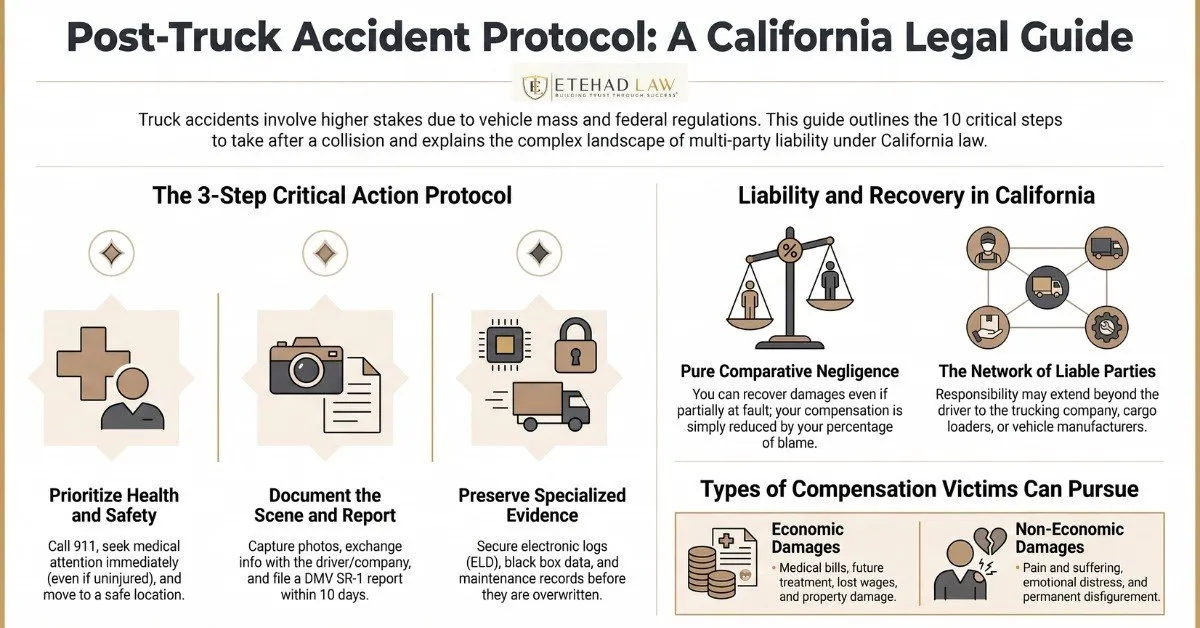
Type of damagesCompensation that may be availableEconomic Damages Medical expenses: Costs related to emergency care, hospital treatment, doctor visits, surgery, prescription medications, and other accident-related care.Future medical treatment: Reasonably anticipated costs of ongoing treatment, rehabilitation, or other future medical needs.Lost wages: Income lost because your injuries prevented you from working.Loss of earning capacity: Compensation for a reduced ability to earn income in the future when an injury affects your ability to perform your previous work.Rehabilitation costs: Expenses related to physical therapy, occupational therapy, and other rehabilitative treatment.Property damage: The cost to repair or replace your vehicle and other damaged personal property.Non-Economic Damages Pain and suffering: Physical pain and the effects of accident-related injuries.Emotional distress: Mental and emotional harm resulting from the accident or injuries.Permanent disability: The long-term impact of an injury that causes lasting physical or functional limitations.Scarring and disfigurement: Compensation for permanent changes to a person's appearance.Loss of enjoyment of life: The reduced ability to participate in activities or experiences you previously enjoyed because of your injuries.
What If You Were Partially at Fault?
Being partially responsible for a truck accident does not necessarily prevent you from recovering compensation in California. California follows a pure comparative negligence rule, meaning an injured person may generally recover damages even when they share some responsibility for the accident, although their recovery is reduced by their percentage of fault. The California Supreme Court established this rule in Li v. Yellow Cab Co., replacing the older rule that could completely bar recovery for a plaintiff who was also negligent.
For example, if your total damages were $100,000 and you were found 30% responsible, your recovery could generally be reduced by $30,000, leaving $70,000. The percentage assigned to each party should be supported by evidence, which may include the police report, witness statements, vehicle damage, photographs, video footage, electronic truck data, and other information about how the crash occurred.
An insurance company's decision to blame you for part of the accident is not necessarily the final determination of fault. The available evidence and the circumstances surrounding the collision can affect how liability is evaluated during settlement negotiations or court proceedings.
Mistakes to Avoid After a Truck Accident
One common mistake is delaying medical treatment after a serious collision. Some injuries may not produce immediate symptoms, and waiting too long can make it harder to identify the full extent of your condition and document when symptoms began.
You should also avoid failing to document the accident when you are physically able to do so. Photos of the vehicles, damage, road conditions, skid marks, injuries, and the truck's identifying information may become important if the facts of the crash are later disputed.
Be careful about discussing the accident on social media while your claim is pending. Posts, photographs, or comments may be taken out of context and could be reviewed during an insurance claim or lawsuit.
Another mistake is giving detailed statements without understanding how they may be used. Stick to accurate facts, avoid guessing, and carefully review requests for recorded statements, medical authorizations, or other documents before agreeing to them.
Accepting a quick settlement can also create problems if you do not yet know the full extent of your injuries or future medical needs. A settlement release may limit your ability to seek additional compensation for the same accident, so understand the terms before signing.
Finally, do not overlook evidence specific to commercial trucks. Electronic logging data, inspection and maintenance records, dashcam footage, dispatch records, and other company-controlled information may be important, and some evidence may not remain available indefinitely.
How Long Do You Have to File a Truck Accident Claim in California?
In many California personal injury cases, the general statute of limitations is two years from the date of the injury. Under California Code of Civil Procedure Section 335.1, this deadline generally applies to an action for injury or death caused by the wrongful act or neglect of another person.
Different deadlines may apply when a government entity is involved. Under the California Government Claims Act, a claim for money or damages relating to personal injury generally must be presented to the appropriate public entity within six months after the cause of action accrues, subject to specific rules and exceptions.
The applicable deadline can vary based on the facts of the accident, the parties involved, and the type of claim being pursued. Getting legal advice early can help you understand which deadlines apply and allow time to preserve evidence before important records or information become unavailable.
How a California Truck Accident Lawyer Can Help

A California truck accident lawyer can investigate what happened while addressing issues that may not arise in a typical car accident claim. Simon Etehad explains, "Truck accident cases often require us to look beyond the collision itself. The investigation may involve the driver's conduct, company records, vehicle maintenance, and other evidence that helps explain why the crash happened and who may be responsible."
An attorney can begin by investigating the crash and gathering available evidence, including the police report, photographs, witness statements, video footage, and information from the accident scene. Because important trucking evidence may be controlled by the trucking company or other businesses, a lawyer can also take steps to identify and preserve records before they are lost or overwritten.
That evidence may include electronic logging device data, event data recorder information, driver qualification files, hours-of-service records, inspection reports, maintenance records, dispatch information, and cargo documents. Reviewing these records can help determine whether the truck driver, trucking company, vehicle owner, maintenance provider, cargo company, or another party may have contributed to the accident.
When the cause of the crash is disputed, an attorney may work with accident reconstruction experts and other qualified professionals to analyze the available evidence. This can help develop a clearer picture of factors such as vehicle movement, speed, braking, impact points, and driver behavior.
A lawyer can also document the full extent of your damages, including current medical expenses, lost wages, property damage, and, when supported by the evidence, future medical treatment or reduced earning capacity. Calculating these losses before resolving a claim can be important when serious injuries require ongoing care.
Finally, a California truck accident lawyer can handle communications and negotiations with insurance companies and review any settlement offers you receive. If a fair resolution cannot be reached and legal action is appropriate, an attorney can file a lawsuit and represent you throughout the court process.
Need a Truck Accident Attorney?
A truck accident can leave you dealing with serious injuries, medical bills, lost income, vehicle damage, and a complicated claims process. Taking the right steps after the crash and preserving evidence can be important, especially when multiple parties or commercial insurance companies are involved.
At Etehad Law, our team has over 30 years of experience helping accident victims navigate complex injury claims. Contact us today for a free consultation to discuss your truck accident, understand your legal options, and learn how we may be able to help you pursue compensation.
Frequently Asked Questions
A truck accident can raise urgent questions about medical care, reporting requirements, evidence, and your legal options. The answers below provide general information about California truck accident claims, but the facts of your case can affect what steps are appropriate.
What Should I Do Immediately After a Truck Accident in California?
Check for injuries, call 911, move to a safe location if possible, and seek medical attention. If you can do so safely, document the accident scene, collect relevant information, and report the crash to your insurance company.
Should I Call The Police After a Truck Accident?
Yes, calling the police is generally important after a truck accident, particularly when someone is injured or there is significant property damage. Responding officers can investigate the scene and create an accident report that may become important evidence.
What Information Should I Get From The Truck Driver?
Collect the truck driver's name and contact information, driver's license and insurance information, and details about the trucking company. You should also document the truck's license plate, USDOT number if visible, and any truck or trailer identification numbers.
What If The Trucking Company Contacts Me After The Accident?
You can provide necessary basic information, but avoid speculating about fault or the extent of your injuries before you know all the facts. Be cautious about requests for recorded statements, medical authorizations, or settlement releases, and consider seeking legal advice before signing anything.
Can I Sue The Trucking Company After a Truck Accident?
You may be able to bring a claim against a trucking company when the facts and applicable law establish that the company was legally responsible for your injuries. Potential liability can depend on issues such as the driver's employment relationship, company conduct, supervision, maintenance, or other circumstances surrounding the crash.
How Much Is a Truck Accident Claim Worth in California?
There is no standard value because compensation depends on factors such as the severity of your injuries, medical expenses, lost income, future losses, available insurance coverage, and evidence of liability. A serious injury does not automatically result in a particular settlement or court award.
How Long Do I Have To File a Truck Accident Lawsuit in California?
California generally gives injured people two years from the date of the injury to file a personal injury lawsuit, although exceptions and different deadlines can apply. Claims involving government entities may have much shorter notice requirements, so getting legal advice early can help you understand the deadline that applies to your case.
Legal Disclaimer: This article provides general information and does not constitute legal advice. Reading it does not create an attorney-client relationship with Etehad Law, and you should consult a qualified attorney about the specific facts of your case.
You may also like
 Personal Injury Law
 Dealing with Insurance Adjuster After An Accident
Learn how to deal with insurance adjusters after an accident, what to say, what to avoid, and how to protect your California…
Read More » Personal Injury Law
 Are E-Bikes Legal in California?
Are e-bikes legal in California? Discover the laws governing e-bikes in California, including safety regulations, classifications, and key compliance tips.
Read More » Personal Injury Law
 Can You Sue an Unlicensed Contractor in California?
Before you make any decisions, here are five crucial things you need to know about unlicensed contractors in California.
Read More »
