


Understanding the importance of consistent medical treatment for your case can protect both your health and the evidence supporting your personal injury claim. Following your doctor's recommendations, attending appropriate follow-up appointments, and keeping clear medical records can create a documented timeline of your injuries and recovery.
At Etehad Law, we represent injury victims on a contingency fee basis, meaning you pay no attorney fees unless we recover compensation for you. Our firm has recovered more than $100 million in settlements and has earned a 5-star rating based on more than 250 Google reviews. Our case results include an $11 million-plus jury verdict and numerous policy-limit recoveries in motor vehicle and premises liability cases. If you were injured in an accident, contact us today for a free consultation to pursue the maximum compensation.
Why Medical Treatment Matters After an Accident

Medical treatment matters after an accident for reasons that go beyond a potential personal injury claim. Some injuries are not immediately obvious, particularly when adrenaline masks pain in the hours after a collision. A medical evaluation can help identify symptoms and injuries that may otherwise go untreated, including soft tissue damage, concussions, or internal injuries that require further attention.
Seeking medical care also creates a record of when accident-related symptoms were first reported. Your medical records may document your pain, physical limitations, examination findings, diagnostic tests, and the treatment recommendations made by your healthcare providers. This can help establish a clearer timeline of your condition following the accident.
Consistent care gives your doctor an opportunity to monitor your recovery and adjust the treatment plan when necessary. If symptoms worsen, fail to improve, or new concerns develop, regular follow-up appointments can help your healthcare providers identify those changes and recommend appropriate care.
Prompt and appropriate medical attention may also prevent some injuries from worsening. Following your doctor's advice, including recommended treatment and follow-up care, can support your physical recovery while helping establish the medical care you needed because of your accident.
What Does Consistent Medical Treatment Mean?
Consistent medical treatment means following a medically appropriate treatment plan and maintaining communication with your healthcare providers throughout your recovery. It does not mean attending unnecessary appointments or continuing treatment you do not need simply to strengthen a personal injury claim.
Simon Etehad explains, "Consistency is about taking your recovery seriously and following appropriate medical advice. If your treatment needs to change or you cannot attend an appointment, clear communication and accurate documentation can help explain what happened."
Depending on your injuries, consistent care may involve attending scheduled appointments when possible, completing prescribed physical therapy or rehabilitation, and taking medications as directed. It also means reporting new or worsening symptoms so your doctor can evaluate whether your treatment plan needs to be adjusted.
Understandably, life can interfere with medical appointments, and missing one appointment does not automatically undermine your case or mean you failed to take your injuries seriously. When you need to cancel or reschedule, communicate with your healthcare provider and continue following medically appropriate recommendations for your condition.
How Steady Medical Care Strengthens Your Personal Injury Claim
After an accident, your treatment history can become an important part of the evidence in a personal injury claim. Regular medical care creates a timeline showing when you reported symptoms, how healthcare providers evaluated them, what treatment was recommended, and how your condition changed over time. According to the U.S. Department of Health and Human Services, health records support continuity of care by giving providers access to information needed to understand a patient's medical history and treatment.
Consistent treatment can therefore provide detailed medical documentation of your injuries and recovery. Appointment notes, diagnostic results, physical therapy records, prescriptions, and specialist reports may help connect your symptoms and medical care to the accident, while also showing the ongoing impact of your injuries on daily life.
It can also provide clearer evidence of the severity and progression of an injury. One emergency room visit may document how you felt immediately after an accident, but follow-up care can show whether symptoms improved, worsened, or required additional treatment. This does not mean that frequent treatment automatically proves a serious injury, but medically appropriate care can provide a more complete record than an isolated visit.
Gaps in treatment may raise questions during a personal injury case, particularly when there is no medical explanation for the interruption. Insurance companies or opposing parties may argue that the injury resolved, was less severe than claimed, or resulted from something unrelated to the accident, although there can be legitimate reasons for missed appointments or delays in care.
Simon Etehad explains, "Following appropriate medical advice helps protect your health first, while the resulting records can also provide an accurate account of your recovery. The goal is not to create treatment for a claim, but to ensure your injuries are properly evaluated and the care you genuinely need is documented."
Consistent medical care can also help your attorney calculate damages more accurately. Medical records may support claims involving treatment already received and, when supported by qualified medical evidence, the need for future medical care, missed work, or the continuing effects of an injury.
How Can Gaps in Medical Treatment Affect a Personal Injury Case?

Gaps in medical treatment do not automatically destroy a personal injury case, especially when there is a reasonable explanation for the interruption. However, an extended or unexplained gap can create questions that insurance companies and opposing parties may use when evaluating your claim.
One common argument concerns the severity of the injury. If medical records show a long period without treatment, an insurer may argue that your symptoms improved or that the injury was not as serious as claimed.
Gaps can also lead to disputes about whether the accident caused the injury. The longer the period between an accident and new medical treatment, the more likely an opposing party may question whether another event, pre-existing condition, or unrelated activity caused the symptoms.
If treatment stops and later resumes, the other side may argue that the injury improved before the patient returned for care. Your medical records, the reason for the interruption, and your healthcare provider's opinions can all become important when evaluating that argument.
A significant gap may also complicate efforts to establish the need for future medical care. When a claim includes ongoing treatment or future medical expenses, clear documentation of continuing symptoms, treatment recommendations, and medical progress can help explain why additional care is medically necessary.
Finally, gaps in treatment can create challenges when calculating pain and suffering and other non-economic damages. A consistent medical history may provide a clearer picture of how an injury affected your daily life, while unexplained gaps can make the timeline of symptoms and recovery more difficult to establish.
Why Insurance Companies Pay Attention to Treatment Gaps
Insurance companies often review the timeline of medical care when evaluating a personal injury claim. They may examine when you first sought medical attention, how regularly you attended follow-up appointments, whether your treatment changed, and whether there were significant interruptions in your care.
According to the Agency for Healthcare Research and Quality, medical records contain important clinical information about a patient's conditions, treatments, and outcomes. Complete and accurate documentation helps create a clearer clinical picture over time, which is why the records from different healthcare providers can become important when the cause, severity, or progression of an injury is disputed.
An insurance adjuster may compare your reported complaints with your medical records to see how symptoms were documented throughout your treatment. They may examine whether you consistently reported pain or other symptoms, whether diagnostic findings support those complaints, and how your condition changed after the accident.
Missed appointments may also receive attention, especially when the records do not explain the reason for them. An insurer might question whether you stopped treatment because you improved, but a missed appointment can have many other explanations, including work obligations, transportation problems, financial concerns, or difficulty obtaining insurance approval.
Insurance companies may also look for interruptions when you move between treatment providers. If there is a significant period between appointments, they may question whether you continued receiving care or whether your symptoms persisted during that time.
Later symptoms can raise additional questions about whether they are still connected to the accident. However, an insurer's interpretation of a treatment gap is not necessarily the final word, and appropriate medical evidence, healthcare provider opinions, and documented explanations can be used to challenge conclusions that do not reflect the full circumstances of your recovery.
Legitimate Reasons for Gaps in Medical Treatment
A gap in medical treatment does not always mean an injured person stopped caring about their recovery or no longer needed medical care. Access to treatment can be affected by financial, practical, and scheduling barriers that have nothing to do with the severity of an injury.
According to the CDC's National Health Interview Survey data, 21.7% of adults delayed or did not receive medical care in 2022 because of at least one nonfinancial access barrier. The same report found that 12.5% were too busy with work or other commitments, while 10.6% could not get an appointment when needed.
Financial difficulties can also interrupt treatment. The CDC reports that 7.3% of U.S. adults failed to obtain needed medical care because of cost, based on the 2024 National Health Interview Survey.
A lack of health insurance or difficulty finding a provider who accepts available coverage may create further delays. Someone may need time to identify an appropriate healthcare provider, understand their coverage, obtain approval, or arrange another method of paying for treatment.
Transportation problems can present another genuine obstacle, particularly when an injury makes driving difficult. An AHRQ analysis found that 6.2% of U.S. adults reported that unreliable transportation had kept them from medical appointments, work, or other essential activities during the previous 12 months.
Other interruptions can happen because appointments are unavailable, work or family responsibilities make attendance difficult, or a patient changes medical providers. Treatment may also pause while someone waits for a specialist referral, insurance authorization, diagnostic testing, or the next available appointment.
In some cases, hospitalization or another serious circumstance can disrupt an established treatment schedule. These situations may explain why there is a gap in the medical records, even when the person's symptoms and need for care continued.
When possible, document the circumstances surrounding a missed appointment or interruption in treatment. Keep records of cancellations, referral requests, authorization delays, rescheduled appointments, and communications with healthcare providers or insurers, as these details may help explain the gap if it later becomes an issue in your personal injury case.
What If You Missed an Appointment?
Start by contacting the provider as soon as possible and letting them know you missed the appointment. Ask whether you should reschedule and follow their guidance about when you should return, particularly if your treatment plan includes regular monitoring or follow-up care.
Be honest about any scheduling or access problems that caused you to miss treatment. If transportation, work responsibilities, family obligations, insurance delays, or appointment availability created the problem, explain the circumstances and keep records where possible.
You should also avoid ignoring worsening symptoms while waiting for another appointment. If your condition changes, contact a healthcare provider so they can determine whether you need further medical attention or adjustments to your treatment plan.
Finally, keep records that explain why treatment was interrupted, including cancellation notices, rescheduling messages, referral requests, and relevant insurance communications. If the gap later becomes an issue in your personal injury case, this documentation can provide important context about what happened and why you were unable to continue treatment as originally scheduled.
How Medical Records Support Your Personal Injury Claim

Medical records can provide some of the most important evidence in a personal injury claim because they document your condition from the first evaluation through your recovery. Together, these records can create a clearer timeline of your injuries, symptoms, medical treatment, and the ongoing effects of the accident.
Your initial diagnosis may establish what injuries healthcare providers identified shortly after the accident. Records from early appointments can also document the symptoms you reported, including pain, limited movement, dizziness, numbness, or other accident-related concerns.
Diagnostic tests and imaging, such as X-rays, CT scans, or MRIs, may provide additional clinical information about certain injuries. These findings can be considered alongside your symptoms and physical examinations to help healthcare providers evaluate your condition and determine appropriate care.
Your records may also show the treatment recommendations made by your doctor, including medication, physical therapy, specialist referrals, follow-up appointments, or other forms of medical care. This information can help demonstrate the treatment considered medically appropriate for your injuries.
As treatment continues, progress notes can document changes in your symptoms and recovery. They may show whether your condition improved, remained unchanged, worsened, or required adjustments to the original treatment plan.
Specialist evaluations can provide further information when an injury requires care from providers with particular expertise. Depending on the circumstances, their records may address diagnosis, treatment options, functional limitations, and the expected course of recovery.
Physical therapy records can also document your progress, including pain levels, range of motion, strength, functional difficulties, and your response to rehabilitation. These details may help show how an injury affected your daily life over time.
Finally, medical records may address your prognosis and future treatment needs. When supported by appropriate medical evidence, this information can become relevant when a personal injury case involves anticipated medical care, ongoing limitations, or other future accident-related losses.
Common Mistakes to Avoid
| Mistake | Why It Can Cause Problems | A Better Approach |
|---|---|---|
| Waiting too long to seek care for significant symptoms | Delaying medical attention may allow some conditions to worsen and can make it harder to establish when symptoms began. | Seek appropriate medical attention when you experience significant or concerning symptoms after an accident. |
| Missing appointments without explanation | Unexplained gaps can create an incomplete treatment timeline and lead insurers to question why care stopped. | Contact your provider, explain the circumstances, and reschedule when medically appropriate. |
| Stopping treatment against medical advice without discussing concerns | Ending care abruptly may affect your recovery and leave unanswered questions about why treatment stopped. | Discuss concerns about treatment, costs, side effects, or scheduling with your healthcare provider before making changes. |
| Failing to report worsening symptoms | Your provider cannot respond to changes they do not know about, and untreated symptoms may become more serious. | Communicate new or worsening symptoms promptly and follow your provider's guidance. |
| Not keeping copies of medical records | Missing records can make it more difficult to track treatment, expenses, and the progression of your injuries. | Keep organized copies of medical records, bills, test results, and treatment-related documents when possible. |
| Exaggerating symptoms | Inconsistent or inaccurate statements can damage your credibility and create conflicts with your medical documentation. | Describe your symptoms honestly and accurately, including improvements and setbacks. |
| Seeking unnecessary treatment to increase a claim | Unnecessary care can put your health at risk and may undermine the credibility of your personal injury case. | Follow medically appropriate recommendations based on your actual condition and treatment needs. |
Consistent medical treatment should always focus on your health, not on creating evidence for a personal injury claim. The mistakes below can affect your recovery or create unnecessary questions about your medical history.
How a Personal Injury Lawyer Can Help
A personal injury lawyer can help organize the medical side of your case while you focus on following appropriate treatment and recovering. Medical evidence can become extensive, especially when your care involves emergency treatment, follow-up appointments, physical therapy, specialists, diagnostic testing, and ongoing medical needs.
Simon Etehad explains, "Medical records often tell the story of an injury over time. Our role is to help ensure the relevant documentation is organized and understood in the context of the accident, while the client's health remains the priority."
Your attorney can organize medical documentation and help identify which records may be relevant to your personal injury claim. This may include medical records, diagnostic results, treatment recommendations, physical therapy notes, medical bills, and documentation concerning future care.
A lawyer can also help document legitimate reasons for gaps in treatment when those circumstances are relevant to the claim. Records involving missed appointments, scheduling difficulties, insurance delays, referrals, transportation issues, or changes in healthcare providers may provide important context for an interruption in medical care.
Your attorney can communicate with insurance companies and address questions about your injuries and treatment history. When insurers challenge a treatment gap or question whether an injury is accident-related, appropriate medical evidence and explanations may help evaluate those arguments.
Looking for a Personal Injury Lawyer?
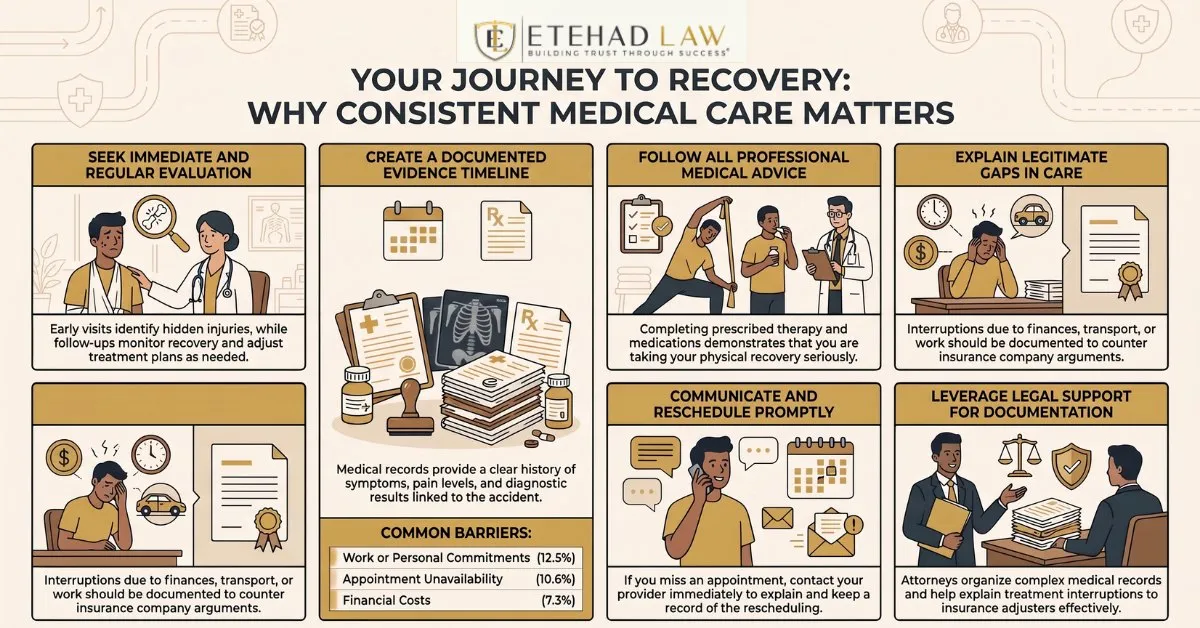
Consistent medical treatment can support your recovery while creating a clearer record of your injuries, symptoms, and medical needs. Following medically appropriate recommendations, communicating about missed appointments, and keeping relevant records can also help address questions that may arise during a personal injury claim.
At Etehad Law, we have over 30 years of experience helping injured people navigate complex personal injury cases. Contact us today for a free consultation to discuss your situation, understand your legal options, and learn how our team may be able to help.
Frequently Asked Questions
Consistent medical treatment can raise questions about your health and its effect on a personal injury claim. These answers provide general information, but the appropriate medical and legal decisions depend on your individual circumstances.
Why Does Consistent Medical Treatment Matter After an Accident?
Consistent, medically appropriate treatment allows healthcare providers to monitor your injuries and adjust your care when needed. It also creates a clearer record of your symptoms, treatment, and recovery over time.
Will Missing a Doctor's Appointment Hurt My Personal Injury Case?
One missed appointment does not automatically damage a personal injury case, particularly when there is a legitimate reason for it. However, repeated or unexplained gaps in treatment may give insurance companies an opportunity to question the severity or progression of your injuries.
What If I Cannot Afford Medical Treatment After An Accident?
Tell your healthcare provider about your financial concerns, as payment arrangements or other options may sometimes be available. You may also wish to speak with a personal injury attorney about potential insurance coverage or other options relevant to your situation.
How Long Can a Gap in Treatment Affect My Case?
There is no specific number of days or weeks that automatically determines whether a treatment gap will affect your case. The reason for the gap, your medical records, the nature of your injuries, and the evidence explaining the interruption can all matter.
Can I Change Doctors During a Personal Injury Claim?
Yes, changing healthcare providers does not automatically harm your claim when there is a legitimate reason for the change. Keep records explaining the transition and ensure your new provider has the information needed to understand your relevant medical history.
Should I Continue Treatment Until My Case Settles?
You should follow medically appropriate advice from your healthcare providers rather than continuing treatment solely because your personal injury case remains open. Your health needs, not the settlement timeline, should determine whether ongoing treatment is necessary.
What If My Symptoms Come Back After I Stop Treatment?
Contact a healthcare provider if symptoms return so your condition can be properly evaluated. Your provider can determine whether you need further treatment and document any new findings or changes in your condition.
Legal Disclaimer: This article provides general information and does not constitute medical or legal advice. Reading this information does not create an attorney-client relationship with Etehad Law, and you should consult appropriate healthcare and legal professionals about your specific circumstances.
You may also like
 Accident and Injury
 California Personal Injury Statute of Limitations
Learn the California statute of limitations for personal injury claims, key filing deadlines, exceptions, and why you should act quickly.
Read More » Expert Opinion
 What is a Vehicle Black Box and How Can It Help Your Case?
Uncover the role of your car black box in legal cases. Insights from Personal Injury Attorney in Beverly Hills await. Check to…
Read More » Expert Opinion
 Will Posting on Social Media Tank Your Case?
How social media posts can affect a legal case, the dos and don'ts while a claim is open, and what insurers look…
Read More »
