

Nursing home financial exploitation happens when an elderly person is manipulated, deceived, or taken advantage of for money, property, or financial gain within a nursing home, assisted living facility, or long-term care facility. This type of financial abuse can involve theft, forged financial documents, misuse of bank accounts, financial fraud, or coercion by caregivers, other residents, staff members, or outside scammers. Families who suspect financial abuse should act quickly because elder financial exploitation can cause devastating financial harm, emotional distress, unpaid bills, and serious damage to a loved one’s well-being.
For more than 30 years, Etehad Law has helped victims and family members pursue justice in cases involving nursing home financial abuse, elder abuse, neglect, and other forms of abuse in long-term care settings. Our experienced lawyers understand the warning signs of financial exploitation and know how to hold a nursing home facility accountable for financial fraud, theft, and abuse. If you believe your loved one has been harmed, reach out to us today for a free consultation and trusted legal guidance.
This article explains the signs of nursing home financial exploitation, common types of financial abuse, legal protections for elderly people, the steps families should take if they suspect abuse, and how an attorney can help protect a loved one’s rights and assets.
Key Takeaways
Financial elder abuse is when a caregiver, staff member, or scammer takes an older adult’s money, property, or financial control inside a care facility. California’s Elder Abuse Act (Welfare & Institutions Code §15610.30) lets families sue to recover stolen assets, and §15657.5 can add attorney’s fees. Watch for missing funds, altered documents, and unpaid bills, then document everything and report it quickly.
What Is Nursing Home Financial Exploitation?

Nursing home financial exploitation refers to the illegal or improper use of an elderly person’s money, property, assets, or financial information for someone else’s benefit. Many forms of elder financial abuse happen quietly, making them difficult for family members to detect until significant financial harm has already occurred. The World Health Organization (WHO) estimates that approximately 1 in 6 people age 60 and older experience some form of abuse each year. Understanding how financial exploitation happens in a nursing home or assisted living facility is one of the most important steps families can take to protect older adults from abuse, fraud, and manipulation.
Understanding Financial Exploitation in Nursing Homes
Nursing home financial exploitation occurs when someone takes advantage of a vulnerable resident for financial gain. This may involve theft, forged signatures, financial fraud, coercion, manipulation of financial documents, misuse of bank accounts, unauthorized use of a social security number, or abuse of financial power through a power of attorney. Often, the elderly person may not fully understand what is happening because of cognitive decline, medication effects, or cognitive impairment.
Unfortunately, many different people can commit nursing home financial abuse. Nursing home staff, administrators, caregivers, financial caregivers, other residents, outside scammers, and even family members may exploit an elderly person’s trust to gain access to money, property, or sensitive financial information. Some exploiters steal directly, while others slowly manipulate victims over time through emotional pressure, deception, or intimidation.
Financial exploitation can also appear alongside other forms of abuse and neglect. A resident experiencing physical abuse, emotional abuse, or poor care may also be suffering financial harm behind the scenes. That is why families should raise awareness and watch closely for warning signs of financial exploitation, unexplained changes in finances, or suspicious behavior involving caregivers and professionals within a nursing home facility.
Why Seniors in Nursing Homes Are Especially Vulnerable
According to the Federal Trade Commission (FTC), adults age 60 and older reported approximately $2.4 billion in fraud losses in 2024, up dramatically from around $600 million in 2020. Older adults living in a nursing home or long-term care facility often face unique vulnerabilities that make them easier targets for financial exploitation. Cognitive decline, dementia, Alzheimer’s disease, medication side effects, and dependence on caregivers for daily living support can reduce a resident’s ability to recognize fraud or protect their assets. An elderly person who struggles with memory or decision-making may fail to notice suspicious withdrawals, missing property, or unauthorized financial activity.
Isolation also plays a major role. Some residents see family members or trusted friends infrequently, which allows exploiters to build control over time. A caregiver, new friend, or staff member may gradually gain trust through kindness, emotional support, or excessive attention before taking advantage of the resident financially. In some cases, elderly people become emotionally dependent on the very person committing the abuse.
Exploiters often look for residents who appear lonely, confused, or reluctant to question authority figures. They may pressure victims into changing financial documents, handing over funds, or signing paperwork they do not fully understand. Because many elderly residents fear retaliation or embarrassment, they may stay silent even when they know something is wrong.
Common Types of Nursing Home Financial Abuse
Nursing home financial abuse can take many forms, and some schemes are far more sophisticated than families realize. While some cases involve obvious theft, others rely on deception, manipulation, forged documents, or financial scams designed to drain a resident’s assets over time quietly. Understanding the common types of financial exploitation can help families recognize warning signs before the damage becomes severe.
Theft of Cash or Personal Property
One of the most common forms of nursing home financial abuse is the theft of cash or personal property directly from a resident’s room. Missing jewelry, electronics, wallets, credit cards, family heirlooms, or even small amounts of money may indicate that someone is taking advantage of an elderly resident. In some situations, caregivers or staff members enter rooms during routine care and steal valuables while residents are distracted or unable to notice.
Families should take unexplained disappearances seriously, especially if nursing home staff provide vague answers or inconsistent explanations. Elderly people experiencing cognitive impairment may struggle to explain when items disappeared, making it easier for theft to continue unnoticed. Even small incidents can signal larger patterns of abuse within a nursing home facility.
Unauthorized Use of Bank Accounts or Credit Cards
Unauthorized financial activity is another major form of elder financial exploitation. This may include suspicious withdrawals from bank accounts, unusual ATM transactions, unapproved purchases, or new credit accounts opened in the resident’s name without permission. Exploiters sometimes gain access to financial information through stolen mail, financial documents, or direct manipulation of the resident.
Families should regularly review account statements and credit reports for unexplained changes. An elderly person who suddenly experiences unpaid bills despite having sufficient funds may already be a victim of financial fraud. Quick action can help protect assets before additional harm occurs.
Forged Checks and Signatures
Forged signatures on checks or financial documents are common in nursing home financial exploitation cases. A caregiver, staff member, or outside scammer may forge signatures to transfer money, access property, or alter important records. Some exploiters manipulate residents into signing documents they do not fully understand, especially when cognitive decline is involved.
Altered financial records can make these cases difficult to uncover without a detailed investigation. Families should carefully review signatures, transaction histories, and legal paperwork for inconsistencies. If anything appears suspicious, an attorney can help investigate possible fraud and protect the resident’s rights.
Manipulating Powers of Attorney or Legal Documents
A power of attorney can be a valuable tool for helping older adults manage finances, but it can also be abused. Some caregivers or family members pressure elderly residents into changing wills, trusts, or financial documents to gain control over money and property. In other cases, someone with legitimate financial power abuses their authority for personal gain.
This type of financial exploitation is especially dangerous because it often appears legally valid at first glance. Elderly people experiencing loneliness, isolation, or cognitive impairment may be particularly vulnerable to coercion or manipulation. Families should closely monitor any sudden changes to legal documents or financial decision-makers.
Billing Fraud and Overcharging
Financial exploitation sometimes occurs directly through the nursing home facility itself. Residents may face charges for services that providers never delivered, duplicate expenses, inflated care costs, or unnecessary treatments. Medicare scams and Medicaid fraud can also occur when facilities submit false claims for reimbursement.
Families should review billing statements carefully and compare charges against the services actually received. Unexplained fees, repeated charges, or inconsistent records may indicate financial fraud. Holding facilities accountable can help protect both the resident and other vulnerable elderly people from future abuse.
Coercion and Financial Scams
Some nursing home residents become targets of emotional manipulation or financial scams. Staff members, outside scammers, or even other residents may pressure an elderly person into giving gifts, loans, or access to funds. Phone calls, online fraud schemes, and romance scams are increasingly common forms of elder financial abuse. The FTC found that investment scams caused the greatest financial losses for older adults in 2024, with many scams beginning on social media platforms.
Exploiters often use intimidation, emotional dependence, or threats to maintain control over victims. A lonely resident may believe they are helping a trusted friend, but a manipulator is actually using them. Families should pay attention to sudden secrecy about money, unexplained gifts, or new relationships that appear financially motivated.
Signs of Nursing Home Financial Exploitation
The signs of nursing home financial exploitation are not always obvious at first. Often, the abuse develops gradually until substantial financial harm has already occurred. Families who understand the warning signs of financial abuse are far more likely to intervene early and protect a loved one from additional harm, fraud, or theft.
Sudden Changes in Bank Account Activity
Unexplained activity involving bank accounts is often one of the clearest signs of financial exploitation. Large withdrawals, unusual wire transfers, repeated ATM transactions, or purchases that do not match the resident’s normal spending habits should raise immediate concern. An elderly person who rarely uses debit cards or online banking may be unaware that funds are disappearing.
Family members should carefully review account statements for suspicious patterns. Even small withdrawals can indicate ongoing financial fraud if they happen repeatedly over time. Acting quickly can help preserve financial records and stop further exploitation.
Missing Personal Belongings
Missing personal property is another major warning sign of nursing home financial abuse. Jewelry, cash, electronics, wallets, and sentimental items may disappear from a resident’s room without explanation. Some victims are too embarrassed, confused, or afraid to report the theft.
Pay attention to how staff members respond when concerns are raised. Vague explanations, inconsistent stories, or attempts to dismiss concerns may indicate deeper problems within the nursing home facility. Families should document missing items immediately and report suspicious behavior to management and law enforcement if necessary.
Unexpected Changes to Legal Documents
Sudden changes involving wills, trusts, beneficiary designations, or powers of attorney should never be ignored. An elderly person who unexpectedly changes financial documents after forming a relationship with a caregiver, new friend, or staff member may be experiencing manipulation or coercion. These situations often involve emotional pressure rather than outright force.
Families should review legal paperwork carefully and ask respectful questions if unexplained changes appear. Financial exploitation cases involving altered documents can become more difficult to resolve if action is delayed. Early legal intervention may help protect a resident’s assets and loved one’s rights.
Unpaid Bills Despite Available Funds
Unpaid bills can reveal serious financial abuse even when a resident has enough money to cover expenses. Utility shutoff notices, missed nursing home payments, collection notices, or disrupted services may indicate that someone is diverting funds for personal use. This problem is especially concerning when an elderly person previously managed finances responsibly.
Families should investigate immediately if financial obligations suddenly go unpaid. Reviewing billing statements, bank records, and financial information can help identify where money is going. The sooner suspicious activity is uncovered, the easier it may be to prevent additional financial harm.
Emotional or Behavioral Changes in the Resident
Victims of financial exploitation often experience noticeable emotional changes. A resident may become fearful around certain caregivers, anxious when discussing money, or confused about missing funds and financial decisions. Some elderly people withdraw socially or appear unusually distressed after phone calls or meetings with specific individuals.
Behavioral changes should never be dismissed as a normal part of aging without closer evaluation. Fear, hesitation, or secrecy surrounding finances can signal manipulation or abuse. Families who notice these warning signs should ask calm questions and monitor the situation closely.
Isolation From Family or Financial Discussions
Isolation is one of the most effective tools exploiters use to maintain control over victims. Some nursing home staff or caregivers may limit communication between residents and family members or discourage conversations about financial information. A resident who appears coached, intimidated, or reluctant to speak openly may be experiencing exploitation.
Families should stay actively involved in their loved one’s life and care. Frequent visits and open communication can make it harder for exploiters to operate unnoticed. Isolation often allows abuse to continue longer, which increases both emotional and financial harm.
Who Can Be Held Liable for Financial Exploitation?

Nursing home financial exploitation is not always committed by one individual acting alone. In many cases, multiple parties may share responsibility for the financial harm suffered by an elderly person. Identifying who caused the abuse is an important step in protecting victims, recovering stolen assets, and holding negligent parties accountable.
Nursing Home Employees
Individual nursing home employees sometimes commit theft, financial fraud, or other forms of financial abuse against residents. Staff members may steal money, misuse credit cards, access financial documents, or manipulate elderly residents into handing over funds or sensitive financial information. Caregivers who spend significant time with vulnerable residents may also gain trust and use that relationship to take advantage of an elderly person financially.
Some employees target residents experiencing cognitive decline or cognitive impairment because they believe the abuse will go unnoticed. A caregiver may convince a resident to sign checks, share bank account information, or provide access to property and assets. Even seemingly small incidents of theft or suspicious behavior should be taken seriously because they may point to larger patterns of abuse within the nursing home facility.
Nursing Home Facilities and Administrators
A nursing home facility may also be legally responsible for financial exploitation when it fails to properly protect residents. Negligent hiring practices, poor supervision, inadequate staff screening, and failure to investigate complaints can create an environment where financial abuse thrives. Administrators who ignore warning signs of financial exploitation or fail to report abuse may also face legal liability.
Facilities have a duty to protect residents from harm, including elder financial abuse and financial fraud. If a nursing home knew or should have known that employees were stealing from residents, the facility itself may be held accountable. This is especially true when multiple victims, prior complaints, or repeated incidents suggest ongoing problems within the living facility.
Third Parties and Outside Scammers
Not all nursing home financial exploitation comes from inside the facility. Outside scammers often target elderly people through phone calls, emails, fake charities, online scams, or in-person schemes designed to steal money and personal information. Some exploiters pose as government agencies, financial professionals, or even distant family members to manipulate residents into sending funds or revealing their social security numbers.
Romance scams and emotional manipulation are also increasingly common among older adults in long-term care settings. A scammer may pretend to offer friendship or companionship while secretly attempting to gain financial control over the resident. Families should watch closely for unexplained changes in behavior, unusual financial requests, or sudden involvement from a new friend who appears overly interested in the resident’s assets.
Financial Institutions in Certain Cases
Banks and financial institutions may sometimes share responsibility for financial exploitation if they ignore obvious warning signs of fraud. For example, repeated suspicious withdrawals, dramatic changes in spending patterns, or unusual account activity involving an elderly person may indicate financial abuse. In some situations, institutions fail to investigate or report suspicious activity despite clear red flags.
Financial professionals have certain responsibilities when handling vulnerable customers. If a bank ignored signs of financial exploitation or allowed fraudulent transactions to continue unchecked, it may become part of a larger legal investigation. Reviewing bank accounts, credit reports, and transaction records often plays a major role in uncovering the full extent of financial harm.
What Laws Protect Nursing Home Residents From Financial Abuse?
Elderly residents living in nursing homes and assisted living facilities are protected by both federal and state laws designed to prevent elder abuse, neglect, and financial exploitation. These laws exist to safeguard vulnerable residents from theft, fraud, coercion, and other forms of financial harm. The U.S. Department of Justice stated that enforcement actions in its 2025 elder fraud report involved schemes attempting to steal more than $2 billion from over one million older Americans.
Families who understand these protections are often better prepared to recognize abuse and take action quickly.
Federal Protections for Elder Abuse Victims
Several federal laws help protect older adults from nursing home financial abuse and other forms of exploitation. Federal regulations governing nursing homes require facilities to protect residents’ rights, preserve dignity, and provide safe living conditions free from abuse or neglect. These protections apply to residents in long-term care facilities that receive federal funding through Medicare or Medicaid programs.
Residents also have rights involving financial independence and personal property. Nursing homes cannot improperly access or misuse a resident’s money, financial documents, or assets. When facilities violate these protections, victims and family members may have legal options to pursue accountability and compensation.
State Elder Abuse Laws
Every state has laws addressing elder financial abuse and financial exploitation. These laws often allow victims and families to pursue civil claims against individuals, caregivers, nursing home facilities, or professionals responsible for financial harm. In some cases, financial exploitation may also lead to criminal charges involving theft, fraud, forgery, or financial misconduct.
State laws vary, but many provide enhanced protections for elderly people experiencing cognitive decline, dementia, or dependence on caregivers. Penalties can include repayment of stolen funds, punitive damages, fines, or imprisonment. Reporting suspected abuse to local adult protective services or a local law enforcement agency may trigger investigations that help protect victims from further harm.
California’s Elder Abuse Act and Financial Abuse Protections
California gives older adults some of the country’s strongest financial protections. Under Welfare and Institutions Code §15610.30, financial abuse of an elder or dependent adult happens when someone takes, hides, or keeps a person’s money or property for a wrongful use, through undue influence, or by assisting in that conduct. The statute reaches anyone who profits from the abuse, so a caregiver, a facility, or an outside scammer can each be a defendant.
The Act does more than name the wrong. Section 15657.5 lets a victim who proves financial abuse by a preponderance of the evidence recover attorney’s fees and litigation costs on top of the stolen amount, and it allows added damages when the wrongdoer acted with recklessness or malice. Families usually have four years from the date the abuse was discovered to file a civil claim under Welfare and Institutions Code §15657.7, though shorter deadlines can apply, so timing matters.
Financial exploitation can be a crime as well as a civil wrong. Penal Code §368 makes theft, embezzlement, or fraud against an elder a felony in serious cases, and a prosecutor’s file can support a parallel civil suit. Nursing home staff are mandated reporters under §15630 and must alert Adult Protective Services or law enforcement when they suspect abuse. A civil case then moves through investigation, records subpoenas, depositions, and either settlement or trial.
This section is general legal information about California law, not legal advice for any specific case.
Nursing Home Residents’ Rights
Residents in a nursing home or assisted living facility have important legal rights related to their finances and personal safety. These loved one’s rights exist to help protect vulnerable elderly residents from exploitation and abuse. Families should understand that residents generally have the right to:
- Control their own finances and financial decisions
- Be free from financial exploitation, fraud, and coercion
- Access financial records and account information
- Receive protection from abuse, neglect, and mistreatment
- Maintain ownership of personal property and assets
- Report abuse without fear of retaliation
When these rights are violated, victims and family members may have legal grounds to seek compensation and accountability. Protecting residents starts with recognizing abuse early and taking immediate action to stop further financial harm.
What to Do If You Suspect Financial Exploitation
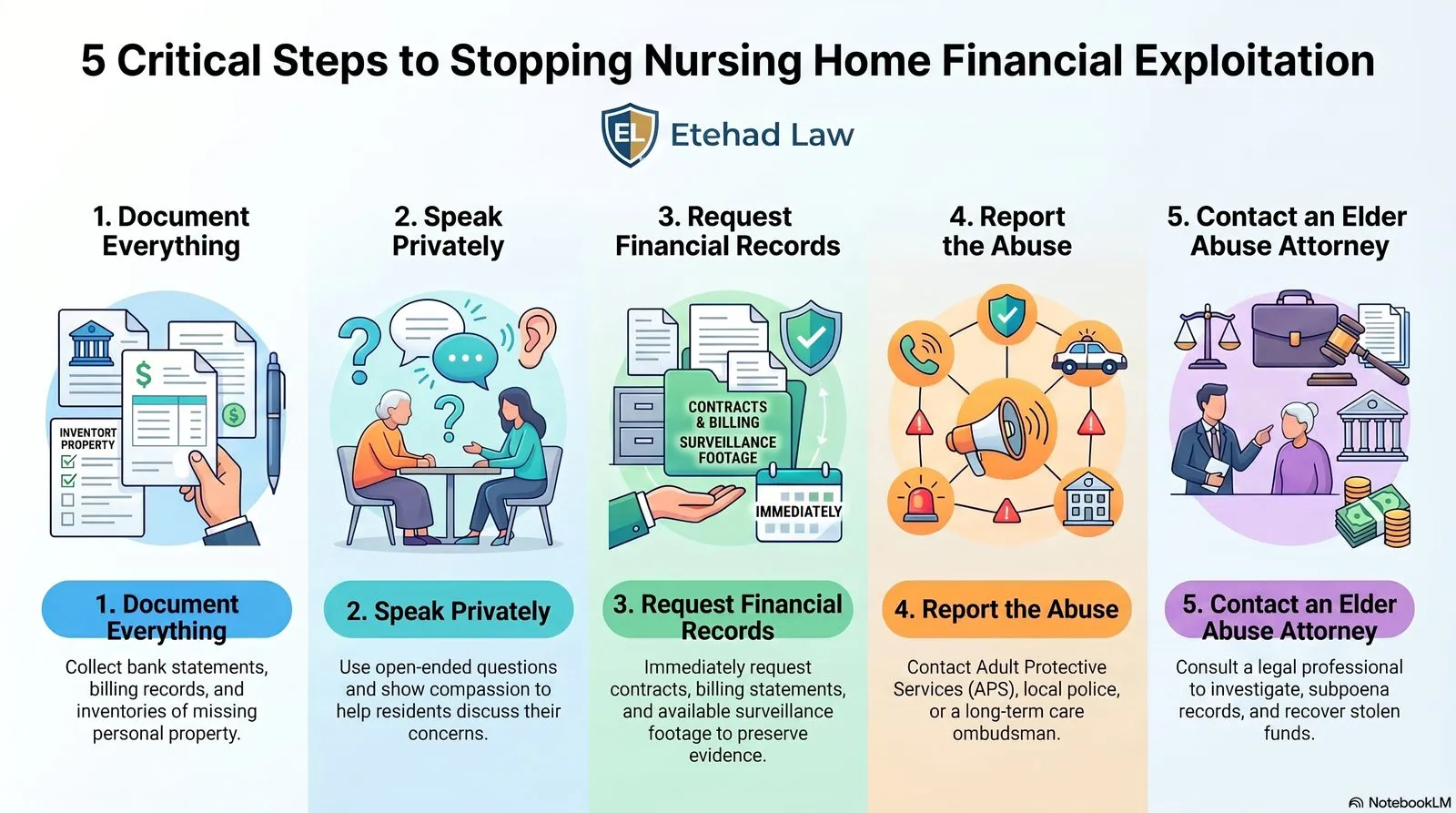
When families suspect nursing home financial exploitation, taking immediate action can make a major difference. Delays may allow financial fraud, theft, or abuse to continue while evidence disappears. Etehad Law recommends a step-by-step approach focused on protecting the elderly person, preserving financial records, and reporting abuse to the proper authorities.
Start Documenting Everything
The first step is gathering as much information as possible. Families should collect bank statements, billing records, credit card statements, emails, written communications, and inventories of missing personal property. Detailed documentation often becomes critical evidence in financial exploitation investigations.
Keep copies of suspicious financial documents and note any unexplained changes involving money, property, or account activity. Even small inconsistencies may help uncover larger patterns of abuse. Organized records can also help attorneys, law enforcement, and adult protective services investigate the situation more effectively.
Speak With Your Loved One Privately
Families should speak calmly and privately with the elderly person involved. Asking open-ended, non-leading questions can help residents feel safe enough to discuss concerns about money, caregivers, or suspicious activity. Some victims may hesitate to speak openly because they feel embarrassed, intimidated, or emotionally manipulated.
Pay close attention to fear, confusion, or reluctance when discussing finances. A resident who appears nervous around certain caregivers or avoids conversations about money may be experiencing financial abuse. Compassion and patience are extremely important during these discussions.
Report the Abuse
Suspected financial exploitation should be reported immediately to the appropriate authorities. Depending on the situation, families may need to contact adult protective services, a local law enforcement agency, local police, nursing home administrators, or a long-term care ombudsman. Reporting abuse creates an official record and may help prevent additional harm to other residents.
If the nursing home facility fails to respond appropriately, families should continue escalating concerns. Financial exploitation often affects multiple victims within the same living facility. Early reporting can help protect vulnerable elderly people from continued abuse.
Request Financial Records Immediately
Timing matters in financial exploitation cases because important records can disappear quickly. Families should request copies of contracts, billing records, financial statements, account information, and any documents involving financial power or property transfers. Reviewing these materials carefully may reveal signs of fraud, overcharging, or unauthorized activity.
Quick action can also help preserve surveillance footage, staff records, and other evidence within the nursing home facility. The sooner suspicious activity is identified, the better the chances of limiting financial harm and recovering stolen assets.
Contact an Elder Abuse Attorney
An experienced attorney can play a major role in investigating nursing home financial exploitation claims. Lawyers often work to preserve evidence, subpoena records, interview witnesses, and hold negligent parties accountable for abuse and financial harm. Legal representation may also help families recover stolen funds and protect a loved one’s rights moving forward.
Financial exploitation cases can become complicated very quickly, especially when multiple parties are involved. Working with knowledgeable legal professionals gives families access to resources, investigative support, and guidance during an incredibly stressful time. A free consultation can help families better understand their legal options.
How Lawyers Prove Nursing Home Financial Exploitation
Proving nursing home financial exploitation often requires a detailed investigation supported by financial records, witness testimony, and professional analysis. Because exploiters frequently attempt to hide fraud or manipulate victims quietly, attorneys must carefully piece together evidence to show how the abuse occurred. Strong documentation can make a major difference in holding wrongdoers accountable.
Reviewing Financial Records
Financial records are often the foundation of an elder financial abuse case. Attorneys may review bank statements, billing histories, credit reports, transaction logs, and property transfer documents to identify suspicious activity. Unexplained withdrawals, forged signatures, unusual spending patterns, or sudden asset transfers may reveal clear evidence of financial exploitation.
Lawyers also compare financial records against the resident’s normal habits and financial history. Sudden changes involving money or unpaid bills despite available funds can help establish patterns of fraud or theft. These records often become critical evidence in both civil claims and criminal investigations.
Investigating Nursing Home Practices
Attorneys also investigate how the nursing home facility operated internally. This may include reviewing hiring procedures, employee background checks, staff disciplinary records, surveillance footage, and prior complaints involving abuse or neglect. Facilities that ignored warning signs or failed to supervise employees properly may share liability for the financial harm suffered by residents.
Patterns of misconduct are especially important in these cases. If other residents experienced similar problems involving theft, fraud, or missing property, that information may strengthen the legal claim significantly. Investigating facility practices can also uncover broader failures involving resident safety and protection.
Working With Financial Experts
Financial exploitation cases sometimes require assistance from outside experts. Forensic accountants, elder abuse investigators, and financial professionals may analyze records to uncover hidden fraud, unauthorized transactions, or asset transfers. Their findings can help explain complex financial activity in a way that judges, juries, and investigators understand clearly.
Experts may also identify attempts to conceal theft or manipulate financial documents. In cases involving large losses or multiple forms of financial abuse, professional analysis often becomes extremely valuable. These experts help attorneys build stronger and more persuasive claims on behalf of victims.
Gathering Witness Testimony
Witness testimony can provide powerful evidence in nursing home financial exploitation cases. Attorneys may interview staff members, residents, caregivers, medical professionals, family members, and other individuals familiar with the elderly person’s daily living situation. Statements about suspicious behavior, emotional manipulation, or unexplained changes may help establish how the abuse occurred.
Medical professionals may also provide insight into the resident’s cognitive condition and vulnerability to manipulation. Testimony showing that an elderly person experienced cognitive impairment, dementia, or confusion can help explain why the victim was unable to protect themselves from exploitation. Combined with financial records and other evidence, witness testimony often strengthens the overall case considerably.
Compensation Available in Nursing Home Financial Exploitation Cases

Victims of nursing home financial exploitation may have the right to pursue compensation for both financial losses and emotional harm. These cases are about more than stolen money. Financial abuse often destroys a resident’s sense of security, independence, and trust while placing enormous emotional stress on family members.
Recovery of Stolen Assets
One of the primary goals in a financial exploitation case is recovering stolen assets and funds. Victims may seek reimbursement for stolen money, unauthorized withdrawals, fraudulent purchases, or lost personal property. In some cases, attorneys may also pursue compensation involving property transfers or misuse of financial accounts.
Recovering assets quickly can help protect an elderly person’s future care and financial stability. Many victims depend heavily on their savings to cover long-term care expenses, medical services, and daily living needs. Legal action may help prevent further financial harm while restoring lost resources.
Compensation for Emotional Distress
Financial exploitation can cause severe emotional distress, especially when the abuse involves trusted caregivers or family members. Victims often experience anxiety, humiliation, fear, anger, or depression after discovering that someone has manipulated or betrayed them financially. Emotional trauma may become even more serious when elderly residents already struggle with isolation or cognitive decline.
Families often feel the strong effects as well. Watching a loved one suffer financial abuse can create overwhelming stress and frustration. Compensation for emotional distress recognizes the very real psychological harm caused by exploitation and manipulation.
Punitive Damages
Courts sometimes award punitive damages in cases involving intentional fraud, theft, or particularly egregious misconduct. Unlike ordinary compensation, punitive damages are designed to punish wrongdoers and discourage similar abuse in the future. These damages may apply when exploiters acted maliciously, repeatedly targeted vulnerable residents, or engaged in large-scale financial fraud.
Punitive damages can also send a strong message to nursing home facilities about the importance of protecting residents from financial exploitation. Facilities that ignore abuse or fail to address obvious warning signs may face significant legal consequences.
Wrongful Death Damages
In difficult situations, financial exploitation may contribute to declining health or even death. An elderly person who loses access to funds for medications, medical care, or essential services may experience serious physical and emotional deterioration. Stress caused by financial abuse can also worsen existing medical conditions.
If financial exploitation contributed to a resident’s death, surviving family members may have grounds to pursue wrongful death damages. These claims can help families seek accountability for the devastating consequences of abuse and neglect.
How Families Can Help Prevent Financial Exploitation
Preventing nursing home financial exploitation requires consistent involvement, awareness, and proactive planning. Families who stay connected to their loved one’s care are often better positioned to notice warning signs before serious financial harm occurs. Small steps taken early can help protect elderly residents from fraud, theft, manipulation, and other forms of abuse.
Stay Involved in Your Loved One’s Care
Frequent visits are one of the strongest protections against financial exploitation. Regular interaction allows family members to monitor relationships between residents and caregivers while noticing unexplained changes in behavior, finances, or living conditions. Exploiters are often less likely to target residents whose families remain actively involved.
Families should also pay attention to how caregivers and staff members interact with the elderly person. A caregiver who becomes overly controlling, discourages communication, or seems unusually interested in finances may raise serious concerns. Staying engaged helps create accountability within the nursing home facility.
Regularly Monitor Financial Accounts
Monitoring bank accounts and financial information consistently can help families identify suspicious activity early. Review account statements, billing records, and credit reports for unexplained withdrawals, unusual charges, or unpaid bills. Even minor inconsistencies may signal ongoing financial fraud or elder financial abuse.
Setting up fraud alerts and account notifications can provide another layer of protection. Alerts for large withdrawals, wire transfers, or unusual spending activity may help families respond quickly before significant assets disappear. Early detection often limits financial harm considerably.
Secure Important Documents
Protecting important financial documents is essential for preventing exploitation. Wills, powers of attorney, banking records, insurance policies, and other sensitive paperwork should be stored securely and shared only with trusted individuals. Families should also protect social security numbers and online account information carefully.
Unauthorized access to financial documents can allow exploiters to manipulate accounts, transfer property, or commit fraud. Regularly reviewing legal paperwork can also help families identify suspicious changes involving beneficiaries, assets, or financial decision-makers.
Watch for Changes in Behavior or Relationships
Behavioral changes may reveal financial exploitation long before missing funds become obvious. An elderly person who suddenly becomes secretive about money, emotionally dependent on one individual, or fearful during financial discussions may be experiencing manipulation. Families should also watch for sudden involvement from a new friend who appears unusually interested in finances or property.
Emotional manipulation often plays a major role in nursing home financial abuse. Residents who feel isolated or lonely may become vulnerable to people taking advantage of their trust. Open communication and emotional support can help reduce that vulnerability.
Choose Nursing Homes Carefully
Researching nursing homes carefully before admission is one of the most effective ways to reduce the risk of abuse. Families should review complaint histories, inspection reports, staffing practices, and any prior allegations involving neglect, fraud, or financial exploitation. Asking direct questions about financial safeguards and staff screening procedures is also important.
A reputable long-term care facility should have clear policies for protecting residents’ finances and personal property. Families should never hesitate to ask how the facility handles theft allegations, suspicious financial activity, or complaints involving caregivers and other residents. Thorough research today can help protect a loved one tomorrow.
Ready to Protect Your Loved One From Nursing Home Financial Exploitation?
Nursing home financial exploitation can leave elderly residents and their families facing emotional distress, financial losses, and uncertainty about what to do next. Taking action quickly can help stop ongoing abuse, preserve valuable evidence, and protect your loved one’s rights, assets, and well-being. Working with an experienced attorney may also help your family pursue accountability, recover stolen funds, and prevent further harm.
The nursing home abuse lawyers at Etehad Law have more than 30 years of experience helping victims and families handle elder abuse and financial exploitation cases. The firm understands how devastating nursing home financial abuse can be and provides compassionate legal guidance tailored to each family’s situation. If you suspect financial abuse, fraud, neglect, or exploitation involving a nursing home or assisted living facility, contact Us Today for a free consultation.
Frequently Asked Questions
At Etehad Law, our experience handling elder abuse and nursing home financial exploitation cases allows us to answer the questions families ask most often. We understand how confusing and emotional these situations can become, especially when vulnerable elderly people are involved. The following answers provide general guidance for families concerned about financial abuse in a nursing home or assisted living facility.
Can a Nursing Home Be Sued for Financial Exploitation?
Yes, a nursing home facility may be sued if it failed to protect residents from financial exploitation, fraud, theft, or abuse. Facilities can sometimes be held responsible for negligent hiring, poor supervision, or ignoring warning signs involving caregivers and staff members. Families may also pursue claims against individual employees or other parties involved in the financial harm.
What Evidence Is Needed to Prove Financial Abuse?
Evidence often includes bank statements, billing records, credit reports, financial documents, witness testimony, surveillance footage, and records showing unexplained financial changes. Attorneys may also review forged signatures, suspicious account activity, or property transfers connected to the abuse. Strong documentation can help establish patterns of fraud, theft, or manipulation.
Is Financial Exploitation Considered Elder Abuse?
Yes, financial exploitation is considered a form of elder abuse. Elder financial abuse involves illegally or improperly using an elderly person’s money, assets, property, or financial information for personal gain. Many states treat financial exploitation very seriously and allow victims to pursue both civil and criminal action.
What if My Loved One Has Dementia?
Residents with dementia or cognitive impairment are often especially vulnerable to financial exploitation because they may struggle to recognize manipulation or fraud. Families should act quickly if they notice suspicious financial activity, missing property, or unexplained changes involving caregivers or legal documents. An attorney can help investigate abuse even when the elderly person has memory or communication challenges.
Can Stolen Money Be Recovered?
In some cases, stolen money, assets, or property can be recovered through legal action. Attorneys may pursue reimbursement for unauthorized withdrawals, fraudulent transfers, stolen personal property, or financial fraud involving bank accounts and financial documents. Acting quickly often improves the chances of recovering lost funds.
How Long Do I Have to File a Claim?
The time limit for filing a financial exploitation claim depends on state law and the specific facts of the case. Some deadlines may begin when the abuse occurred, while others may start when the financial harm was discovered. Speaking with an attorney as soon as possible helps families avoid losing their right to pursue compensation.
What Should I Do if the Nursing Home Denies Wrongdoing?
Families should continue documenting evidence and report concerns to outside authorities if a nursing home denies wrongdoing. This may include contacting adult protective services, a long-term care ombudsman, local police, or a local law enforcement agency. An experienced attorney can also conduct an independent investigation and help protect the resident’s rights.
How does California define financial elder abuse?
California defines it broadly. Welfare and Institutions Code §15610.30 says financial abuse occurs when someone takes, secretes, appropriates, obtains, or retains an elder’s money or property for a wrongful use or with intent to defraud, or through undue influence, which covers the emotional pressure exploiters use inside care facilities. The person does not have to steal cash directly. Helping someone else do it, or keeping property after a request to return it, also counts. Because the definition reaches property obtained through undue influence, a signature on a check or a changed beneficiary form can qualify even when the resident technically agreed. That broad language is one reason a California elder abuse claim can succeed where a plain theft charge might fail.
Can I recover attorney’s fees in a California elder financial abuse case?
Often, yes. Welfare and Institutions Code §15657.5 lets a victim who proves financial abuse by a preponderance of the evidence recover reasonable attorney’s fees and litigation costs from the wrongdoer, separate from the money that was taken. That fee-shifting rule matters because it makes it realistic to pursue a smaller loss that would otherwise cost more to litigate than it is worth. When the evidence shows recklessness, oppression, fraud, or malice, the statute opens the door to additional damages as well. Many elder abuse attorneys handle these cases on a contingency basis, so families usually pay nothing up front and fees come out of any recovery.
What is the deadline to file an elder financial abuse claim in California?
California generally gives families four years to file a civil financial abuse claim under Welfare and Institutions Code §15657.7. The clock usually starts when the abuse is discovered, or when a reasonably careful person should have discovered it, not necessarily when the money first disappeared. That discovery rule helps families who uncover hidden fraud long after it began. Even so, other deadlines can apply depending on the defendant and the other claims involved, and waiting makes proof harder to preserve. Bank records get purged, witnesses move, and memories fade. Talking with an attorney early protects both the deadline and the evidence a case needs.
Who can bring an elder financial abuse lawsuit in California?
The elder can bring the claim personally if they are able. When a resident cannot manage litigation because of dementia or another condition, a court-appointed conservator, an agent under a valid power of attorney, or a guardian ad litem may sue on their behalf. If the elder has died, California’s Elder Abuse Act allows a personal representative of the estate, or in some situations a successor in interest such as a surviving spouse or child, to pursue the financial abuse claim. Because standing depends on the facts and the family’s legal role, this is one of the first questions an attorney sorts out before filing.
What is the difference between a criminal and a civil elder abuse case in California?
A criminal case is brought by a prosecutor under Penal Code §368, which makes theft, embezzlement, forgery, or fraud against an elder punishable as a misdemeanor or felony. The goal there is punishment, whether fines, probation, or jail, and the victim is a witness rather than the party in control. A civil case is one the family files under the Elder Abuse Act to recover the stolen money, added damages, and attorney’s fees. The two can run at the same time, and a criminal investigation often produces records that strengthen the civil claim. A civil case can also succeed even when prosecutors decline to file, because the burden of proof is lower.
Do nursing home staff have to report suspected financial abuse in California?
Yes. Under Welfare and Institutions Code §15630, care custodians, including nursing home and assisted living staff, are mandated reporters who must report suspected elder abuse, including financial abuse, to Adult Protective Services or a law enforcement agency, usually within two working days. A long-term care ombudsman is another route for reports that involve a facility. Failing to report can expose a mandated reporter to penalties, and a facility’s pattern of ignored complaints can become evidence of neglect in a civil case. Families do not have to wait for staff to act, though. Anyone can report suspected exploitation, and doing so creates an official record that helps later.
Legal Disclaimer
This article is for informational purposes only and does not constitute legal advice. Reading this content does not create an attorney-client relationship with Etehad Law. Every nursing home financial exploitation case is different, and individuals should consult a qualified attorney regarding their specific legal rights and options. Past results do not guarantee future outcomes, and every case turns on its own facts.
You may also like
 Accident and Injury
 California Personal Injury Statute of Limitations
Learn the California statute of limitations for personal injury claims, key filing deadlines, exceptions, and why you should act quickly.
Read More » Expert Opinion
 What is a Vehicle Black Box and How Can It Help Your Case?
Uncover the role of your car black box in legal cases. Insights from Personal Injury Attorney in Beverly Hills await. Check to…
Read More » Expert Opinion
 Will Posting on Social Media Tank Your Case?
How social media posts can affect a legal case, the dos and don'ts while a claim is open, and what insurers look…
Read More »
