


Most people are unsure what to do after a slip and fall accident, especially when they are shaken or their injuries are not immediately apparent. In our experience, you should seek medical attention, report the incident to the property owner, and gather evidence from the accident scene as soon as possible to protect your health and legal rights.
For more than 30 years, Etehad Law has helped injury victims hold negligent property owners accountable in premises liability and slip and fall cases across California. Our experienced attorneys understand how these claims are proven, how insurance companies fight them, and what it takes to recover fair compensation for medical bills, lost wages, and pain and suffering. We handle injury cases on a contingency fee basis, so you pay no attorney fees unless we recover for you. If you were hurt in a slip and fall accident, contact us today for a free consultation and trusted legal guidance.
In this guide, we explain the most important steps to take after a slip and fall accident. We also discuss how to gather evidence, report the incident, deal with insurance companies, and understand when to seek legal assistance for your case.
Key Takeaways
After a slip and fall, get medical care, report the hazard to the property owner, and preserve evidence right away. In California, a property owner owes lawful visitors a duty of reasonable care under Civil Code §1714, and an injured person generally has two years to file a lawsuit under Code of Civil Procedure §335.1 — as little as six months to file a written claim if a government entity is responsible, under Government Code §911.2. California follows a pure comparative negligence rule (Li v. Yellow Cab Co.), so you can still recover even if you were partly at fault, with your award reduced by your share of responsibility. Acting quickly protects both your health and your legal claim.
What Are Slip and Fall Accidents?

A slip and fall accident occurs when someone slips, trips, or falls because of hazardous conditions on someone else’s property. Common causes include wet floors, broken stairs, poor lighting, uneven sidewalks, loose flooring, and other dangerous conditions that a property owner failed to address. In premises liability cases, property owners generally have a legal duty to maintain reasonably safe conditions for lawful visitors.
Slip and fall accidents are more common than many people realize. According to the World Health Organization (WHO), falls are the second leading cause of unintentional injury deaths worldwide, causing an estimated 684,000 deaths every year. The Occupational Safety and Health Administration (OSHA) also identifies falls as one of the leading causes of serious workplace injuries and fatalities, and the National Floor Safety Institute (NFSI) reports that falls account for more than eight million hospital emergency room visits each year, making them a leading cause of ER visits nationwide.
A slip and fall accident can happen almost anywhere. For instance, you could fall in a grocery store because of a wet floor, trip over broken stairs at an apartment complex, or lose your footing in a poorly lit parking garage. In our experience, these accidents often occur without warning and can result in soft tissue damage, broken bones, head injuries, internal injuries, and other severe injuries.
Whether a property owner is legally responsible depends on the specific circumstances of the accident. In California, the duty to keep property reasonably safe comes from Civil Code §1714, and courts weigh the factors set out in Rowland v. Christian (1968) to decide whether an owner acted reasonably. A successful slip and fall case often requires showing that the property owner knew, or reasonably should have known, about the hazardous condition and failed to repair it or provide adequate warning. This is why preserving evidence immediately after the fall can make all the difference.
If you are injured, seek medical attention as soon as possible, even if your injuries seem minor. Some conditions, including head trauma and internal injuries, may not be immediately apparent and can worsen without prompt medical treatment. Medical records also create an official record that may become important evidence during the claims process.
As Simon Etehad explains, “A successful slip and fall claim often depends as much on what you do after the accident as on what caused the accident itself.” We recommend documenting the accident scene, reporting the incident to the property owner, requesting a copy of the incident report, and preserving as much evidence as possible while the details remain fresh.
Immediate Steps to Take After a Slip and Fall Accident
The actions you take immediately after a slip and fall accident can significantly affect both your recovery and your legal claim. Below are steps we advise our clients to take:
Step 1: Seek Immediate Medical Attention
Your health should always come first. Seek immediate medical attention, even if your injuries appear minor or you believe you can walk away from the accident.
Some slip and fall injuries, including head injuries, internal injuries, soft tissue damage, and head trauma, may not be immediately apparent. Early medical treatment protects your health while creating medical records that serve as important evidence during the claims process.
Step 2: Report the Accident to the Property Owner
Notify the property owner, store manager, landlord, or other responsible party as soon as possible. Provide factual details about what happened without admitting fault or assigning blame.
Ask that an official incident report or formal report be completed before you leave the property. We also recommend requesting a copy of the report for your records because it may become valuable evidence if you later begin filing a slip and fall claim.
Step 3: Document the Accident Scene
If you are physically able, document the accident scene immediately. Take photographs or videos of the hazardous conditions that caused the fall, including wet floors, broken stairs, poor lighting, uneven surfaces, or missing warning signs.
Gather the names and contact information of any witnesses who saw the accident. We also recommend writing down everything you remember while the details are still fresh, including the time, location, weather conditions, and exactly how the fall occurred.
Step 4: Preserve Important Evidence
Do not throw away the clothing or shoes you were wearing during the accident. These items may help demonstrate the circumstances of the fall and rebut arguments made by the insurance company.
Keep copies of medical bills, treatment plans, receipts, photographs, correspondence, and any other documents related to your injuries. Creating a complete paper trail can strengthen your slip and fall case as it progresses.
Step 5: Contact an Experienced Slip and Fall Attorney
Before speaking with insurance adjusters, consult an experienced slip and fall lawyer. Insurance companies often attempt to minimize claim payouts, and they may ask for recorded statements or encourage you to sign documents that could affect your legal rights.
An attorney can help gather evidence, communicate with the insurance company, prove the property owner’s negligence, and guide you through the legal process. As Simon Etehad explains, “The strongest slip and fall claims are built from the actions taken in the hours immediately after the accident.” We recommend seeking legal assistance as early as possible so your attorney has the best opportunity to protect your interests and pursue the compensation you deserve.
How to Protect Your Slip and Fall Claim
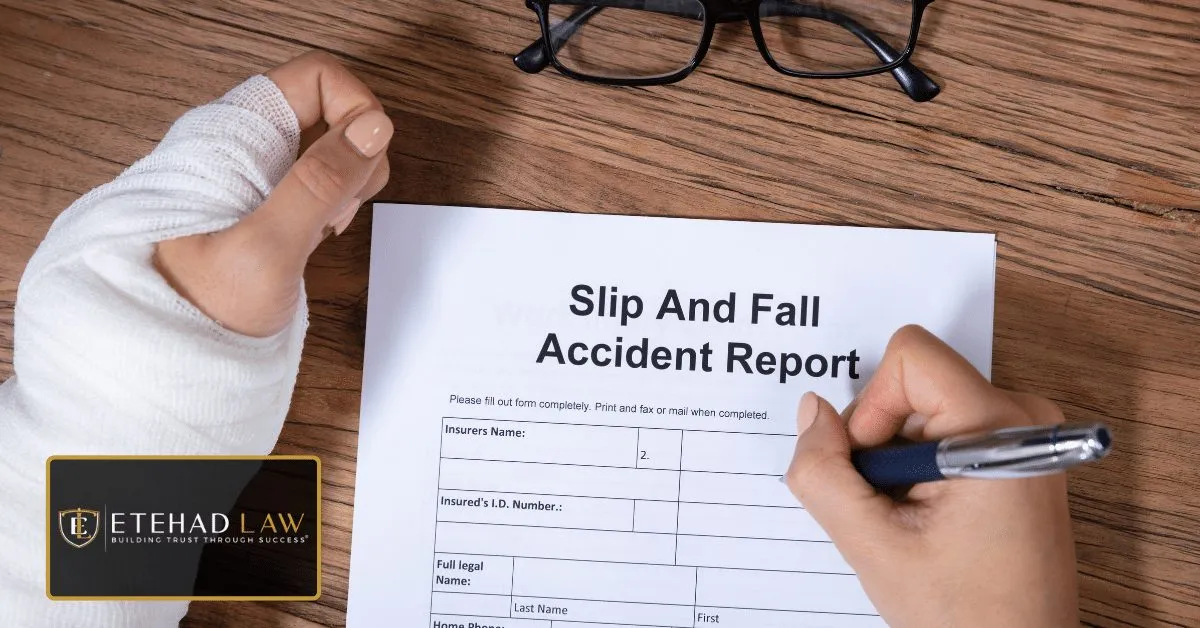
First, continue seeking medical treatment and follow your healthcare provider’s treatment plan. Even if you begin feeling better, do not skip appointments or stop treatment without medical advice. Ongoing medical care creates detailed medical records that document the full extent of your slip and fall injury and support your claim for medical bills, lost wages, and future treatment.
Next, keep copies of every document related to your recovery. Save medical bills, pharmacy receipts, physical therapy invoices, transportation costs, and any records showing time missed from work. These documents create a clear paper trail that helps demonstrate the financial impact the accident has had on your daily life.
You should also avoid discussing your case on social media. Insurance companies and defense attorneys may review public posts, photos, or comments in an attempt to dispute the severity of your injuries. We recommend limiting what you share online until your claim has been resolved.
It is equally important to avoid speaking with insurance adjusters without legal guidance. They may ask for recorded statements or encourage you to accept a quick settlement before the full extent of your injuries is known. In our experience, consulting an attorney first helps protect your legal rights and prevents mistakes that could weaken your claim.
Finally, contact an experienced slip and fall lawyer as early as possible. An attorney can preserve evidence, communicate with the insurance company, calculate your damages, and ensure all legal deadlines are met. If you are wondering what your slip and fall case worth may be, an attorney can evaluate the unique facts of your case and provide guidance based on the severity of your injuries, liability, and financial losses.
When to Contact a Slip and Fall Lawyer
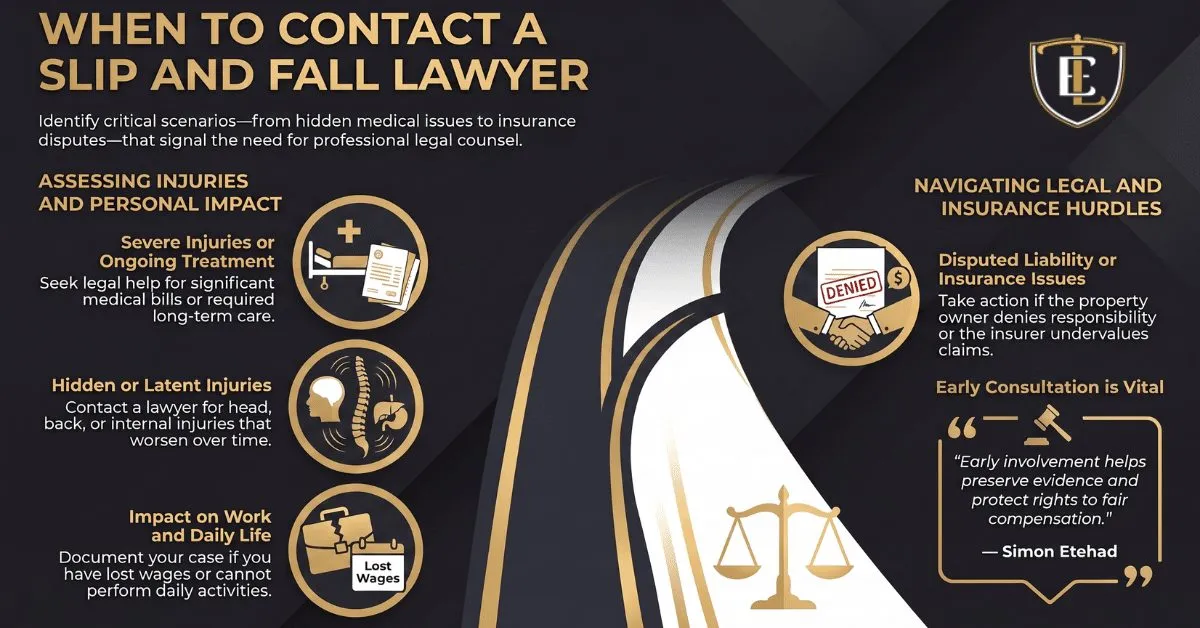
Not every slip and fall accident requires legal action, but some situations call for professional guidance as soon as possible. In our experience, consulting a slip and fall lawyer early can help preserve evidence, protect your legal rights, and improve your chances of recovering fair compensation. It also matters for deadlines: under Code of Civil Procedure §335.1, most California injury claims must be filed within two years, and a claim against a government entity can require written notice within just six months under Government Code §911.2.
You should contact a lawyer if you suffered severe injuries, required ongoing medical treatment, or incurred significant medical bills after the accident. Legal assistance is also important if the property owner denies responsibility, liability is disputed, or the insurance company delays, undervalues, or denies your claim. We recommend seeking legal advice before providing recorded statements or signing documents from an insurance company.
A lawyer can also help if your injuries are not immediately apparent. Conditions such as head injuries, internal injuries, back injuries, or soft tissue damage may worsen over time. Waiting too long to seek legal guidance can make it more difficult to connect these injuries to the fall accident and recover compensation.
Another sign that you should contact an attorney is when your injuries affect your ability to work or complete daily activities. Lost wages, ongoing medical care, physical therapy, and future treatment costs can significantly increase the value of a claim. An experienced attorney can calculate these damages and pursue compensation that reflects both your current and future losses.
Working with a lawyer also improves the way your claim is presented. Attorneys gather evidence, obtain witness statements, review incident reports, communicate with insurance adjusters, and build a strong case demonstrating the property owner’s negligence. In our experience, early legal representation often places clients in a stronger position during settlement negotiations.
During a slip and fall lawyer consultation, you can expect the attorney to review the facts of your accident, evaluate available evidence, discuss your injuries, and explain your legal options. Most consultations also include a discussion of the claims process, potential compensation, and the next steps if you decide to move forward with your case.
As Simon Etehad explains, “The sooner an attorney becomes involved, the greater the opportunity to preserve evidence and protect the client’s right to fair compensation.” Even if you are unsure whether you have a valid claim, speaking with an experienced attorney early can help you make informed decisions and avoid costly mistakes.
Common Injuries from Slip and Fall Accidents
A slip and fall accident can cause far more than minor bruises or soreness. In our experience, many victims initially believe they escaped serious harm, only to discover days later that they sustained significant injuries. According to the Centers for Disease Control and Prevention (CDC), falls are the leading cause of injury-related deaths among adults aged 65 and older, and millions of older adults are treated in emergency departments for fall injuries each year. This is why seeking immediate medical attention is one of the most important steps after any fall.
Fractures are among the most common slip and fall injuries. Broken wrists, hips, ankles, and arms often occur when people instinctively try to break their fall. These injuries may require surgery, rehabilitation, or physical therapy and can limit mobility for weeks or even months.
Head injuries are another serious concern. A slip and fall can result in a concussion, head trauma, or traumatic brain injury, even if you never lose consciousness. Some symptoms, including headaches, dizziness, memory problems, and confusion, may not appear immediately. We recommend seeking a medical evaluation after any impact to the head because early diagnosis can prevent complications.
Soft tissue injuries are also common and often overlooked. Damage to muscles, ligaments, and tendons can cause significant pain and restrict movement. Although these injuries may not appear on standard X-rays, they can affect your daily life and require ongoing medical treatment.
Back and spinal injuries can have lasting consequences as well. A fall may lead to herniated discs, spinal cord injuries, or chronic back pain that limits your ability to work or perform everyday activities. In some cases, these injuries require long-term rehabilitation or pain management.
Internal injuries may be difficult to recognize immediately after a fall. Damage to internal organs or internal bleeding can become life-threatening without prompt medical care. This is another reason why delaying treatment can put both your health and your legal claim at risk.
Some injuries also have long-term effects that are not immediately apparent. Chronic pain, reduced mobility, cognitive impairment, and permanent disability can continue long after the initial accident. Following your physician’s recommendations and understanding the medical treatment to expect can support both your recovery and your claim for compensation.
Even if you feel well after a slip and fall accident, do not assume you are uninjured. In our experience, early diagnosis creates a clear medical record, supports your treatment plan, and helps demonstrate the full extent of your injuries if you pursue a legal claim.
Injury Types and Settlement Amounts
Every slip and fall case is unique, so there is no fixed settlement amount for any particular injury. Below is a table listing injury types and their potential impact on a claim.
| Injury Type | Potential Impact on a Claim |
|---|---|
| Soft Tissue Injuries | May involve lower settlement values if recovery is quick, but compensation can increase when ongoing treatment or physical therapy is required. |
| Broken Bones (Fractures) | Often result in higher settlements due to surgery, rehabilitation, lost income, and extended recovery periods. |
| Head Injuries or Concussions | Settlement amounts vary depending on the severity of symptoms, medical treatment, and any lasting cognitive effects. |
| Traumatic Brain Injuries (TBI) | Frequently result in substantial settlements because of long-term medical care, permanent disability, future medical costs, and reduced earning capacity. |
| Back and Spinal Injuries | Compensation may increase when injuries require surgery, chronic pain management, or limit a person’s ability to work. |
| Internal Injuries | Can lead to significant settlements because these injuries often require emergency treatment, hospitalization, and ongoing medical care. |
| Multiple Severe Injuries | Cases involving several serious injuries generally have higher settlement values because of greater medical expenses, pain and suffering, and long-term financial losses. |
Remember that no attorney can accurately predict the value of a slip and fall claim based on the injury alone. Liability, available evidence, insurance coverage, the extent of your recovery, and the long-term impact on your daily life all play an important role in determining the value of a settlement.
Need a Slip and Fall Lawyer?
A slip and fall accident can leave you facing unexpected medical bills, lost wages, and a long recovery. In our experience, taking the right steps after a fall and seeking legal guidance early can make a significant difference in protecting your health, preserving evidence, and strengthening your claim.
At Etehad Law, we have over 30 years of experience helping slip and fall victims pursue the compensation they deserve. Our team understands the complexities of premises liability claims and is committed to providing personalized legal guidance every step of the way. Contact us today to schedule your free consultation.
Frequently Asked Questions
Slip and fall accidents often raise questions about medical care, legal rights, and compensation. Below are answers to some of the most common questions we receive from clients.
Do Most Slip and Fall Cases Settle Out of Court?
Yes, many slip and fall cases are resolved through settlement before reaching trial. However, if liability is disputed or the insurance company refuses to offer fair compensation, litigation may become necessary.
How Do You Know If You Are Okay After a Fall?
Some injuries, including concussions, head trauma, and internal injuries, may not show symptoms immediately after a fall. We recommend seeking medical attention as soon as possible, even if you initially feel fine.
How Much Will I Get From a $50,000 Settlement?
The amount you receive depends on attorney’s fees, medical liens, case expenses, and other deductions. Your attorney can explain how the settlement proceeds will be distributed based on the specific facts of your case.
What is The Most You Can Get For a Slip and Fall?
There is no maximum settlement amount for a slip and fall claim because every case is different. Compensation depends on factors such as the severity of your injuries, medical expenses, lost wages, pain and suffering, and the strength of the evidence.
What Should I Avoid Doing After a Slip and Fall Accident?
Avoid delaying medical treatment, giving recorded statements to insurance adjusters, signing insurance documents without legal advice, or posting about the accident on social media. These actions can weaken your claim and make it more difficult to recover fair compensation.
What is the statute of limitations for a slip and fall claim in California?
Most California slip and fall claims must be filed within two years of the accident under Code of Civil Procedure §335.1. A much shorter deadline applies when a government entity is responsible, such as a fall on public property: Government Code §911.2 generally requires a written claim within six months. Because missing a deadline can end a case before it begins, it is best to confirm which limit applies as early as possible.
Who is liable for a slip and fall on someone else’s property in California?
Under Civil Code §1714, property owners and occupiers owe lawful visitors a duty of reasonable care to keep their premises safe. California courts use the factors from Rowland v. Christian (1968) 69 Cal.2d 108 to decide whether an owner acted reasonably. To recover, you generally must show the owner knew or should have known about the dangerous condition and failed to fix it or warn about it. Liability can extend to landlords, businesses, property managers, and government entities depending on who controlled the property.
Can I still recover compensation if I was partly at fault for my fall?
Usually, yes. California follows a pure comparative negligence rule established in Li v. Yellow Cab Co. (1975) 13 Cal.3d 804. A jury can assign you a percentage of fault and reduce your award by that share, but it does not eliminate your recovery, even if you were mostly at fault. For example, if your damages are $100,000 and you are found 20 percent responsible, you can still recover $80,000. Under Proposition 51, codified at Civil Code §1431.2, each defendant is responsible for non-economic damages only in proportion to that defendant’s share of fault.
What if I slipped and fell on government or public property in California?
Claims against a city, county, or state agency follow special rules. Before you can sue a public entity, Government Code §911.2 generally requires you to file a written government claim within six months of the injury. If the entity denies the claim, you then have a limited window to file a lawsuit. Because these deadlines are much shorter than the standard two-year limit and the procedures are strict, it is important to speak with an attorney quickly if your fall happened on public property.
Legal Disclaimer
This article is for informational purposes only and does not constitute legal advice. Reading this content does not create an attorney-client relationship with Etehad Law. Every slip and fall case is different, and individuals should consult a qualified attorney regarding their specific legal rights and options. Past results do not guarantee future outcomes, and every case turns on its own facts.
You may also like
 Accident and Injury
 California Personal Injury Statute of Limitations
Learn the California statute of limitations for personal injury claims, key filing deadlines, exceptions, and why you should act quickly.
Read More » Expert Opinion
 What is a Vehicle Black Box and How Can It Help Your Case?
Uncover the role of your car black box in legal cases. Insights from Personal Injury Attorney in Beverly Hills await. Check to…
Read More » Expert Opinion
 Will Posting on Social Media Tank Your Case?
How social media posts can affect a legal case, the dos and don'ts while a claim is open, and what insurers look…
Read More »
