


If you are wondering what medical treatments to expect when you are injured in a car crash, this guide has the answers. Treatment usually includes emergency evaluation, diagnostic testing, pain management, rehabilitation, and follow-up care based on your injuries.
At Etehad Law, we represent injury victims on a contingency fee basis, meaning you pay no attorney fees unless we recover compensation for you. Our firm has recovered more than $100 million in settlements and has earned a 5-star rating based on more than 250 Google reviews. Our case results include an $11 million-plus jury verdict and numerous policy-limit recoveries in motor vehicle and premises liability cases. If you were injured in an accident, contact us today for a free consultation to pursue the maximum compensation.
This guide explains the most common car accident injuries, the treatments you may receive, and why follow-up care is essential. We also discuss hidden injuries, recovery timelines, medical costs, and how consistent medical treatment can strengthen your personal injury claim.
Common Medical Treatments After a Car Crash
The type of medical treatment you receive depends on the severity of your car accident injuries, your symptoms, and your doctor's findings during the initial evaluation. The table below outlines the most common treatment options and what you can generally expect during the recovery process.
| Treatment Type | Purpose | Typical Duration | Expected Outcomes |
|---|---|---|---|
| Emergency Medical Assessment | Identify life-threatening conditions, stabilize the patient, and begin immediate medical care after a car crash. | Several hours in the emergency room, depending on the severity of the injuries. | Serious conditions such as internal bleeding, organ damage, and severe head injuries are identified and treated promptly. |
| Diagnostic Imaging | Detect broken bones, bone fractures, spinal cord injuries, internal injuries, and other hidden conditions using X-rays, CT scans, or MRI scans. | Usually completed during the initial hospital visit, with additional imaging if necessary. | Provides an accurate diagnosis and helps doctors develop an appropriate treatment plan. |
| Pain Management | Reduce pain, control inflammation, and improve comfort through medications, the RICE method, injections, or other therapies. | Several days to several months, depending on the injury. | Helps alleviate pain, improves mobility, and supports the body's natural healing process. |
| Physical Therapy | Restore strength, flexibility, and range of motion after soft tissue injuries, back injuries, or joint injuries. | Several weeks to several months based on recovery progress. | Reduces chronic pain, improves function, and helps prevent long-term complications. |
| Chiropractic Care | Address musculoskeletal injuries, improve spinal alignment, and relieve pain caused by whiplash or soft tissue damage. | Often several weeks, with treatment frequency adjusted as recovery improves. | Helps restore mobility, reduce pain, and improve overall physical function. |
| Massage Therapy and Manual Therapy | Relieve muscle tension, reduce inflammation, and improve circulation during recovery. | Usually incorporated into a rehabilitation program over several weeks or months. | Helps reduce pain, improves flexibility, and supports recovery from soft tissue injuries. |
| Surgical Intervention | Repair severe injuries such as complex fractures, spinal injuries, or significant organ damage that cannot heal without surgery. | Recovery may range from several weeks to many months depending on the procedure. | Stabilizes serious injuries and improves long-term function while preventing additional complications. |
| Follow-Up Care and Rehabilitation | Monitor healing, adjust treatment plans, and address persistent symptoms throughout the recovery process. | May continue for several months or longer for severe injuries. | Supports maximum recovery, documents ongoing medical needs, and helps patients safely return to daily activities. |
Signs You Should Seek Immediate Medical Attention After a Car Accident
Not all car accident injuries appear immediately after a collision. Adrenaline can temporarily mask pain, allowing serious conditions to go unnoticed until they become medical emergencies. According to the National Institute of Neurological Disorders and Stroke, symptoms of traumatic brain injuries may develop hours or even days after the initial injury, making prompt medical evaluation essential.
You should seek immediate medical attention if you experience severe pain, loss of consciousness, difficulty breathing, persistent chest pain, repeated vomiting, severe headaches, confusion, seizures, numbness, weakness, or difficulty walking. These symptoms may indicate head injuries, spinal cord injuries, internal injuries, or other life-threatening conditions that require emergency treatment.
Some of the most dangerous hidden injuries involve internal bleeding, organ damage, or blood clots that are not visible immediately after the accident. Left untreated, these conditions can rapidly become life-threatening, even if you initially feel fine. Early diagnosis through a physical examination and medical imaging greatly improves the chances of successful treatment.
Jonathan Dekel explains, "Many people believe they escaped serious injury because they can walk away from the crash. We encourage every accident victim to seek medical evaluation because some of the most serious injuries are not immediately obvious."
When speaking with first responders or your doctor, describe every symptom, even if it seems minor. Explain where you feel pain, when it began, whether you lost consciousness, and whether you experienced dizziness, numbness, blurred vision, or difficulty breathing. Providing a complete medical history and describing how the car accident occurred helps medical professionals identify injuries that may otherwise be overlooked.
Prompt medical care also protects your legal interests. Medical records created immediately after a motor vehicle accident help connect your injuries to the collision and reduce opportunities for an insurance company to argue that your condition resulted from another cause. It is important to stay consistent with your medical treatment and document your recovery as it demonstrates the ongoing impact of your injuries throughout the claims process.
How Long Does Your Body Take to Heal After a Car Accident?

While some car accident injuries improve within weeks, others require months of medical treatment and rehabilitation before you can safely return to normal activities. Check out the table below:
Injury
Typical Recovery Time
Factors That Affect Healing
Soft tissue injuries and whiplash
A few weeks to several months
Injury severity, early physical therapy, age, and adherence to treatment recommendations.
Bone fractures and broken bones
Six weeks to several months
Fracture location, whether surgery is required, and overall bone health.
Concussions and mild head injuries
Several days to a few months
Symptom severity, adequate rest, and close medical monitoring.
Back injuries
Several weeks to many months
Damage to muscles, discs, or spinal nerves, plus participation in rehabilitation.
Spinal cord injuries
Months to years, with some permanent limitations
Injury severity, surgical intervention, rehabilitation, and long-term medical care.
Your recovery time may be longer if you suffer multiple injuries sustained during the crash or develop persistent pain. Older adults, individuals with pre-existing medical conditions, and those with severe trauma often need additional treatment before reaching maximum recovery.
Consistent medical care is one of the most important parts of the recovery process. Attending follow-up appointments allows your doctor to monitor healing, adjust your treatment plan, and identify complications before they become more serious. Your medical records also document your progress and any ongoing medical expenses related to the accident.
Many accident victims benefit from continued physical therapy, manual therapy, or massage therapy after the initial healing period. These treatments help restore strength, improve flexibility, reduce pain, and lower the risk of long term chronic pain after soft tissue damage and other musculoskeletal injuries.
Returning to work or normal daily activities depends on your recovery rather than a fixed timeline. Your medical professional may recommend temporary work restrictions, modified duties, or additional rehabilitation to protect your long-term health. Following those recommendations gives your body the best opportunity to heal fully while creating clear documentation if you later need to recover compensation through a personal injury claim.
Potential Long-Term Effects and Complications from Car Crash Injuries
Some car accident injuries continue affecting victims long after visible wounds have healed. Persistent pain, reduced mobility, and emotional distress can interfere with work, relationships, and everyday activities if they are not properly treated. According to the Centers for Disease Control and Prevention, motor vehicle crashes are a leading cause of traumatic brain injuries in the United States, and some survivors experience lasting physical, cognitive, and emotional challenges.
One of the most common long-term complications is chronic pain caused by soft tissue injuries, back injuries, neck pain, or damage involving the spinal nerves. Some accident victims also experience limited range of motion, muscle weakness, or joint stiffness that requires ongoing physical therapy, pain management, or additional medical treatment to improve function and alleviate pain.
The emotional effects of a car crash can be just as significant as the physical injuries. Anxiety, depression, and post-traumatic stress disorder may develop weeks or months after the collision, especially following serious injuries. Early counseling and mental health treatment can improve recovery and help victims better understand and manage trauma-related symptoms.
Jonathan Dekel explains, "Healing after a car accident is not always measured by visible injuries. We encourage our clients to report every physical and emotional symptom because ongoing treatment protects both their health and their legal claim."
Some complications remain hidden until they become medical emergencies. Internal injuries, delayed internal bleeding, blood clots that can lead to pulmonary embolism, and undetected organ damage may worsen without prompt follow-up care. Regular medical evaluations help doctors identify these conditions before they become life-threatening.
Following your treatment plan gives you the best opportunity to recover while reducing the risk of permanent complications. Consistent medical records also demonstrate how your injuries have affected your life if you later pursue compensation.
What To Do After a Car Accident

The hours and weeks after a car accident can significantly affect both your recovery and your legal claim. According to the National Highway Traffic Safety Administration, millions of people are injured in motor vehicle crashes each year, making prompt medical care essential for identifying injuries and preventing complications.
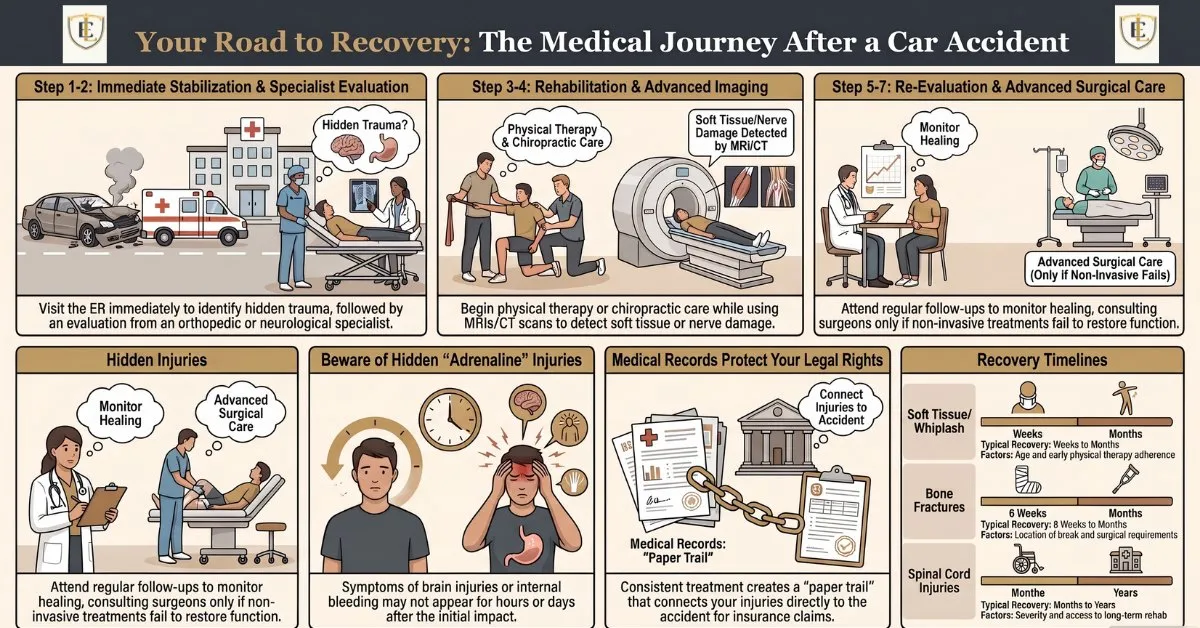
At Etehad Law, we have developed a treatment methodology that has consistently helped our clients receive appropriate medical care while building well-documented injury claims. We recommend the following step-by-step process because it supports your recovery and creates medical records that accurately reflect your car accident injuries.
Jonathan Dekel explains, "The right treatment plan is rarely about doing everything at once. It is about following a consistent medical path that reflects your injuries and supports your recovery from beginning to end."
Step 1: Seek Immediate Medical Care
Visit an emergency room or urgent care center immediately after the crash, even if you initially feel fine. A medical professional can perform a physical examination, stabilize serious conditions, and identify hidden injuries such as internal bleeding, head injuries, or spinal cord injuries. Early treatment also creates important medical documentation for your recovery and any future personal injury claim.
Step 2: Complete a Comprehensive Specialist Evaluation
After emergency treatment, follow up with a specialist who regularly treats car accident injuries. Depending on your condition, you may see an orthopedic physician, pain management specialist, neurologist, or another qualified doctor. This evaluation helps establish an individualized treatment plan based on your symptoms, medical history, and diagnostic findings.
Step 3: Begin Your Recommended Therapy Program
Most accident victims benefit from rehabilitation before considering invasive procedures. Your treatment plan may include physical therapy, chiropractic care, massage therapy, aquatic therapy, or occupational therapy to restore strength, improve mobility, reduce pain, and address soft tissue injuries. Physical therapists tailor each program to your specific injuries and recovery goals.
Step 4: Complete Any Recommended Medical Imaging
Your doctor may order X-rays, CT scans, or MRI scans to identify injuries that cannot be confirmed through a physical examination alone. Medical imaging helps diagnose broken bones, bone fractures, soft tissue damage, internal injuries, and damage affecting the spinal bones or spinal nerves. Accurate imaging ensures your treatment matches the full extent of your injuries.
Step 5: Attend Regular Medical Re-Evaluations
Recovery should be monitored throughout your treatment. Follow-up appointments allow your doctor to evaluate healing, adjust medications, and determine whether additional pain management options are appropriate. Depending on your condition, treatments may include platelet-rich plasma injections, facet joint injections, trigger point injections, or epidural injections to relieve pain while supporting the healing process.
Step 6: Follow Through With Additional Specialist Care
Some injuries require advanced evaluation by medical specialists. A neurosurgeon may assess spinal injuries, an orthopedic surgeon may treat complex fractures, and a neurologist may evaluate traumatic brain injuries or ongoing neurological symptoms. Their recommendations help determine whether additional treatment or rehabilitation is necessary.
Step 7: Consider Surgical Evaluation When Recommended
Not every injury requires surgery, but some serious injuries cannot heal without surgical intervention. Your treating specialist will determine whether surgery offers the best opportunity to restore function, relieve pressure, reduce pain, or improve your long-term recovery. If surgery is appropriate, following your doctor's recommendations gives you the strongest chance of achieving the best possible outcome.
Were You Involved in a Car Accident?
Getting the right medical treatment after a car accident protects both your health and your legal rights. From emergency care and diagnostic testing to physical therapy, rehabilitation, and follow-up appointments, every stage of treatment plays an important role in your recovery. Consistent medical care also creates valuable documentation that can support your personal injury claim and help demonstrate the full impact of your injuries.
At Etehad Law, we have over 30 years of experience helping accident victims recover compensation while they focus on healing. If you were injured in a car crash, contact our team today for a free consultation. We will explain your legal options, answer your questions, and help you pursue the compensation you deserve
FAQs
Many accident victims have questions about their injuries, recovery, and treatment after a collision. Below are answers to some of the most common questions we receive.
How Long Does Your Body Take To Heal After a Car Accident?
Recovery can take anywhere from a few weeks to several months, depending on the severity of your injuries and the treatment you receive. More serious injuries, such as fractures or spinal injuries, may require ongoing rehabilitation and follow-up medical care.
What is the Most Common Injury in a Car Crash?
Whiplash is one of the most common car accident injuries, especially after rear-end collisions. Soft tissue injuries affecting the neck, shoulders, and back are also frequently diagnosed after motor vehicle accidents.
Can a Car Accident Cause a Pulmonary Embolism?
Yes, severe trauma or prolonged immobility after a car accident can increase the risk of blood clots that may lead to a pulmonary embolism. Seek immediate medical attention if you experience sudden chest pain, difficulty breathing, or coughing up blood after a crash.
What Are The 5 Signs of Injury Trauma?
Common warning signs include severe pain, loss of consciousness, difficulty breathing, heavy bleeding, and confusion or disorientation. Even if symptoms seem mild, you should see a doctor because some injuries may not appear immediately after a car accident.
Legal Disclaimer: The information in this article is provided for general educational purposes only and should not be considered legal or medical advice. Reading this content does not create an attorney-client relationship with Etehad Law.
You may also like
 Accident and Injury
 California Personal Injury Statute of Limitations
Learn the California statute of limitations for personal injury claims, key filing deadlines, exceptions, and why you should act quickly.
Read More » Expert Opinion
 What is a Vehicle Black Box and How Can It Help Your Case?
Uncover the role of your car black box in legal cases. Insights from Personal Injury Attorney in Beverly Hills await. Check to…
Read More » Expert Opinion
 Will Posting on Social Media Tank Your Case?
How social media posts can affect a legal case, the dos and don'ts while a claim is open, and what insurers look…
Read More »
