


Most people do not realize how a soft tissue injury lawyer can help secure their compensation until they are struggling with medical bills, lost wages, and ongoing pain. In our experience, an experienced lawyer protects your legal rights, gathers strong medical evidence, negotiates with insurance companies, and pursues the full compensation you deserve after a soft tissue injury.
For more than 30 years, Etehad Law has helped injured Californians recover full and fair compensation for serious soft tissue injuries caused by car accidents, falls, and workplace negligence. Our attorneys know how insurers try to minimize sprains, strains, and whiplash, and how to build the medical evidence that proves the true impact of these injuries. We represent injury victims on a contingency fee basis, so you pay no attorney fees unless we recover for you. If you have been hurt, reach out to us today for a free consultation and trusted legal guidance.
In this guide, we explain how a soft tissue injury lawyer can strengthen your claim and maximize your recovery. We also discuss common soft tissue injuries, the evidence needed to prove your case, the compensation available, the California laws that shape these claims, workers’ compensation, and the steps you should take after an injury.
Key Takeaways
A soft tissue injury lawyer protects your rights, documents the medical evidence insurers try to dispute, and negotiates for the full value of your claim. Soft tissue injuries such as sprains, strains, and whiplash often do not show on an X-ray, so consistent treatment and records are what prove them. In California, most injury claims must be filed within two years under Code of Civil Procedure §335.1, the state uses a pure comparative negligence rule, and there is no damages cap in an ordinary injury case. Seek medical care immediately, preserve evidence, avoid social media, and talk to an attorney early.
What Are Soft Tissue Injuries?
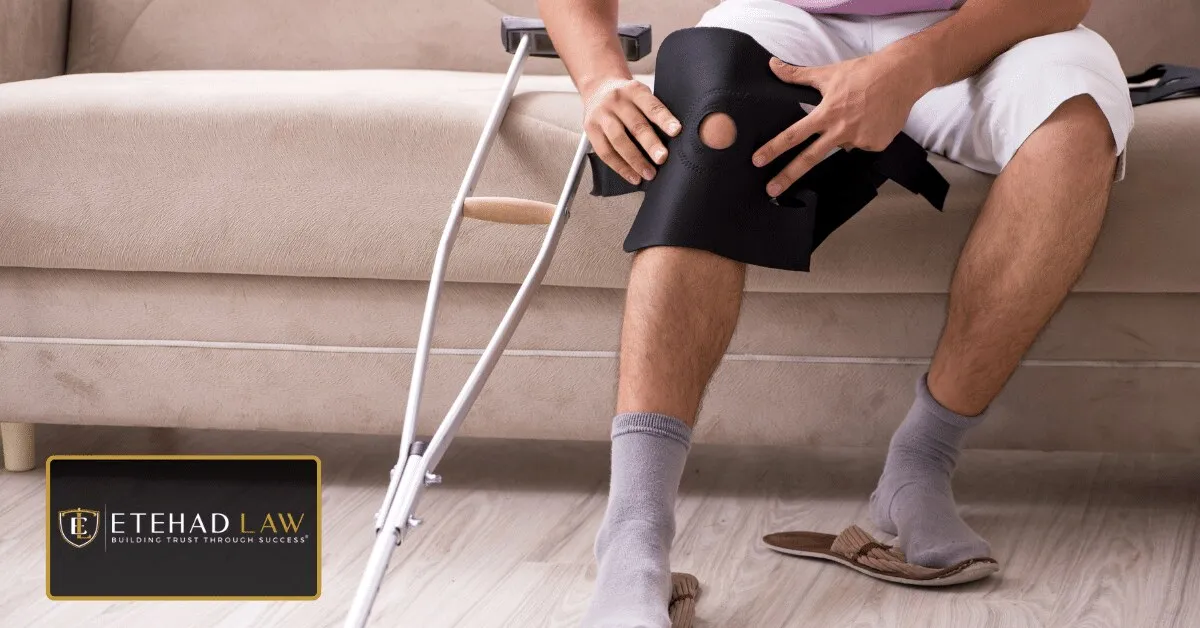
Soft tissue injuries affect the muscles, tendons, ligaments, and other connective tissues that support movement throughout the body. In our experience, these injuries can range from mild strains to severe tissue damage that causes chronic pain, reduced mobility, and difficulty performing everyday tasks. According to the National Institutes of Health (NIH), sprains and strains are among the most common musculoskeletal injuries and often require rest, rehabilitation, and medical treatment to recover fully.
Common soft tissue injuries include sprains, muscle strains, muscle tears, contusions, tendon injuries, and whiplash. These injuries may not appear on standard X-rays, making strong medical documentation, advanced imaging, and ongoing medical evaluations essential when pursuing a soft tissue injury claim.
Soft tissue injuries frequently occur after car accidents, workplace injuries, falls on uneven surfaces, repetitive motion, or sports-related accidents. According to the Centers for Disease Control and Prevention (CDC) Transportation Safety, motor vehicle crashes result in millions of emergency department visits each year. These accident victims suffer soft tissue injuries even when fractures are not immediately diagnosed.
Although these injuries are sometimes dismissed as minor, they can have lasting consequences. Typically, untreated soft tissue injuries may lead to chronic pain, limited range of motion, reduced mobility, and the need for ongoing medical care or physical therapy. This is why we recommend seeking medical attention immediately after an accident because early diagnosis not only improves recovery but also creates the medical evidence needed to support your compensation claim.
Common Types of Soft Tissue Injuries and Their Impact on Compensation
The value of every soft tissue injury claim depends on several factors. These factors include the severity of the injury, the quality of the medical evidence, the length of recovery, and the impact on your ability to work and perform everyday activities. Typically, strong medical documentation and prompt treatment are often the most effective ways to demonstrate the true extent of a soft tissue injury and pursue fair compensation.
Below is a table that highlights some common types of soft tissue injuries and the impact they can have on compensation.
| Injury Type | Typical Symptoms | Recovery Timeline | Impact on Compensation | Common Challenge |
|---|---|---|---|---|
| Sprains | Pain, swelling, bruising, joint instability, and limited range of motion | A few weeks for mild injuries, but several months for severe ligament damage | Compensation may increase if surgery, physical therapy, or ongoing medical care is required. | Insurance companies may argue the injury is minor or pre-existing without strong medical evidence. |
| Strains | Muscle pain, weakness, spasms, stiffness, and reduced mobility | Several weeks for mild muscle strains and months for severe muscle tears | Claims may include medical expenses, lost wages, pain and suffering, and future rehabilitation costs. | Soft tissue damage may not appear on standard X-rays, making medical documentation especially important. |
| Contusions (Bruises) | Pain, swelling, tenderness, discoloration, and reduced movement | Usually a few weeks, although deep tissue injuries may take longer | Compensation depends on the severity of the injury, medical treatment received, and its impact on daily life. | Contusions are often underestimated despite causing significant pain and functional limitations. |
| Whiplash | Neck pain, headaches, dizziness, shoulder pain, stiffness, and limited mobility | Recovery ranges from a few weeks to several months, with some victims developing chronic pain | Whiplash claims may include compensation for ongoing medical treatment, physical therapy, lost income, and non-economic damages. | Because symptoms often develop hours or days after an accident, insurers may dispute the connection between the injury and the incident. |
Challenges in Soft Tissue Injury Claims
Soft tissue injury claims are often more difficult to prove than fractures or other visible injuries. In our experience, the greatest challenge is demonstrating the true extent of pain and long-term limitations. According to the U.S. Bureau of Labor Statistics, sprains, strains, and tears consistently rank among the most common workplace injuries requiring time away from work.
One challenge is that symptoms may worsen gradually instead of appearing immediately. Delayed symptoms can make it easier for insurance companies to question whether the accident caused the injury.
Another challenge involves proving how the injury affects your daily life. Chronic pain, reduced mobility, and limited range of motion may prevent you from working or completing everyday tasks.
Insurance adjusters often argue that soft tissue injuries should heal quickly without extensive treatment. They may also dispute ongoing medical care or challenge the need for physical therapy and other treatments.
Strong medical documentation is essential to overcoming these arguments. We recommend attending every medical appointment and following your treatment plan carefully. Consistent records help establish the severity and progression of your injury.
Expert testimony can also strengthen your claim. Medical specialists explain how soft tissue damage affects muscles, tendons, ligaments, and other connective tissues. Their opinions help demonstrate why continued treatment and future expenses may be necessary.
As Kirk Comer explains, “The strongest soft tissue claims combine consistent medical treatment with compelling evidence that clearly documents the injury’s long-term impact.” An experienced attorney can gather that evidence, challenge unfair insurance tactics, and pursue the full compensation you deserve.
How a Soft Tissue Injury Lawyer Builds a Strong Personal Injury Case
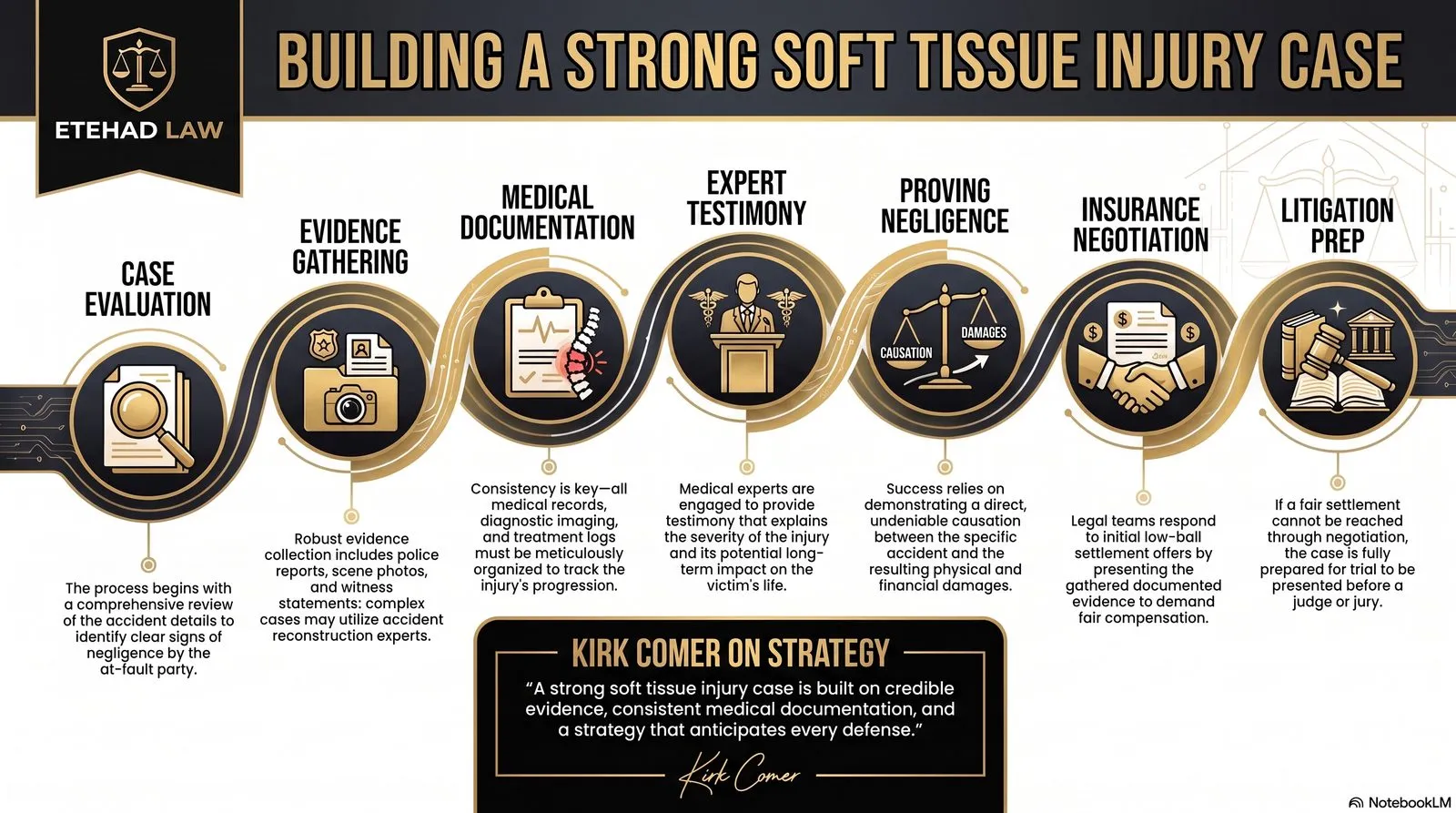
The process starts with a detailed case evaluation. Your lawyer reviews the accident, identifies the at-fault party, and determines whether negligence caused your injuries. This assessment helps establish the strongest path toward recovering compensation.
Next, your attorney gathers evidence supporting your claim. This may include accident reports, photographs, witness statements, surveillance footage, and other relevant documents. In complex cases, accident reconstruction specialists may help explain how the incident occurred.
Medical documentation is another essential part of the process. Your attorney collects medical records, diagnostic imaging, treatment notes, and physician reports. We recommend following every treatment recommendation because complete records strengthen your claim.
Expert testimony may also become necessary. Medical experts explain the severity of your soft tissue injuries and their effect on your daily life. Their opinions can support claims involving chronic pain, reduced mobility, and future medical needs.
Your attorney then works to prove negligence and causation. This means demonstrating that another person’s careless actions directly caused your injuries and resulting damages. Establishing these elements is essential to recovering fair compensation.
Negotiating with insurance companies is another important step. Your lawyer responds to low settlement offers using strong evidence and well-documented damages. Effective negotiations often result in better outcomes without the need for trial.
If settlement discussions fail, your attorney prepares the case for litigation. They organize evidence, prepare witnesses, and present persuasive legal arguments before a judge or jury. Thorough preparation often strengthens your position throughout the legal process.
As Kirk Comer explains, “A strong soft tissue injury case is built on credible evidence, consistent medical documentation, and a strategy that anticipates every defense.” An experienced attorney helps ensure your claim reflects the full impact of your injuries and financial losses.
Understanding the Compensation You Can Secure for Soft Tissue Injuries
Compensation for a soft tissue injury depends on the unique facts of your case. In our experience, no two settlements are identical because every injury affects people differently. According to the U.S. Bureau of Labor Statistics, 568,150 sprains, strains, and tears resulted in days away from work in 2024. These injuries often create significant financial and personal hardships.
Your compensation may include both economic and non-economic damages. Economic damages typically cover medical expenses, medical bills, lost wages, future medical care, rehabilitation, and other out-of-pocket costs. Non-economic damages may include pain, emotional distress, reduced mobility, and loss of enjoyment of daily life.
Settlement amounts vary widely depending on the severity of the injury. Minor soft tissue injuries may resolve with conservative treatment, while severe injuries can require years of ongoing medical care. Some severe cases result in settlements exceeding six figures, although outcomes differ significantly.
Several factors influence the value of a soft tissue injury claim. These include the seriousness of your injury, available insurance coverage, the strength of the medical evidence, and whether another party was clearly at fault. Future medical expenses and reduced earning capacity can also increase compensation.
Insurance companies often calculate settlement offers using formulas that may undervalue your claim. We recommend speaking with an attorney before accepting any offer. Early settlements may not account for future treatment or long-term complications.
A personal injury lawyer works to maximize your recovery by gathering evidence, documenting every loss, and negotiating aggressively with insurers. Your attorney also consults medical experts when necessary and prepares your case for trial if negotiations fail.
California Laws That Affect Your Soft Tissue Injury Claim
California has specific statutes and rules that shape how a soft tissue injury claim is filed, valued, and resolved. Understanding them early helps you protect your rights and avoid deadlines that can quietly end a claim. The points below are general legal information, not legal advice for any specific case.
The Deadline to File (Statute of Limitations)
Most California personal injury claims must be filed within two years of the injury under Code of Civil Procedure §335.1. Claims involving only vehicle or property damage generally get three years under Code of Civil Procedure §338. If your injury involved a city, county, or state entity, Government Code §911.2 requires a written government claim within six months before you can sue. Because these deadlines vary and the shortest one controls, it is wise to confirm which applies to your situation quickly.
Pure Comparative Negligence
California follows a pure comparative negligence rule from Li v. Yellow Cab Co. (1975) 13 Cal.3d 804. A jury can reduce your recovery by your percentage of fault but never eliminate it, so a plaintiff found partly responsible still recovers the remaining share. Insurers frequently try to assign fault to the injured person to lower a soft tissue payout, which is one more reason clear evidence of how the accident happened matters.
Proposition 51 and How Damages Are Divided
When more than one party is at fault, Civil Code §1431.2 (Proposition 51) makes each defendant responsible for non-economic damages, such as pain and suffering, only in proportion to that defendant’s share of fault. Economic damages like medical bills and lost wages are treated differently and can be recovered jointly. For an ordinary soft tissue injury claim, California does not cap either economic or non-economic damages; the statutory caps people hear about apply only to medical malpractice cases.
Settlement Offers Under Section 998
California gives both sides a tool to encourage fair settlements. Under Code of Civil Procedure §998, a party that rejects a formal offer and then fails to do better at trial can be ordered to pay certain of the other side’s post-offer costs, including expert-witness fees. That cost risk pushes insurers to take reasonable offers seriously and is part of why most soft tissue claims settle before trial.
Injured at Work: Workers’ Compensation and Third-Party Claims
If your soft tissue injury happened on the job, workers’ compensation is generally your exclusive remedy against your employer under Labor Code §3600, and a workers’ compensation claim usually must be filed within one year under Labor Code §5405. Workers’ compensation pays medical care and part of your lost wages without proving fault, but not pain and suffering. When a third party, such as another driver or an outside contractor, caused your workplace injury, you may also bring a separate personal injury claim against that party for your full damages.
Steps to Take After a Soft Tissue Injury to Protect Your Legal Rights
Protecting your legal rights begins immediately after a soft tissue injury. We recommend following a clear process from the beginning.
First, seek immediate medical attention. Prompt treatment protects your health and creates medical documentation supporting your injury claim. Follow your treatment plan and attend every follow-up appointment.
Next, report the injury to the appropriate party. Contact the police after a car accident, notify your employer after a workplace injury, or inform the property owner after a slip and fall. Prompt reporting creates an official record that may support your claim.
After reporting the incident, preserve as much evidence as possible. Take photographs of the accident scene, your injuries, and any hazardous conditions. Keep copies of medical records, receipts, treatment plans, and other documents related to your injury. If anyone witnessed the incident, collect their contact information.
You should also avoid discussing your case on social media. Insurance companies may review your online activity while evaluating your claim. Before posting, understand whether posting on social media can tank your case and how online activity may affect your legal rights.
Finally, consult a soft tissue injury lawyer as soon as possible. Early legal representation helps preserve evidence, communicate with insurance companies, and avoid mistakes that could weaken your claim. Your attorney can evaluate your case, explain your legal options, and pursue the full compensation you deserve while you focus on recovery.
Benefits of Hiring a Soft Tissue Injury Lawyer

A lawyer understands the legal and medical issues involved in soft tissue injury claims. They gather strong evidence, organize medical documentation, and work with medical experts to demonstrate the full extent of your injuries.
An attorney also manages communications with insurance adjusters. This reduces the risk of accepting a low settlement or making statements that could weaken your claim. We recommend allowing your lawyer to handle negotiations on your behalf.
Another important benefit is accurately calculating your damages. Your attorney considers medical expenses, lost wages, future treatment costs, and the impact of your injury on daily life. This approach helps ensure every recoverable loss is included in your claim.
If negotiations do not produce a fair settlement, your lawyer is prepared to pursue litigation. Strong trial preparation often strengthens settlement discussions and positions your case for a better outcome.
Perhaps the greatest benefit is the peace of mind legal representation provides. While your attorney manages deadlines, paperwork, and legal strategy, you can focus on your recovery and ongoing medical care.
As Kirk Comer explains, “A successful claim is not measured only by compensation. It is measured by giving clients the support and advocacy they need during recovery.” An experienced soft tissue injury lawyer helps protect your interests while pursuing the best outcome the facts will support for your case.
How to Choose the Right Lawyer
Start by looking for a lawyer with experience in personal injury law. Soft tissue injury claims often involve unique medical and legal challenges. An attorney familiar with these cases can anticipate common obstacles and build a stronger claim.
Next, evaluate the lawyer’s experience with soft tissue injuries specifically. Ask how they investigate claims, gather medical evidence, and negotiate with insurance companies. Their approach should demonstrate a clear understanding of these injuries.
You should also consider the firm’s reputation and commitment to client service. A good lawyer communicates regularly, answers your questions, and explains your legal options clearly. We recommend choosing someone who keeps you informed throughout the process.
Ask whether the attorney works with medical experts and other specialists. These professionals can strengthen your claim by explaining the severity of your injuries and future treatment needs.
Finally, discuss fees during your initial consultation. Many personal injury lawyers work on a contingency fee basis, meaning you pay attorney’s fees only if your case is successful. This arrangement allows many injury victims to obtain legal representation without upfront costs.
At Etehad Law, we have over 30 years of experience helping injury victims pursue fair compensation. Our team is committed to providing personalized guidance, thorough case preparation, and dedicated advocacy from beginning to end.
Ready to Work With a Soft Tissue Injury Lawyer?
A soft tissue injury can affect your health, finances, and quality of life long after an accident. In our experience, having the right legal representation can strengthen your claim, protect your rights, and improve your chances of recovering fair compensation. Whether your injury resulted from a car accident, workplace incident, or another act of negligence, early legal guidance can make a meaningful difference.
At Etehad Law, we have over 30 years of experience helping injury victims navigate complex personal injury claims. Our attorneys understand the challenges of proving soft tissue injuries and work diligently to gather evidence, negotiate with insurance companies, and pursue the full compensation our clients deserve. If a fair settlement cannot be reached, we are prepared to advocate for you in court.
If you have suffered a soft tissue injury, do not wait to seek legal advice. Contact Etehad Law today for a free consultation to discuss your case, understand your legal options, and learn how we can help you pursue the compensation you deserve.
Frequently Asked Questions
Soft tissue injury claims often raise questions about compensation, negligence, California deadlines, and when to seek legal help. Below are answers to some of the most common questions we receive.
What is The Average Payout for Soft Tissue Injury?
There is no standard payout because every soft tissue injury claim is different. Compensation depends on factors such as injury severity, medical expenses, lost wages, liability, and available insurance coverage. A minor sprain that heals in a few weeks resolves very differently from a whiplash injury that leaves lasting chronic pain, so the medical evidence and the length of treatment usually drive the value more than any average figure.
What Are Signs of a Good Settlement Offer?
A good settlement offer covers your current and future medical expenses, lost income, pain and suffering, and other recoverable damages. In our experience, you should not accept an offer until you understand the full extent of your injuries and have completed or clearly documented your treatment. Early offers often arrive before the true cost of future care is known, which is why reviewing any offer with an attorney first helps protect your recovery.
What Are The 4 Proofs of Negligence?
The four elements of negligence are duty of care, breach of duty, causation, and damages. Your attorney must establish all four elements to recover compensation in a personal injury claim. In California these elements are reflected in the standard jury instruction for negligence, CACI No. 400, which a jury applies when it decides whether the at-fault party is legally responsible for your soft tissue injury.
How Much Compensation Do You Get For Soft Tissue Damage?
The amount varies depending on the facts of your case and the impact of the injury on your life. More severe injuries requiring ongoing treatment or causing permanent limitations generally result in higher compensation. Documented medical care, wage loss, and credible evidence of pain and reduced mobility all increase value, while gaps in treatment or thin documentation give insurers room to argue the injury was minor.
How Soon Should I Contact a Lawyer After a Soft Tissue Injury?
You should contact a lawyer as soon as possible after the injury occurs. Early legal representation helps preserve evidence, protect your rights, and prevent mistakes that could weaken your claim. It also matters for deadlines: most California injury claims must be filed within two years under Code of Civil Procedure §335.1, and a claim against a government entity can require written notice within just six months.
How long do I have to file a soft tissue injury lawsuit in California?
Most California personal injury claims, including soft tissue injury claims, carry a two-year deadline from the date of the injury under Code of Civil Procedure §335.1. A claim for vehicle or property damage generally gets three years under Code of Civil Procedure §338. If a city, county, or state agency is responsible, a much shorter clock applies: Government Code §911.2 requires a written government claim within six months before you can file suit. Because missing the deadline can end a claim before it starts, it is best to confirm which limit applies early rather than assuming you have the full two years.
Can I still recover compensation if I was partly at fault for the accident?
Usually, yes. California follows a pure comparative negligence rule established in Li v. Yellow Cab Co. (1975) 13 Cal.3d 804. A jury can assign you a percentage of fault and reduce your award by that share, but it never eliminates your recovery, even if you were mostly at fault. If your damages are $50,000 and you are found 20 percent responsible, you still recover $40,000. Insurers often try to shift blame onto the injured person to shrink a soft tissue claim, so documenting how the accident happened matters.
Is there a cap on damages for a soft tissue injury in California?
For an ordinary soft tissue injury caused by a car accident, a fall, or workplace negligence, California does not cap your economic damages (such as medical bills and lost wages) or your non-economic damages (such as pain and suffering). Statutory caps like the ones in the Medical Injury Compensation Reform Act apply only to medical malpractice cases, not typical injury claims. One rule that does apply is Proposition 51, codified at Civil Code §1431.2, which makes each defendant responsible for non-economic damages only in proportion to that defendant’s share of fault.
Should I file a workers’ compensation claim or a personal injury claim for a soft tissue injury at work?
It depends on who caused the injury. If you were hurt on the job, workers’ compensation is generally your exclusive remedy against your employer under Labor Code §3600, and a workers’ compensation claim usually must be filed within one year under Labor Code §5405. Workers’ compensation pays medical care and a portion of lost wages without proving fault, but it does not pay for pain and suffering. If a third party, such as another driver or an outside contractor, caused your workplace injury, you may also bring a separate personal injury claim against that party for the full range of damages. Many injured workers pursue both.
How does a California Code of Civil Procedure §998 offer affect my soft tissue injury case?
A §998 offer is a formal settlement offer with cost consequences under Code of Civil Procedure §998. If a party rejects the offer and then fails to do better at trial, that party can be ordered to pay certain of the other side’s post-offer costs, including expert-witness fees. That risk pushes both sides to weigh a reasonable offer seriously, which is one reason so many soft tissue claims settle before trial. A well-timed §998 offer is a strategic tool your attorney can use to move an insurer toward a fair number.
Legal Disclaimer
This article is for informational purposes only and does not constitute legal advice or create an attorney-client relationship with Etehad Law. Every soft tissue injury case is unique, and outcomes depend on the specific facts, applicable law, and available evidence. Past results do not guarantee future outcomes. If you need legal advice about your situation, consult a qualified attorney.
You may also like
 Accident and Injury
 California Personal Injury Statute of Limitations
Learn the California statute of limitations for personal injury claims, key filing deadlines, exceptions, and why you should act quickly.
Read More » Expert Opinion
 What is a Vehicle Black Box and How Can It Help Your Case?
Uncover the role of your car black box in legal cases. Insights from Personal Injury Attorney in Beverly Hills await. Check to…
Read More » Expert Opinion
 Will Posting on Social Media Tank Your Case?
How social media posts can affect a legal case, the dos and don'ts while a claim is open, and what insurers look…
Read More »
