

The steps to take when involved in an accident with a party driving a company vehicle are to seek medical attention, report the accident, document the scene, collect insurance information, and speak with an experienced attorney as soon as possible. These actions help protect your health, preserve important evidence, and strengthen your ability to pursue compensation after company vehicle accidents.
At Etehad Law, we have over 30 years of experience representing injury victims on a contingency fee basis, meaning you pay no attorney fees unless we recover compensation for you. Our firm has recovered more than $100 million in settlements and has earned a 5-star rating based on more than 250 Google reviews. Our case results include an $11 million-plus jury verdict and numerous policy-limit recoveries in motor vehicle and premises liability cases. Contact our legal team today for a free consultation to discuss your accident, understand your legal options, and protect your right to fair compensation.
This guide explains what to do after an accident involving a company vehicle, how employer liability and insurance coverage may apply, and what evidence can strengthen your claim. We also discuss determining liability, the compensation you may recover, and how an experienced attorney can help you pursue the maximum compensation available under California law.
Immediate Steps to Take After an Accident Involving a Company Vehicle
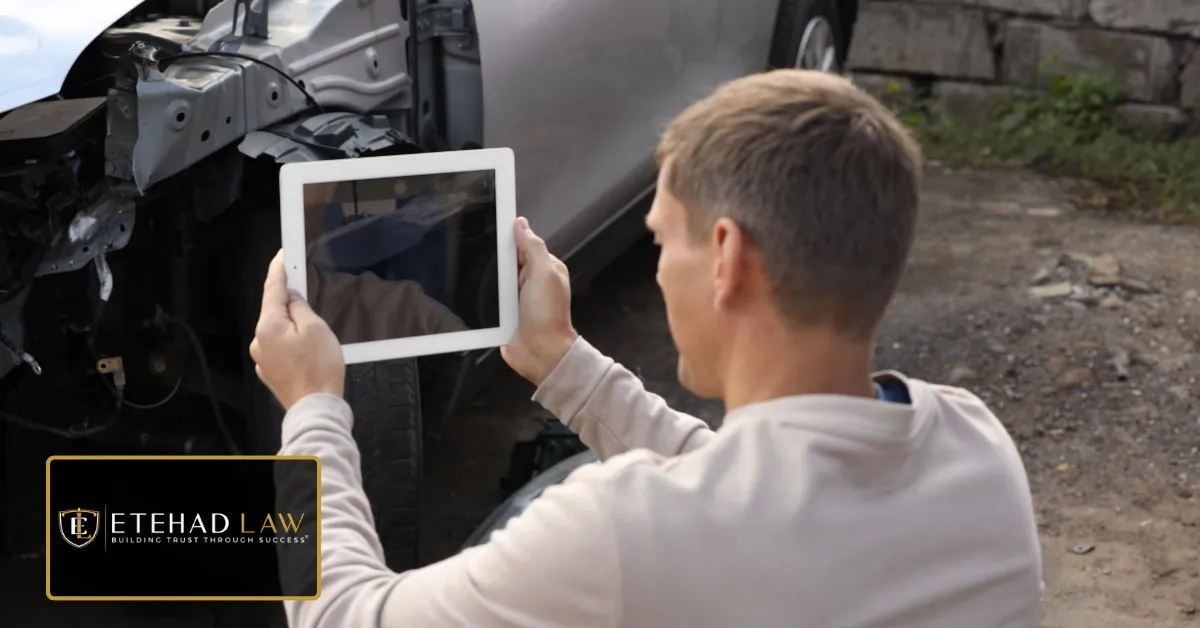
After an accident involving a company vehicle, the actions you take can affect both your recovery and your legal claim. We recommend following this process to protect your health, preserve evidence, and strengthen your case.
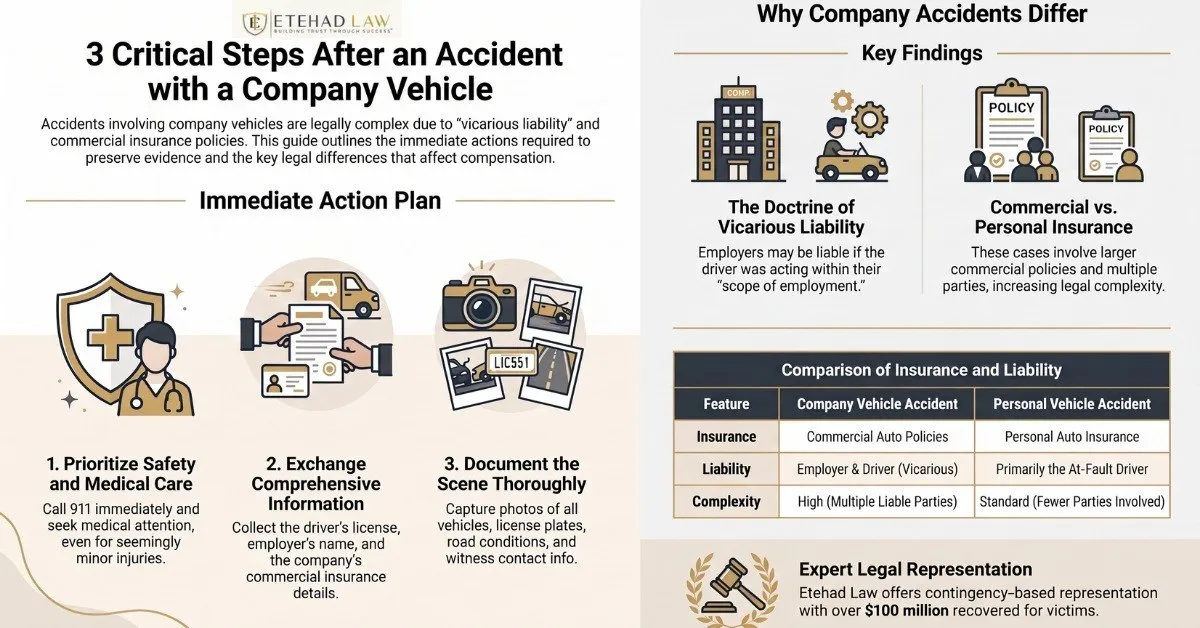
Your first priority should always be safety. Check yourself and others for visible injuries, call 911 immediately, and move to a safe location if it is possible to do so safely. According to the National Highway Traffic Safety Administration (NHTSA), prompt reporting helps ensure emergency responders arrive quickly and that important crash information is documented.
Once everyone is safe, exchange information with the employee driving the company vehicle. Obtain the driver's name, contact information, driver's license number, employer's name, vehicle registration, insurance details, and the company's insurance information. If another personal vehicle or other vehicle was involved, collect the same information from those drivers as well.
Next, document the accident scene thoroughly. Take photographs of every vehicle, license plates, road conditions, traffic signs, skid marks, debris, and any significant property damage. You should also write down what happened while the details remain fresh and obtain contact information from witnesses who can provide independent accounts of the accident.
Simon Etehad explains, "The strongest claims begin with the strongest evidence. Taking a few extra minutes to document the scene carefully can make a meaningful difference later in the legal process."
You should also ensure the accident is reported to law enforcement. A police report creates an official record of how the accident occurred, identifies the parties involved, and documents observations that may become important when determining liability. If the driver was performing work duties, the accident should also be reported to the employer as soon as possible so the incident is documented under the company's reporting procedures.
Finally, seek medical care even if your injuries seem minor. Some injuries develop gradually and may not produce immediate symptoms after a car accident. Receiving prompt medical treatment after a car crash protects your health while creating medical records that connect your injuries to the collision. After your immediate needs have been addressed, contact an experienced attorney who can protect your rights, preserve additional evidence, and communicate with insurance companies on your behalf.
Steps to Take After Accident with a Company Vehicle vs. Personal Vehicle
Although many of the immediate actions are the same, accidents involving a company vehicle often require additional reporting, insurance, and liability considerations. The table below highlights the key differences.
| Step | Accident with a Company Vehicle | Accident with a Personal Vehicle |
|---|---|---|
| Check for Injuries | Check for injuries, call 911, and seek immediate medical treatment if anyone is hurt. | Check for injuries, call 911, and seek immediate medical treatment if anyone is hurt. |
| Report the Accident | Notify law enforcement and ensure the employee driving reports the accident to the employer according to company policies. | Notify law enforcement and report the accident to your insurance company if required. |
| Exchange Information | Obtain the driver's information, employer's contact details, insurance information, and the company's insurance details. | Exchange driver's license, registration, and personal auto insurance information with the other driver. |
| Document the Accident Scene | Photograph the company vehicle, vehicle damage, road conditions, license plates, and collect witness information. | Photograph the vehicles, damage, road conditions, and gather witness information. |
| Insurance Coverage | Claims may involve commercial auto insurance, the company's insurance policy, and sometimes the driver's personal insurance. | Claims usually involve the driver's personal auto insurance policy. |
| Determining Liability | Liability may extend to the employer under vicarious liability, multiple parties, or negligent hiring and vehicle maintenance claims. | Liability generally focuses on the at fault driver and any other responsible parties. |
| Evidence Needed | Preserve the police report, employer information, company records, medical records, and evidence showing the driver was acting within the scope of employment. | Preserve the police report, medical records, repair estimates, and other evidence supporting the claim. |
| Legal Complexity | Cases often involve employer liability, commercial insurance policies, and several insurance companies. | Claims are generally less complex because fewer parties and insurance policies are involved. |
| Legal Representation | Early legal guidance is important because company vehicle cases frequently involve multiple liable parties and larger insurance policies. | An attorney can still protect your rights, negotiate with insurers, and pursue fair compensation after the accident. |
Understanding Liability and Insurance in Company Vehicle Accidents
One of the most important legal concepts is vicarious liability. Under this doctrine, an employer may be held responsible for an employee's negligence when the employee was acting within the scope of employment or performing job duties at the time the accident occurred. However, if the employee was running personal errands or using the company car for unauthorized personal activities, the employer may argue that the employee is personally responsible for the collision.
Liability may also arise from the employer's own conduct. For example, a business may be held liable if it failed to maintain company owned vehicles, ignored known safety problems, hired an unqualified driver, or retained an employee with a dangerous driving history. Depending on the circumstances, claims involving negligent hiring, inadequate training, or poor vehicle maintenance may exist alongside claims against the driver.
Insurance coverage is also different in company vehicle accidents. In many situations, the company's insurance provides the primary coverage because employers typically carry commercial auto insurance for business operations. According to the Insurance Information Institute, commercial auto insurance is designed to provide broader protection than personal auto insurance because business vehicles often face greater operational risks. Additional policies, including the employee's personal insurance, may also become relevant depending on vehicle ownership, company policies, and the purpose of the trip.
The consequences for the employee can vary as well. If the employee caused the accident while performing work duties, the employer's insurance will often handle the claim, although internal disciplinary action may still occur. If the employee violated company policies, drove under the influence, or used the vehicle for unauthorized personal purposes, the employer may seek reimbursement, impose disciplinary measures, or dispute responsibility for the accident.
State laws also influence how these claims are handled. Some states have statutes that specifically address employer liability, while others rely more heavily on common law principles governing agency relationships. Regardless of the jurisdiction, determining whether the employee was acting within the scope of employment remains one of the most important issues when evaluating liability.
Because these cases frequently involve multiple parties, overlapping insurance policies, and complex legal questions, early legal guidance is critical. An experienced attorney can identify every available source of insurance coverage, establish liability, and guide you through the car accident settlement process while pursuing the full compensation available under the law.
How to Protect Your Rights After an Accident with a Company Vehicle

One of the most important steps is consulting an experienced car accident attorney as early as possible. Company vehicle cases often involve employers, commercial insurance policies, and multiple liable parties, making them more complex than ordinary car accident claims. Early legal guidance helps preserve evidence, identify every responsible party, and prevent mistakes that could weaken your claim.
Simon Etehad explains, "The sooner an attorney becomes involved, the better your chances of preserving evidence and protecting your legal rights. Early action often prevents problems that become much harder to fix later."
You should also be careful when speaking with insurance companies or representatives from the employer. Provide only factual information about the accident occurred and avoid admitting fault, speculating about what happened, or minimizing your injuries. Statements made shortly after an accident may later be used to dispute liability or reduce the value of your claim.
Preserving evidence is equally important. Keep copies of the police report, photographs of the accident scene, witness contact information, repair estimates, medical bills, receipts, and all medical records related to your treatment. Thorough documentation helps establish both liability and the full extent of your financial and personal losses.
Seeking prompt medical attention is another essential step, even if you believe your injuries are minor. According to the Centers for Disease Control and Prevention (CDC), symptoms of a concussion or other traumatic brain injury may not appear until hours or even days after the incident. Early medical evaluation protects your health while creating documentation that links your injuries to the accident.
Finally, continue following your healthcare provider's recommendations throughout your recovery. Consistent treatment demonstrates the seriousness of your injuries and provides valuable evidence if your claim proceeds to settlement negotiations or litigation. Working with an experienced car accident attorney from the beginning allows you to focus on healing while your legal team protects your rights and pursues the compensation you deserve.
Situation One: The Pizza Delivery Person Was Driving a Company Car at the Time of the Accident
If the delivery person was driving a company car, the question of who is financially responsible in a car accident depends on whether the driver was acting within the scope of the driver's employment. “Acting within the scope of employment” is a legal term meaning that employees are engaged in activities that are part of their jobs. When workers who are acting within the scope of employment cause an injury to someone else, their employer may be liable, and the employer's insurance company may have to pay.
That means that if the delivery person was actually delivering pizza for his employer when the accident occurred, the pizza company, not the delivery driver, may have to pay any damages that the other driver is entitled to. On the other hand, if the pizza delivery person was driving the company car not to deliver pizzas, but for his or her own use after hours, then the driver, not the company, may be liable for any injuries or damage he or she caused in an accident.
There are some other situations where the driver, not the company, may be liable, even if the driver was delivering pizzas at the time of the accident. For example, if the delivery person was driving drunk, then the company may not be liable because breaking the law about drunk driving can be considered outside the “scope of employment.”
None of these situations, though, are cut and dried. There are many complications and shades of gray. Having an experienced personal injury lawyer represent you can make all the difference in these kinds of cases.
Situation Two: The Pizza Delivery Person Was Driving His or Her Own Personal Car
Many pizza delivery people use their own cars for deliveries and rely on their own insurance policies for protection. This may cause problems. Some personal auto insurance policies have exclusions for accidents that occur while the driver is working for pay. It's a good idea for anyone who is involved in an accident while delivering pizzas in their personal car to consult an experienced personal injury lawyer for assistance.
Who is at Fault Matters in California Car Accidents
In California, the courts will award damages in vehicle accident cases based on which driver was at fault or partially at fault. Determining who was at fault can be a complicated matter requiring extensive investigation. Both sides will try to show that they were not at fault. An experienced attorney will present a strong case for his or her client.
If You Are the Delivery Person
If you were delivering pizzas at the time of the accident, then you will want to make sure that your employer's insurance company pays if it is legally obligated to do so. This is not a good do-it-yourself project. If your employer resists paying, that can cause a lot of problems. An experienced attorney knows how to deal with the complex situations involved.
If You Are the Other Driver
If you were injured in an accident, and the other car was driven by a delivery person, then you may be entitled to compensation. An attorney can determine if the company's insurance policy is obligated to pay and, if so, can then file a lawsuit against the company on your behalf.
In California, you may be entitled to compensation for:
* Medical and related expenses
* Damage to or total loss of your car or other property, such as items that were in the car
* Pain and suffering from your injuries
* Emotional distress
* Loss of consortium (when a spouse is deprived of affection and sexual relations because of injuries from the accident)
* Loss of earnings
* Loss of future earning capacity
Other Situations
Other situations can arise. What happens if the delivery person was not at fault? What if the delivery person claims to be working within the scope of his or her employment, but the pizza company decides to fight the driver on that? What if both the delivery person and the other driver were partially at fault? For all these situations, an attorney can help get everything sorted out.
Need an Injury Lawyer?
Accidents involving a company vehicle often raise difficult questions about employer liability, insurance coverage, and who is financially responsible for your injuries. Throughout this guide, we explained the steps to take after the accident, how liability is determined, the role of commercial insurance, and the importance of protecting your rights from the very beginning.
At Etehad Law, we have over 30 years of experience representing people injured in complex company vehicle accidents throughout California. Our legal team investigates every case thoroughly, identifies all liable parties, negotiates with insurance companies, and prepares each claim for litigation when necessary. We guide our clients through every stage of the legal process while working to recover fair compensation for their medical expenses, lost income, pain and suffering, and other damages.
California law limits the time you have to file most personal injury claims, so waiting too long could affect your legal rights. Contact us today for a free consultation and learn how our experienced attorneys can help you pursue the compensation you deserve.
FAQs
Accidents involving company vehicles often raise questions about liability, insurance, and your legal rights. Below are answers to some of the most common questions people ask after these collisions.
What Happens If You Get In An Accident With a Company Vehicle?
The accident may involve the driver's employer, commercial insurance, and multiple potentially liable parties. An investigation will determine who is legally responsible and which insurance policies apply.
What is the 3/6 Second Rule?
The 3/6 Second Rule is a defensive driving guideline that recommends maintaining at least a three-second following distance in normal conditions. Drivers should increase that distance to six seconds or more during poor weather, heavy traffic, or other hazardous conditions.
What Are The 7 Steps of Accident Investigation?
The basic steps include securing the scene, providing medical assistance, collecting evidence, identifying witnesses, documenting the incident, determining the cause, and recommending corrective actions. These steps help establish the facts and reduce the risk of similar incidents in the future.
What Should You Not Tell Your Insurance Company?
Avoid admitting fault, speculating about how the accident happened, or minimizing your injuries before the investigation is complete. Provide accurate facts, but consult an attorney before giving a recorded statement if liability is disputed.
Can Your Employer Make You Pay For Damage To a Company Vehicle?
The answer depends on your employment agreement, company policies, state law, and how the accident occurred. Employers generally cannot automatically require reimbursement, especially if the accident happened while you were performing authorized job duties.
Legal Disclaimer: This article is for informational purposes only and does not constitute legal advice or create an attorney-client relationship with Etehad Law. Every accident involving a company vehicle is unique, and liability depends on the specific facts, applicable law, and available evidence. If you have been injured in an accident involving a company vehicle, consult a qualified attorney to discuss your legal rights and options
You may also like
 Accident and Injury
 California Personal Injury Statute of Limitations
Learn the California statute of limitations for personal injury claims, key filing deadlines, exceptions, and why you should act quickly.
Read More » Expert Opinion
 What is a Vehicle Black Box and How Can It Help Your Case?
Uncover the role of your car black box in legal cases. Insights from Personal Injury Attorney in Beverly Hills await. Check to…
Read More » Expert Opinion
 Will Posting on Social Media Tank Your Case?
How social media posts can affect a legal case, the dos and don'ts while a claim is open, and what insurers look…
Read More »
